Canopy Quest: Let’s Play our Urban Forest!
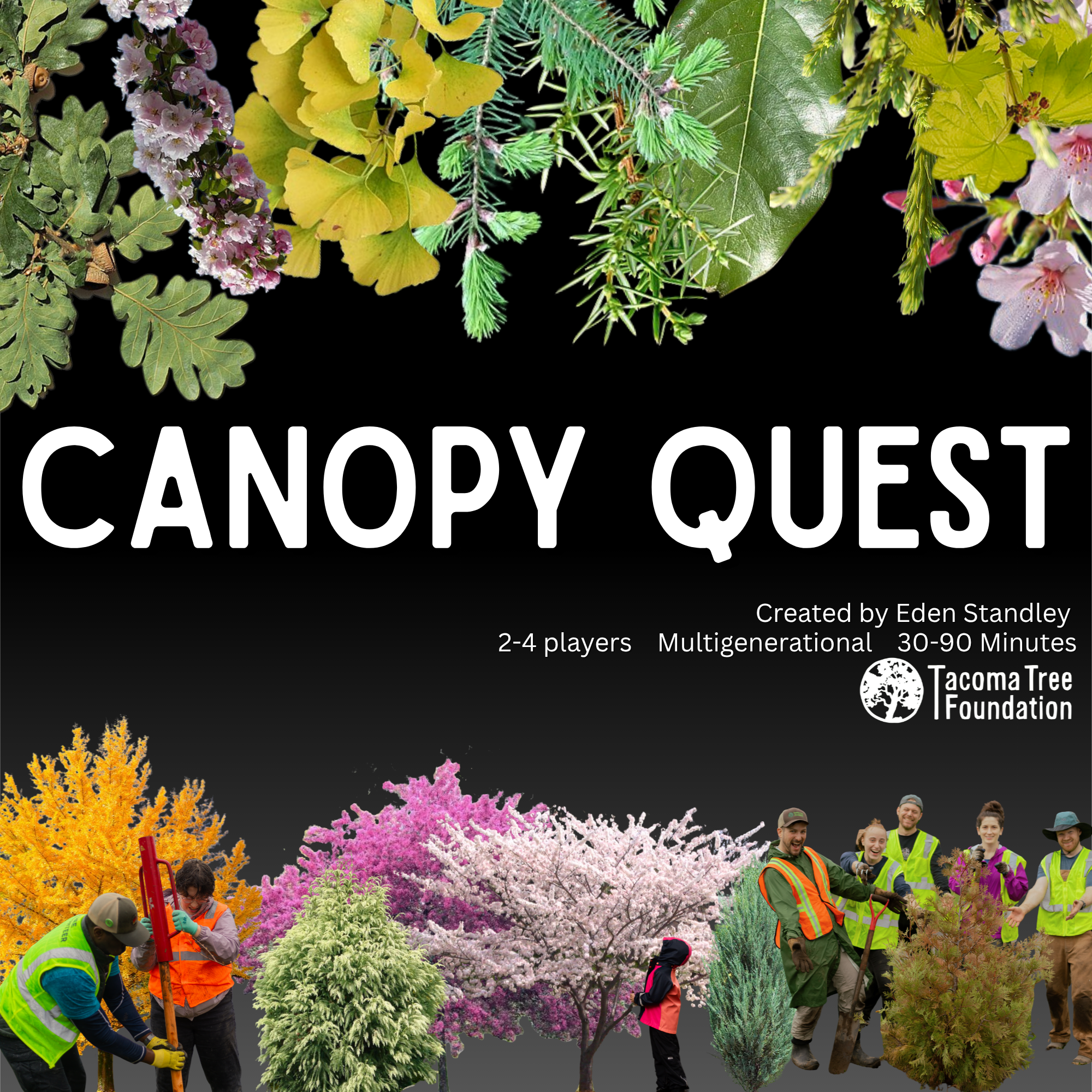
Canopy Quest box design by Eden Standley
INTRODUCTION
Canopy Quest is Tacoma Tree Foundation’s board game, our newest tool for teaching and connecting with the Greater Tacoma community. Through play, imagination, and world-building, we hope to engage player’s senses, emotions, and critical thinking to gain a deeper understanding of the dynamics between urban trees, urban infrastructure, and utilities. The game teaches players how to plant trees in urban landscapes, navigate utilities, and connect with their community.
The idea for Canopy Quest came about one April afternoon in 2024 during an impromptu brainstorming session between myself, our founder, Sarah Low, Executive Director, Lowell Wyse, and Alejandro Fernandez. We had just wrapped up a bilingual tree walk at Alling park in the South End. Alling park used to be an apple orchard that was later donated to Parks Tacoma to be used as public green space and now hosts a number of important and interesting trees. As we considered the complex issues that arise at the intersection of public green space and urban tree planting, we identified an opportunity to develop an activity that would make these easier to grasp for residents, and a table-top board game came up as a possible solution!
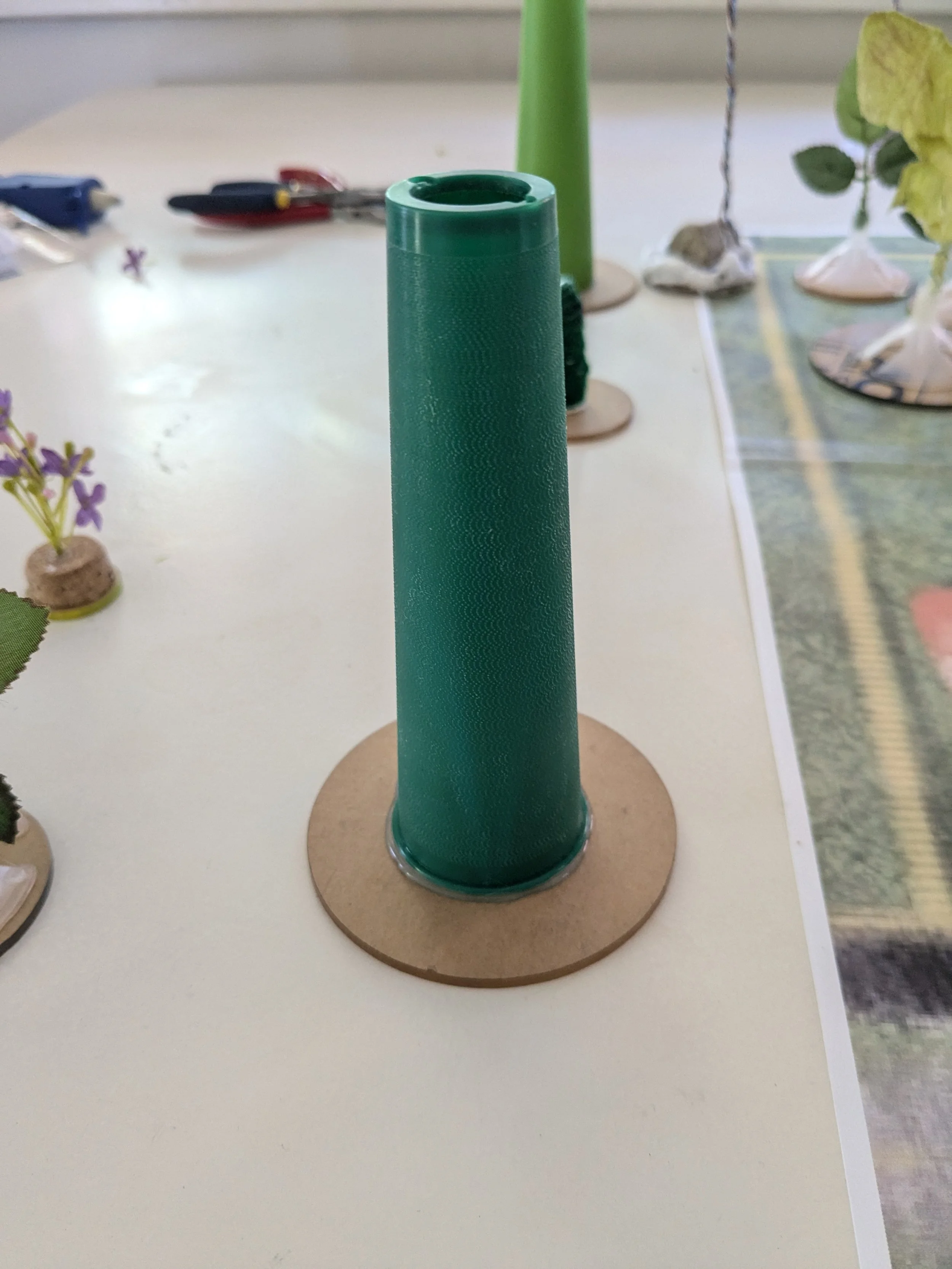
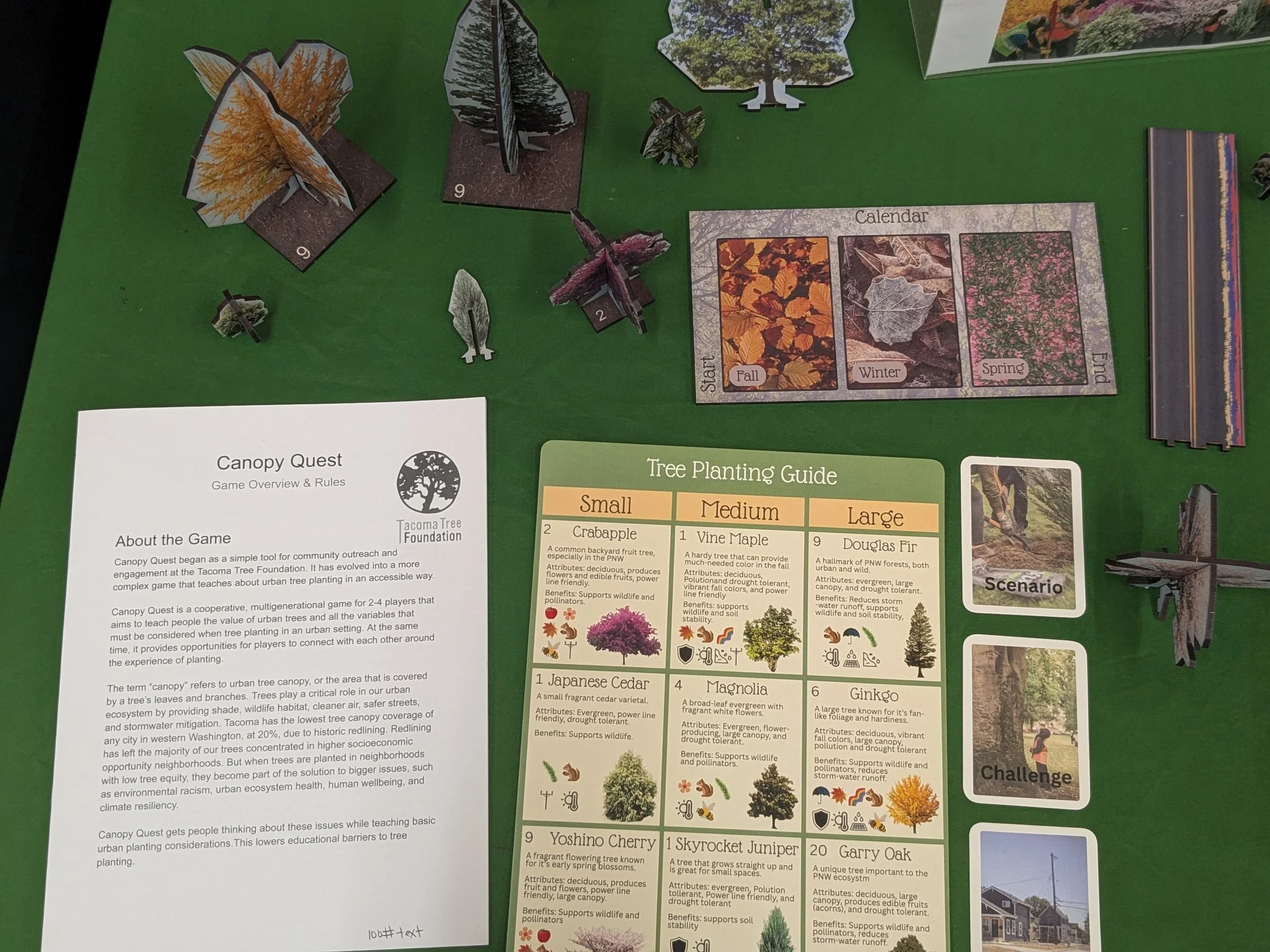
Douglas fir tree piece credit: Eden S.
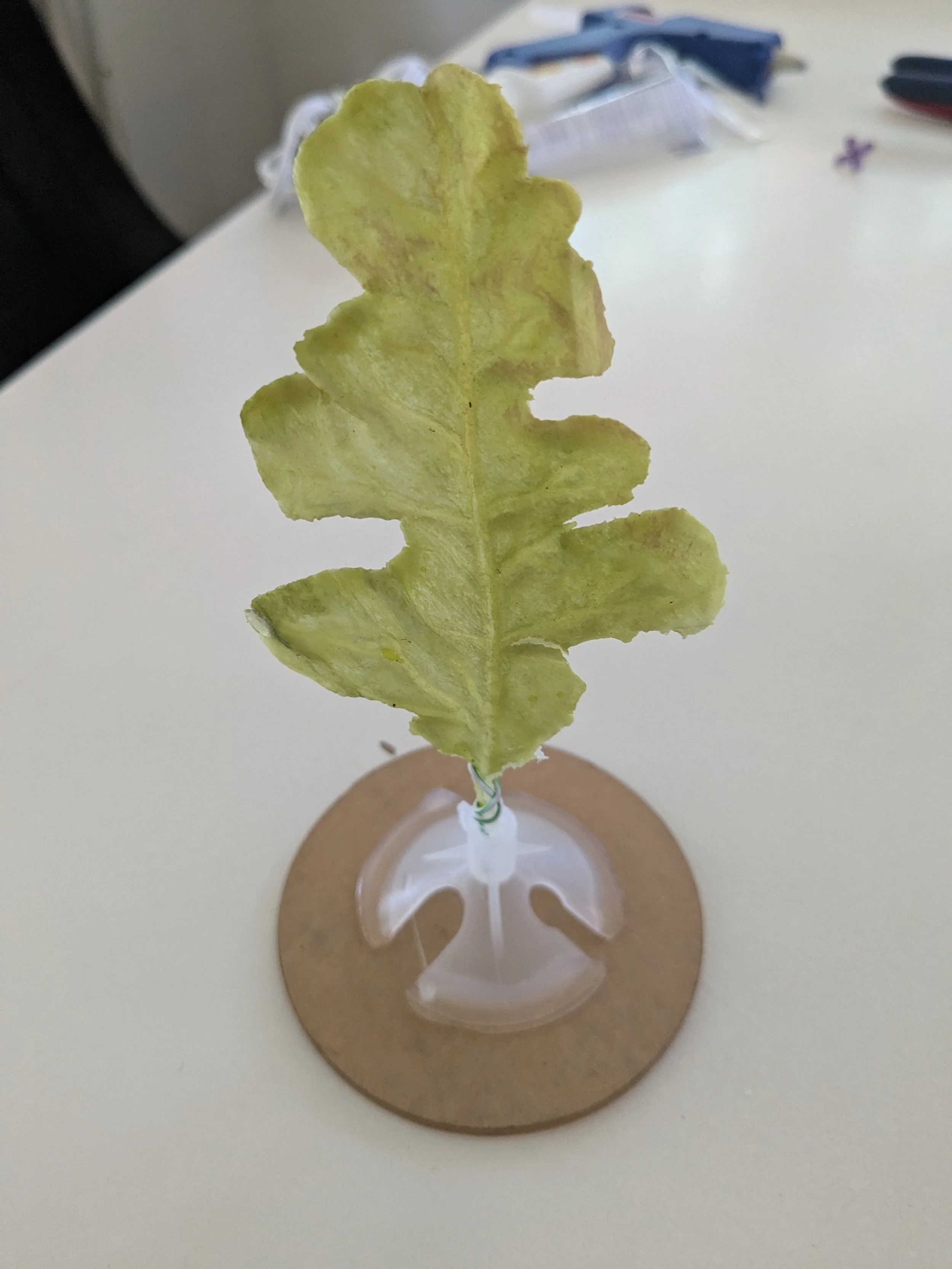
Ginkgo tree piece credit: Eden S.
Around this time I had been learning more about the technical side of urban tree-planting, especially how we plant trees in the right-of-way where we have to follow City guidelines for utilities. Right-of-way spaces are often cramped, but they are critical to the growth of the urban forest: a great deal of plantable space throughout the city is in the right-of-way. They just have to be approached carefully.
Planting trees to grow Tacoma's urban forest requires understanding policies and arboriculture, two areas of expertise that are not common knowledge amongst urban residents. However, learning about policy and arboriculture is not enough, because we also need the
historical context that shaped urban forest policies and that influenced who does and who doesn’t have access to arboricultural resources. A crucial lesson I have drawn from my work at TTF is how environmental racism and classism shape the city's tree canopy distribution and are at the root of the lack of access to public knowledge about tree species and planting practices. It is relevant everywhere I look and influences my experience of Greater Tacoma everywhere I go. I feel passionate about sharing this perspective with others and finding outlets to make change.
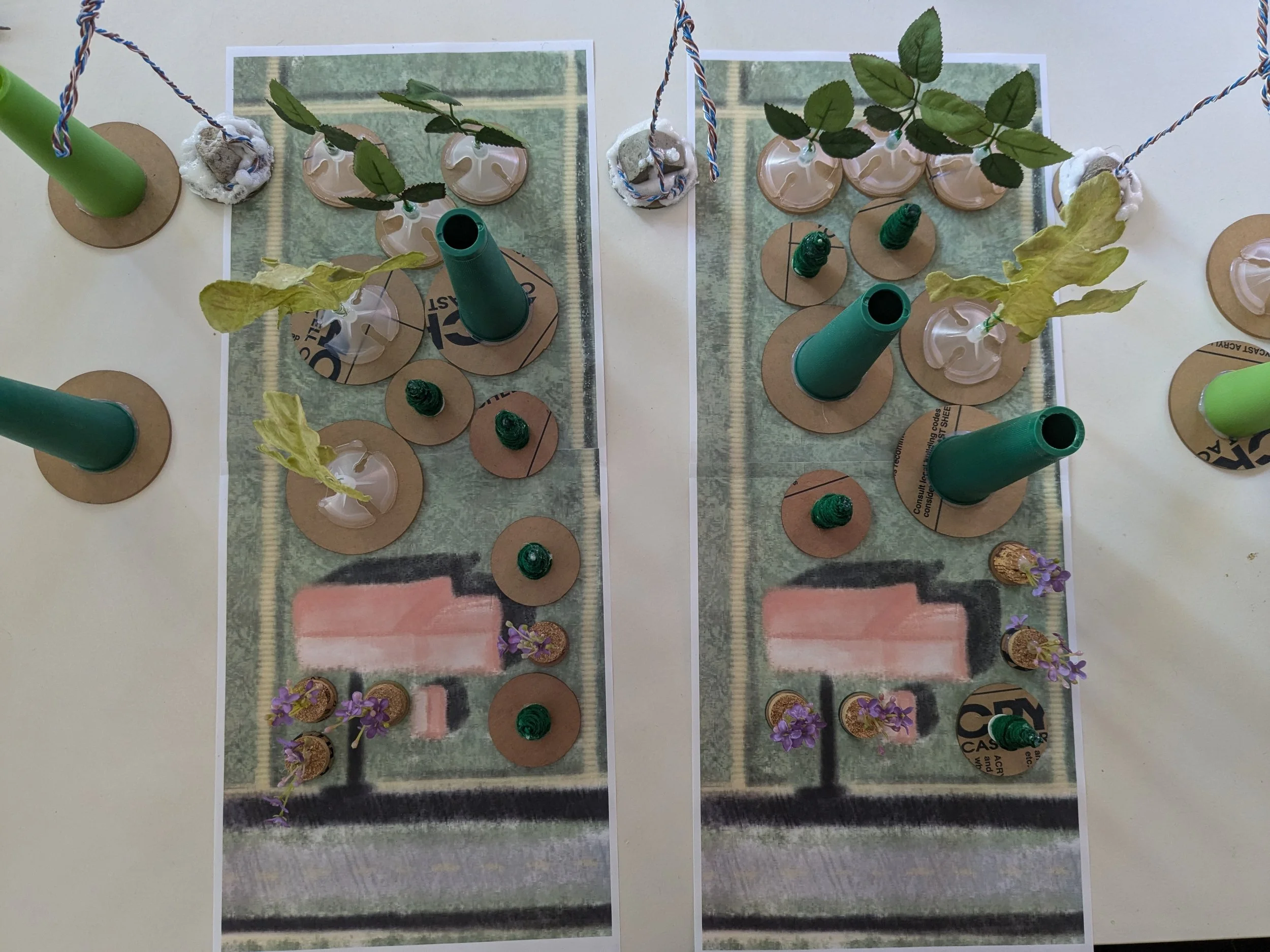
First draft of canopy quest with handmade pieces Credit: Eden S
I approached the design of Canopy Quest with this in mind, and designed the game with the goal of helping others to engage and build their own knowledge. The first iteration of the game was made out of laminated paper and repurposed craft materials found at Tinkertopia. This version could be played collaboratively or competitively, offered six different species to plant with, and had a board with a single house, road, and fenced yard players could plant within. While this version was fun and engaged our community members in a new way, there was still more I wanted the game to accomplish. We took this version to a couple of tabling events but it didn’t hold up for very long. We needed stronger pieces, and to revise the game structure.
Thankfully, we were able to successfully apply for a Small Sustainability Grant at the City of Tacoma. This allowed me to fully develop the game, design and produce laser cut wood pieces with photographic printing, and revise the game structure to be what it is today.
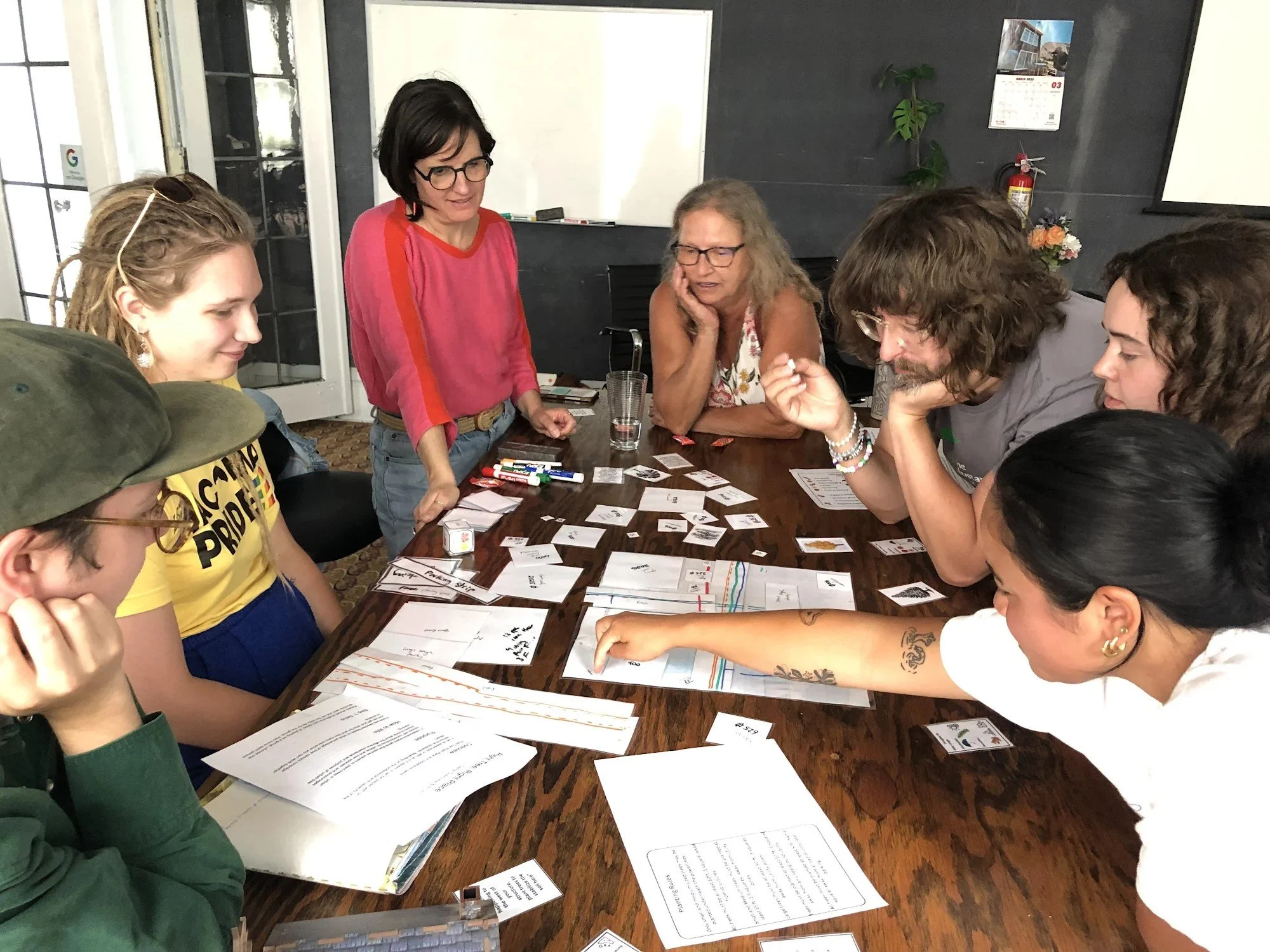
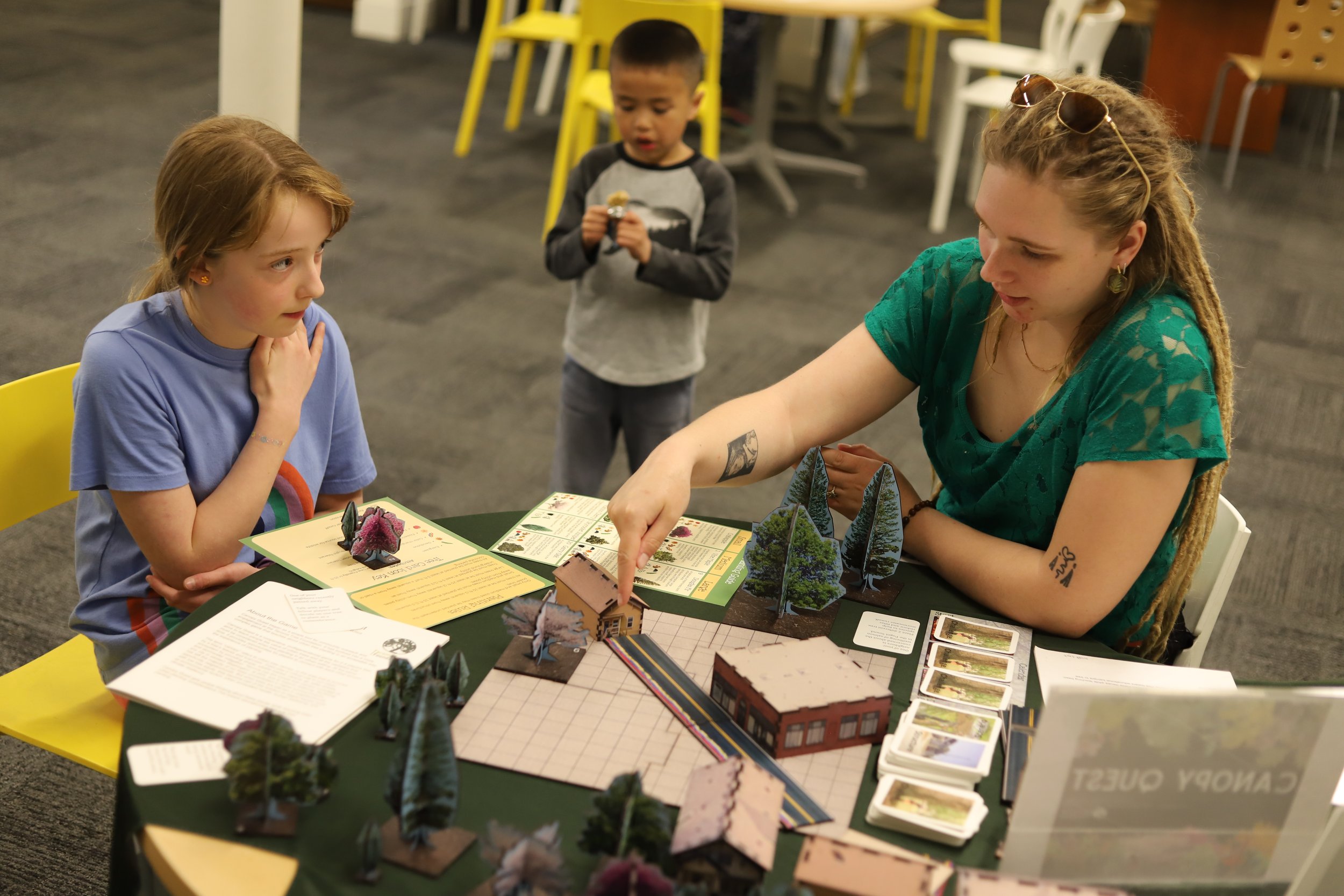
STEAM night with Greentrike Credit: Greentrike
On April 8th, 2026, we brought the newest version of Canopy Quest out into the community to Greentrike’s STEAM Night at the Bryant Community Center. There, we got to play the game with kids aged 5-12 and their families. While Canopy Quest has a lot of moving parts, it is well-structured and clear, and with a little support, the kids played and were as engaged as the adult players. The feedback we received was overwhelmingly positive and we are excited to continue bringing Canopy Quest out into the community!
Thank you to Chris Vega from Blue Cactus Press, Knic Fost, TTF Board members and staff, Michael Muench, volunteers and partners, who played the game with me and helped me revise each iteration. You’re all part of the reason why it’s now a reality!
HOW IS IT PLAYED?
Your neighborhood needs trees! Players must collaborate to achieve the highest percentage of tree canopy coverage for their neighborhood and navigate challenges with utilities, buildings, space, weather, and community goals. In greening your neighborhood, witness the health, environmental, and social benefits of trees while growing closer with your neighbors.
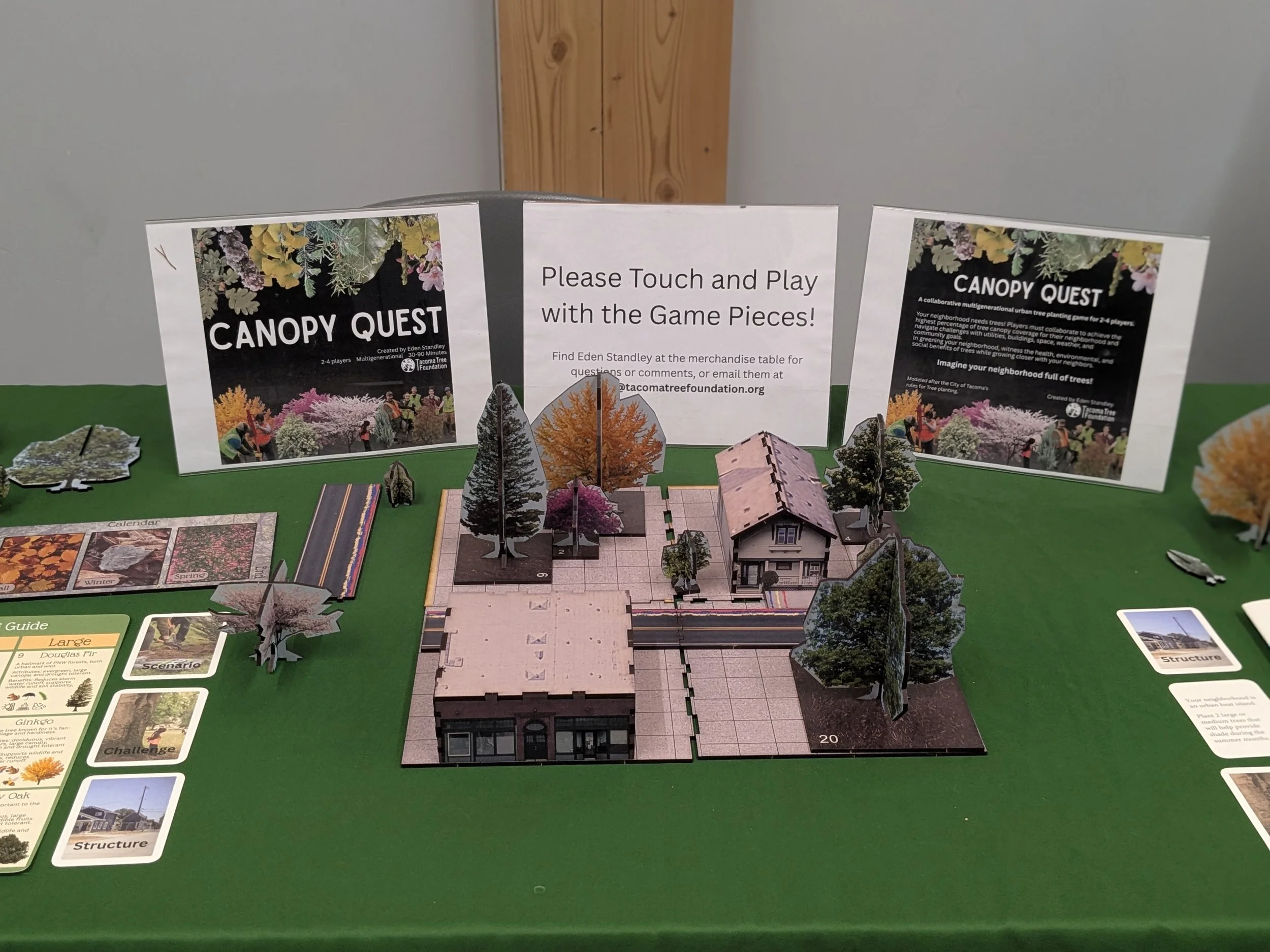
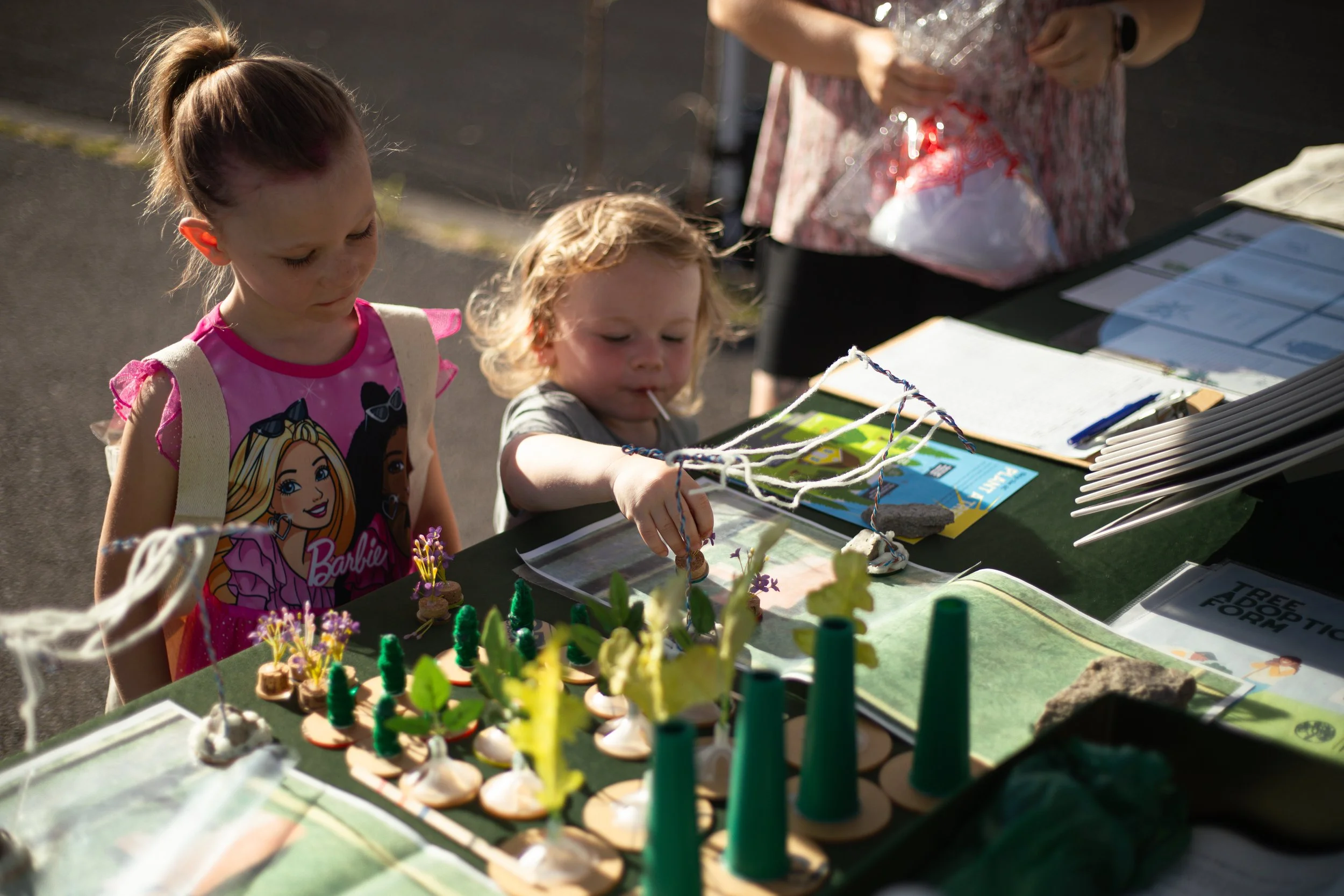
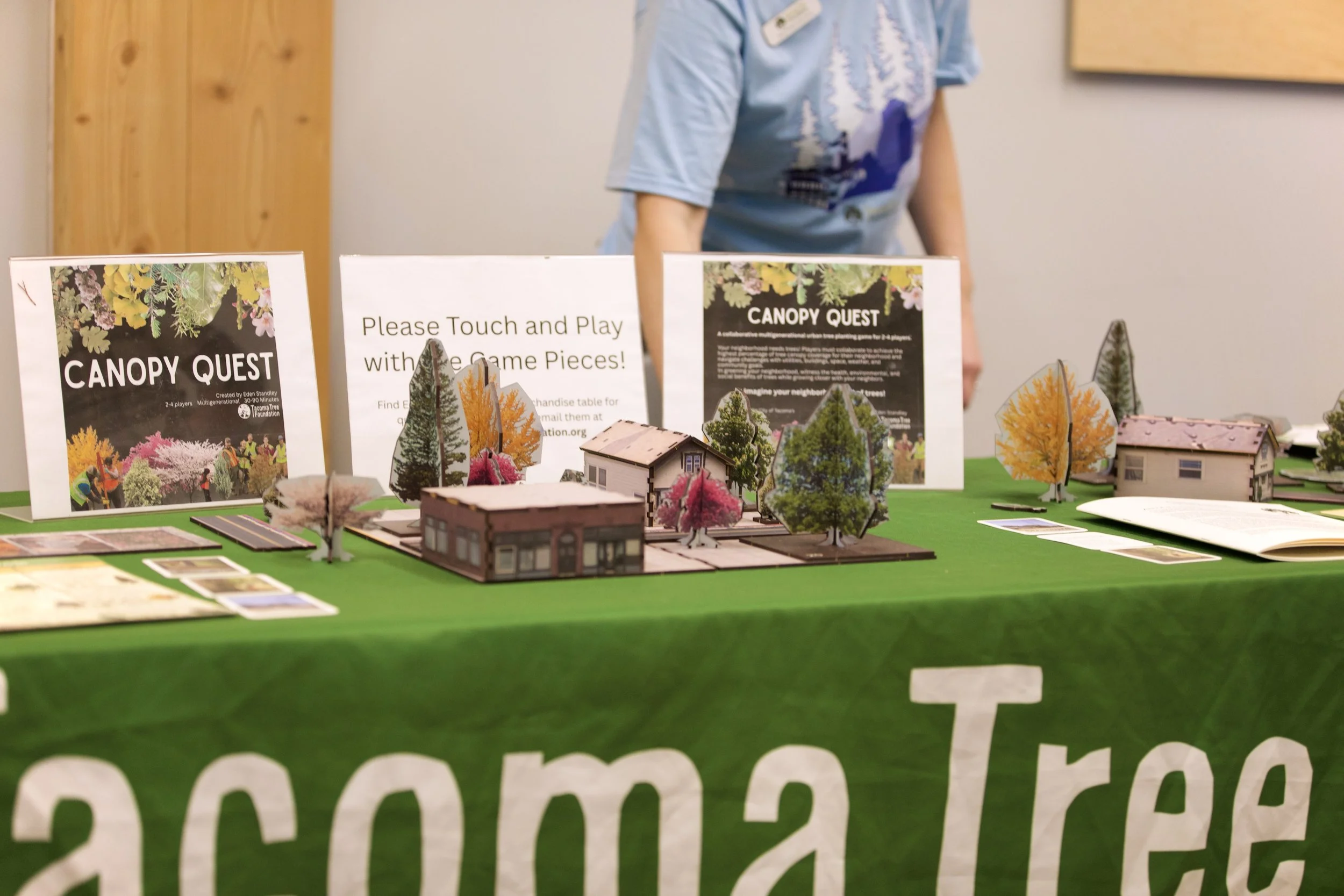
Tabling with Canopy Quest Credit: Eden S
The game provides a to-scale model of what a small neighborhood might look like in real life: there are houses, big and small, grocery stores, apartment buildings, power lines, roads, parking lots, and with your help, trees. Players are encouraged to imagine themselves as neighbors, living in the space represented by the game board, and are each given a goal (called scenario cards) that will either compete with, or support that of the other players. Players have to find ways to collaborate to support each other with limited space and resources, which encourages them to take ownership of their neighborhoods and to recognize their agency in deciding how the space is stewarded.
Paper materials Credit: Eden S.
The goal of the game is to reach 30% canopy coverage for the neighborhood, and complete at least two-thirds of the total scenario cards players receive during the game.
There are three rounds in the game, one for each phase of the planting season: fall, winter, and spring. At the beginning of every round, players get a new scenario card and three trees of their choosing. Before the round ends, players draw a challenge card which presents their neighborhood with a big environmental change or issue, one that usually affects everyone. For example a challenge card might read: “A developer has bought land in your neighborhood: place two small or large single-family homes on the board. Remove trees as necessary to fit the new buildings” or “A disease affecting only conifers is spreading. Some of your neighborhood trees catch it and must be cut down, remove two conifers from your board.”
These challenges reflect the real and varied reasons that trees might be cut down in our urban environment and require players to collaborate to find ways of addressing the setbacks posed by challenges and still complete their scenarios for the round, and ultimately, their canopy coverage goal by the end of the game.
Reaching the canopy coverage goal of 30% might sound simple, but it is often the most challenging part of the game as being able to reach this goal is dependent on how efficiently you use your board space, place your buildings and utilities, and navigate challenges. The reality is that so many of the things that make a city work for us, don’t work well for trees. Buildings reduce the amount of planting space, trees have to be a certain distance from different utilities, and not every tree can fit both the available space and the emotional and cultural needs of the neighbors.
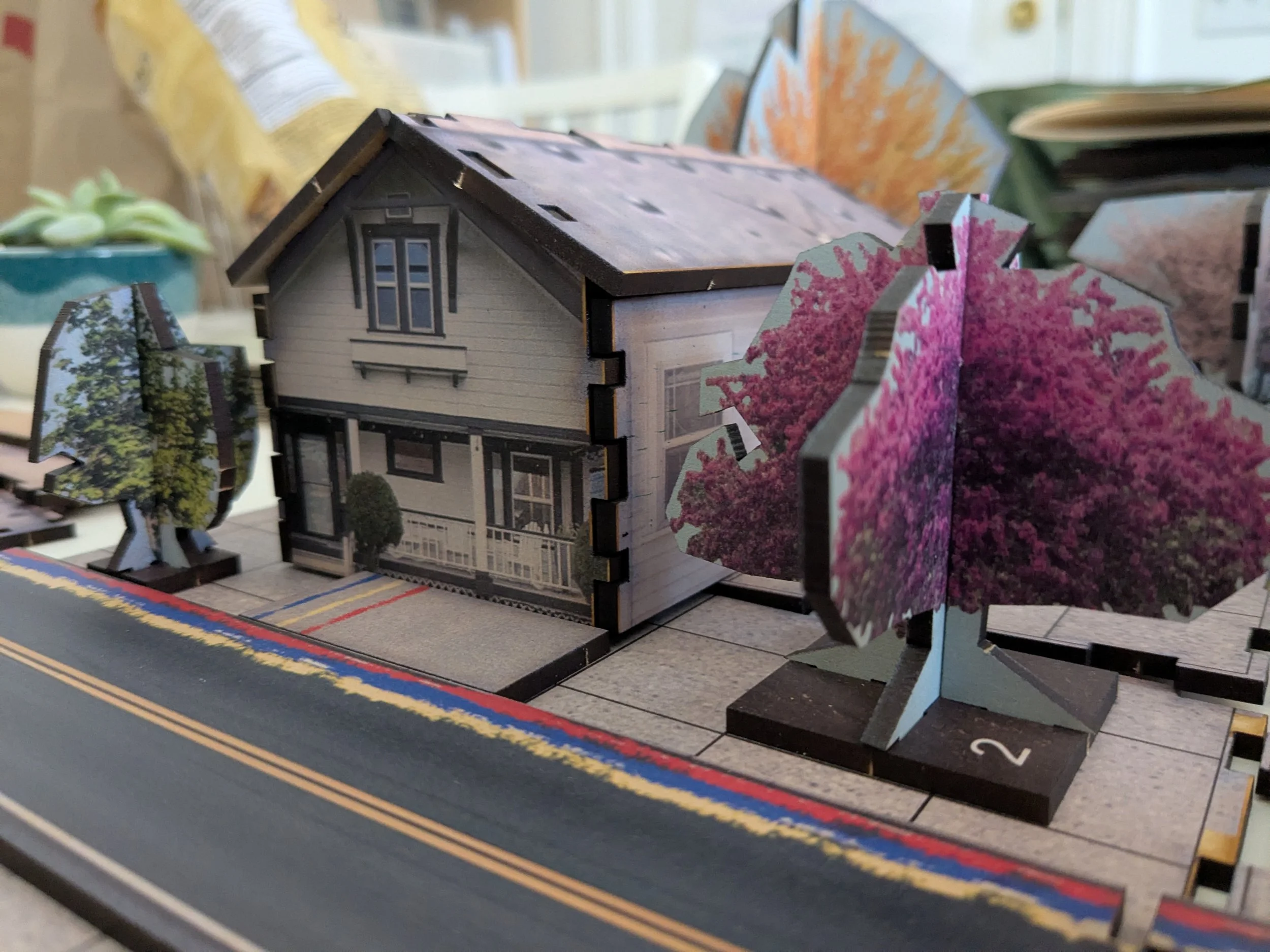
Canopy Quest close up Credit: Eden S.
In the game, there are planting rules and a tree identification guide that show the different characteristics and benefits of each tree to make planting decisions accessible for players. The nine different species of the trees in the game are all ones that TTF regularly plant and give away and can be readily found in Tacoma’s urban forest.
As the game ends and players tally their group score, whether they win or lose, they are encouraged to reflect on their affective– or emotional and sensory–experiences of playing the game. At this point, the game board looks very different, as the trees planted have transformed the desolate, gray square of the neighborhood into a representation of a place someone might actually want to live. Through questions such as “How do I feel when imagining myself in this space I cultivated vs. the board game biosphere before we planted trees there?” or “How do I feel now about the players I cooperated with to play the game, vs. how I felt before playing?” Players strengthen their learning by reflecting, and strengthen their connection with the other players by reflecting together.
With all of TTF’s in person tree planting events there seems to be a collective feeling of energetic warmth that comes from taking positive action and reshaping our shared landscape together. Our staff will often hear from volunteers that they feel they have made a new friend, or several, or feel more connected to Tacoma as a place. Our hope is that players will be able to take away a bit of this feeling after playing. Even though we aren't planting real trees with the game, we are growing our thoughts and understanding of the urban forest, which is just as important to TTF’s mission as putting trees in the ground.
WHERE CAN I PLAY CANOPY QUEST?
The official launch of the board game will be happening on June 6th, 2026 from 3-5pm on the second floor of the Tacoma Library’s Main Branch building. This is a free event open to everyone!
Moving forward, we plan to host regular game nights in the community space on the second floor of the main library where community members can come to play, chat, and be in community with others hoping to learn and play. Stay tuned for more information about these regular events!