
One of the most well-known and internationally planted trees is the London plane.
This tree is thought to be a hybrid between an Asian plane tree and an American sycamore, and no one really knows when or exactly where the London Plane tree hybridized, though most suspect it happened somewhere in Western Europe. The two parent species are native to Asia and North America, respectively, and each had either an ocean or a continent to cross in order to meet and produce the London plane tree.
I met with Lowell Wyse, Executive director of the Tacoma Tree Foundation at our new office in the Community Hub at Tacoma Public Library’s Main Branch to ask him about his connection to the London Plane tree. Shortly after moving to Tacoma in 2014, Lowell went on a tree walk that featured the London plane trees across from the Tacoma Convention center. “That was a moment where I felt I really loved this tree,” Lowell tells me.
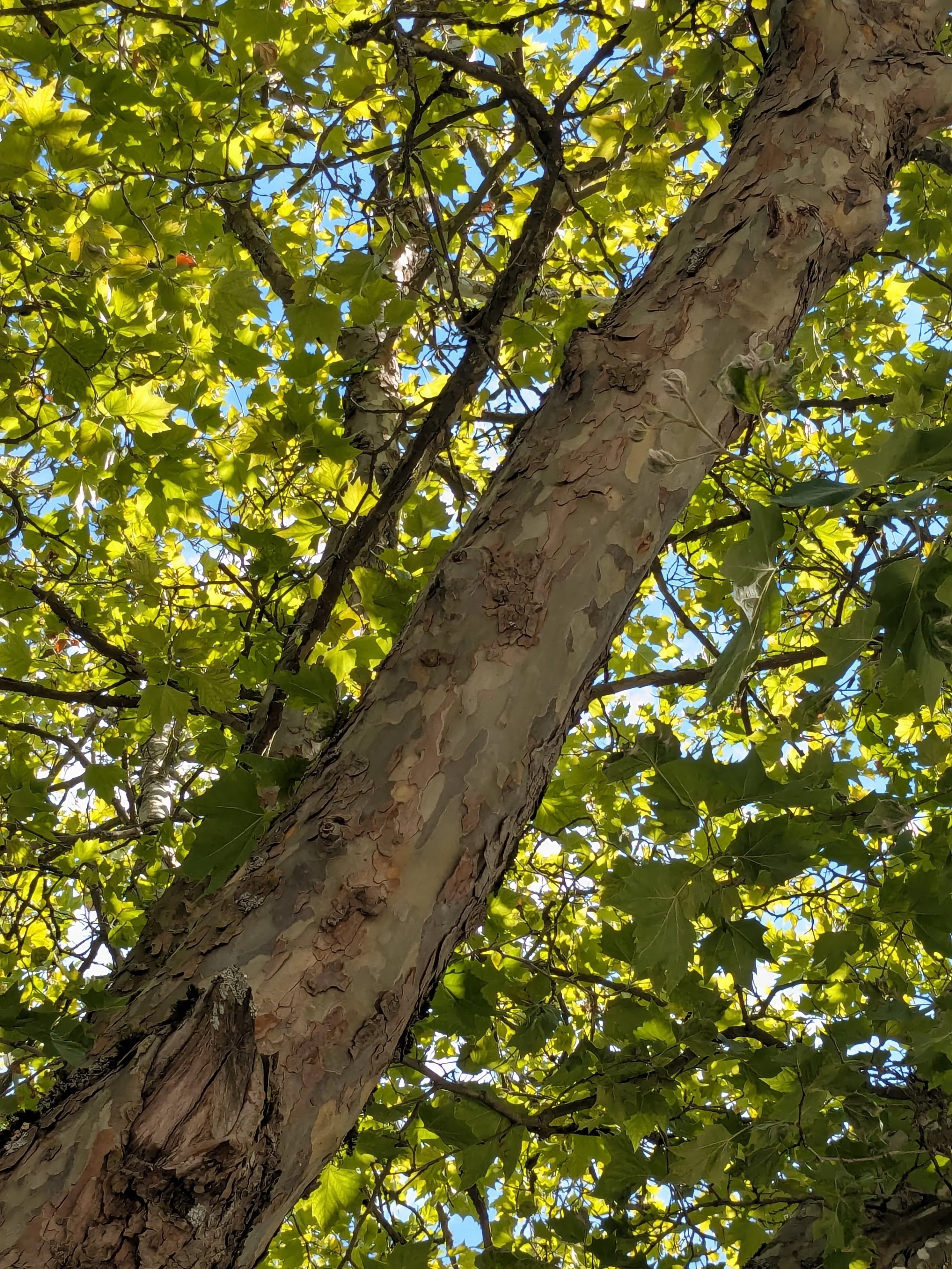
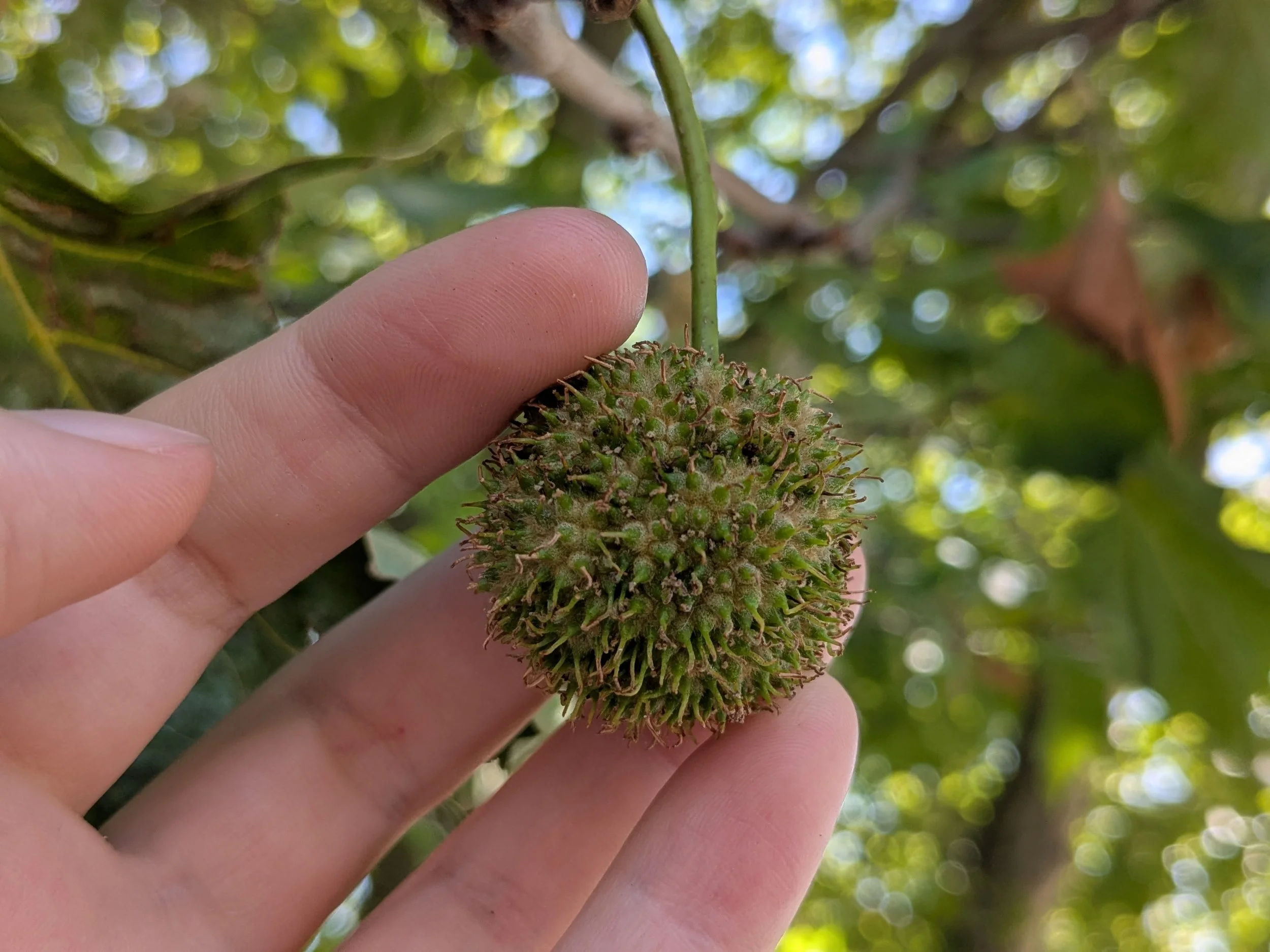
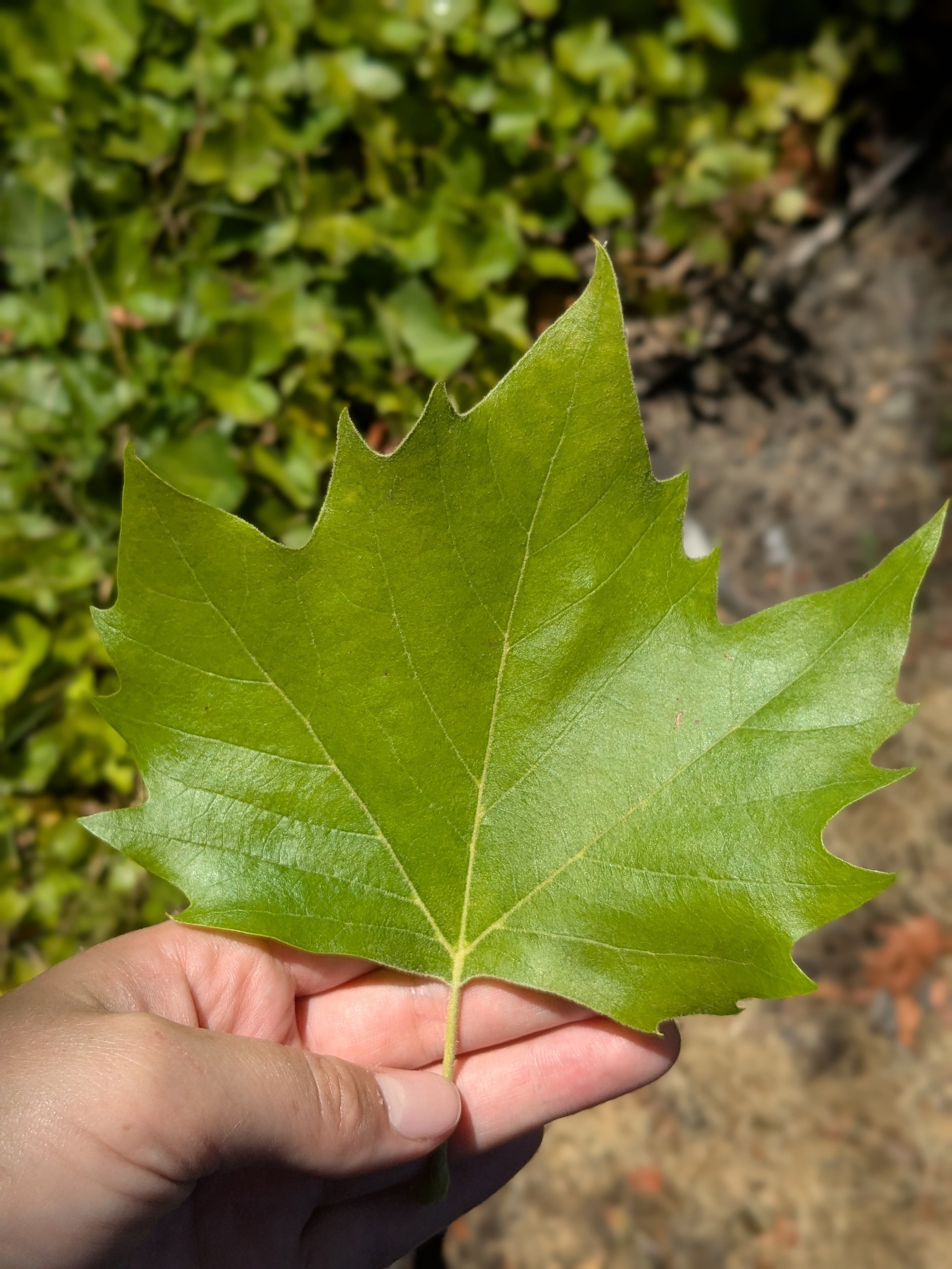
The London plane is characterized by its layered, multicolored bark that peels away and resembles a camouflage pattern. The colors of the bark range from gray to tan, to yellow to green. The leaves and seeds are also easily identifiable- with large light green leaves, a similar color to the new bark, that resemble a maple leaf though often have more lobes. In the fall, the seeds and fruit form, drying out over the winter and turning into brown spikey balls that disperse seeds. Without leaves on the tree, these seed clusters are a good way to identify the London plane.
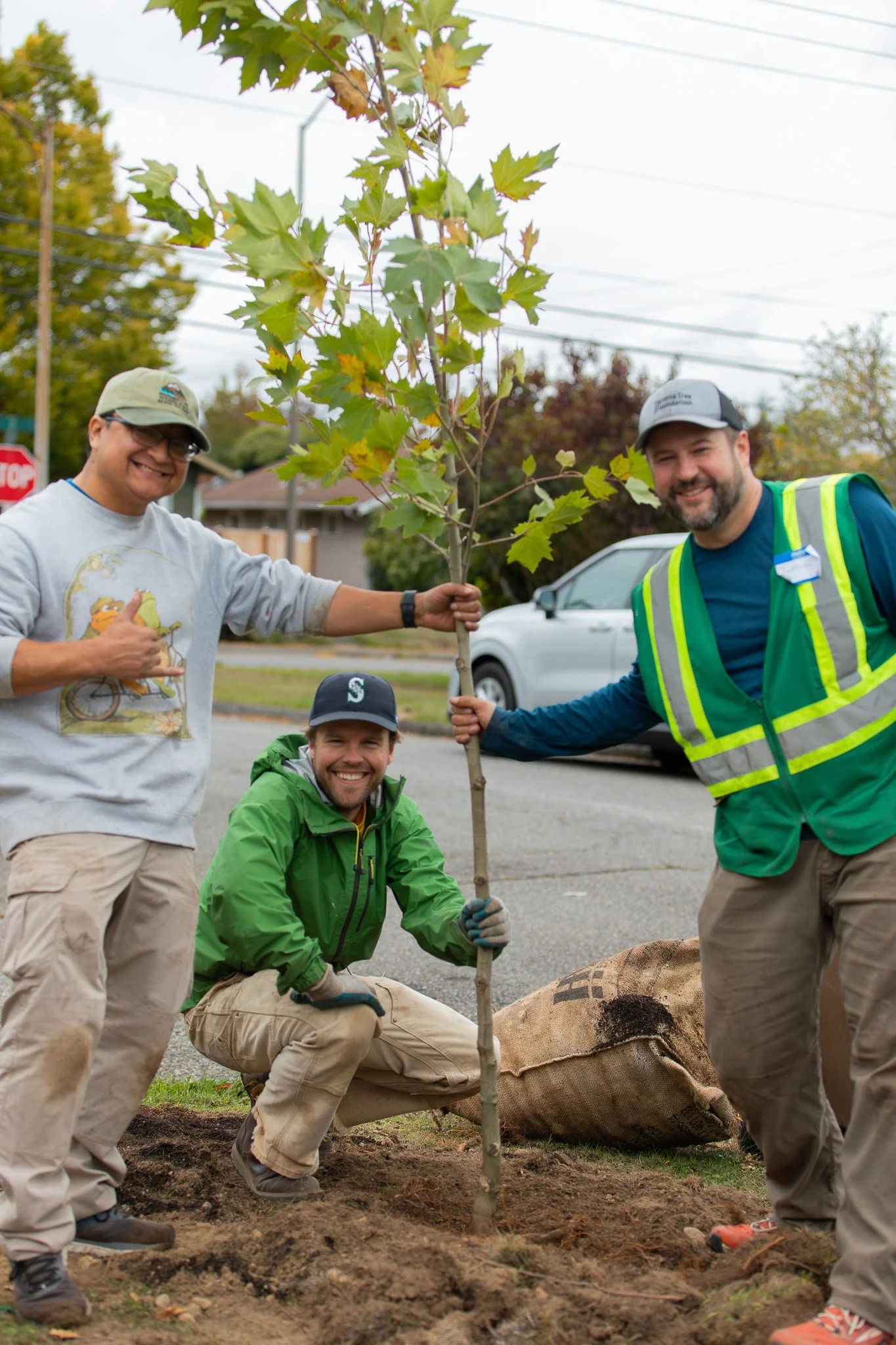
Lowell planting a London plane tree in South End Photo credit: Julia Wolf
Lowell grew up on his parent’s farm in Michigan, where he helped his dad farm corn and soybeans. Beyond their fields were the woods where Lowell and his siblings and friends would play. “We'd walk through the cornfield to get to the woods,” Lowell recalls. I imagine tall, dense, trees outlining a sea of short corn-green.
He says he didn’t really notice the forest for the trees at this time in his life, but as he got older and eventually moved away for school, his relationship with trees started to change: “I moved to the Prairie in Kansas for a while where trees are not part of the natural ecosystem, but we still have them in the towns. [Later] I moved to Chicago and realized how necessary trees were for a city environment to make it comfortable and livable. That's when I started appreciating them more, and not just taking them for granted as a part of the landscape.”
This is around the time that Lowell started to develop the concept of ecospatiality, which he created as part of his dissertation in environmental literature. Lowell defines ecospatiality as “a way of seeing place as being part of nature and also seeing it spatially so that it's about where we are in space. For me, a sense of place means I'm a part of nature, and I'm also on the map at the same time.” In talking to Lowell about this, I get the sense that his understanding of where he is on a map is not a two-dimensional experience, but a multidimensional one that accounts for how place changes over time. “I try to go about my life in a way that connects to and shows an understanding of history, and for me, that's also the people and their stories,” he explains.
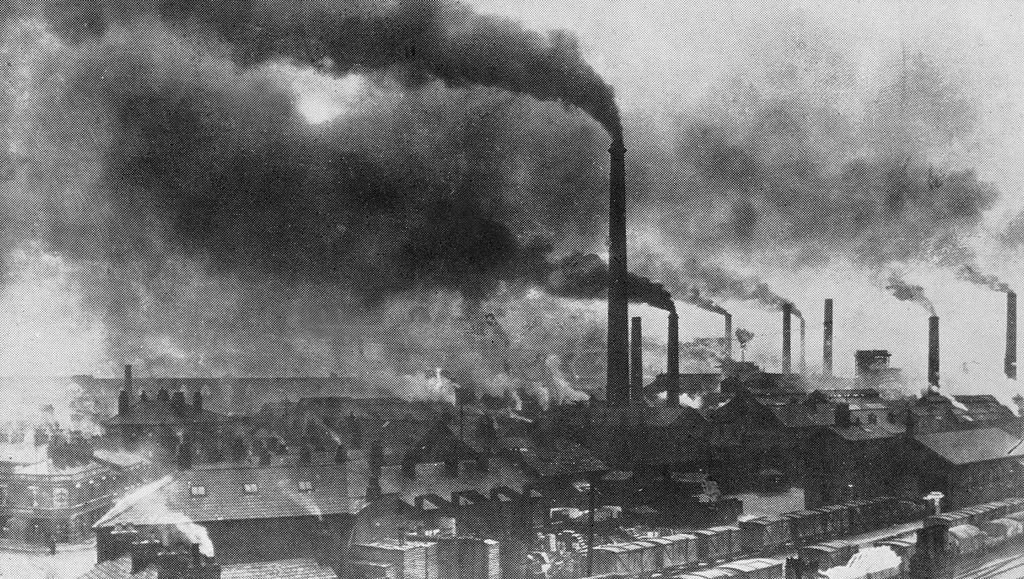
The idea of ecospatiality is more than an academic concept for Lowell: it is a tool he uses to ground and orient himself wherever he is. On a recent trip to London, England, Lowell connected with some of the London planes there: “They're the oldest ones I've ever seen…I think they started planting them there in the 1700s.” These trees were likely planted during the first Industrial Revolution when London was overwhelmed with pollution, making the city a space that few trees or plants could survive, except for the London plane. Due to its tendency to shed its bark, ability to filter and trap air pollution, and generally withstand the intense living conditions of the city, the tree was recognized as an important public asset, capable of improving living conditions for London’s residents. By the 1920’s around 60% of trees in London were London planes. This number is lower now, but London continues to host the oldest ones in the world, some estimated to be as old as 400 years–more than twice the predicted longevity of other species.
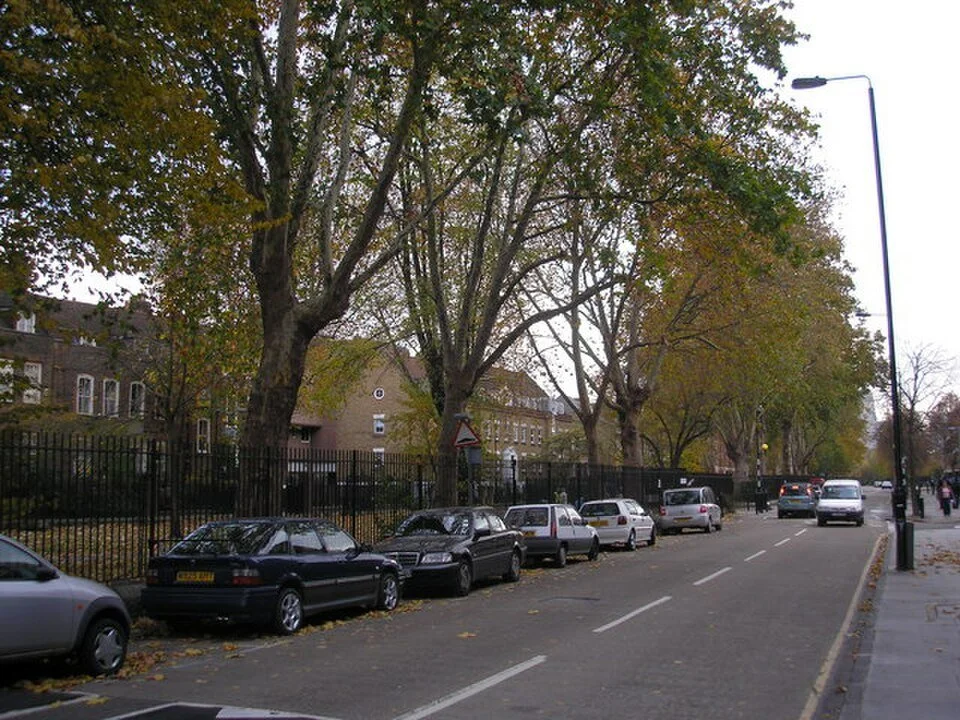
London planes were quickly adopted by other European cities such as Paris and Rome, and planted enthusiastically, eventually arriving in other major cities around the world. Lowell has found them across the world in places like Brooklyn, Melbourne, and Seattle’s Pioneer Square. It is no wonder Lowell connects with this tree, as they are both world travelers. I ask Lowell what makes seeing the London plane around the world meaningful to him. It's the moments of recognizing the tree in various places. He explains that “it’s an entry point to feel like you have a sense of place when you travel, because sometimes traveling is disorienting. But if you have a moment of identification and recognition, then you have a connecting point.”
For Lowell, walking is a way to access stories and connection points alongside place: “there's something about walking that, I think, is very human and feeds those connections, or at least creates the conditions where we could have those connections,” he tells me. You can build these connections anywhere, whether at home, traveling, or somewhere in between to get grounded in a sense of place.
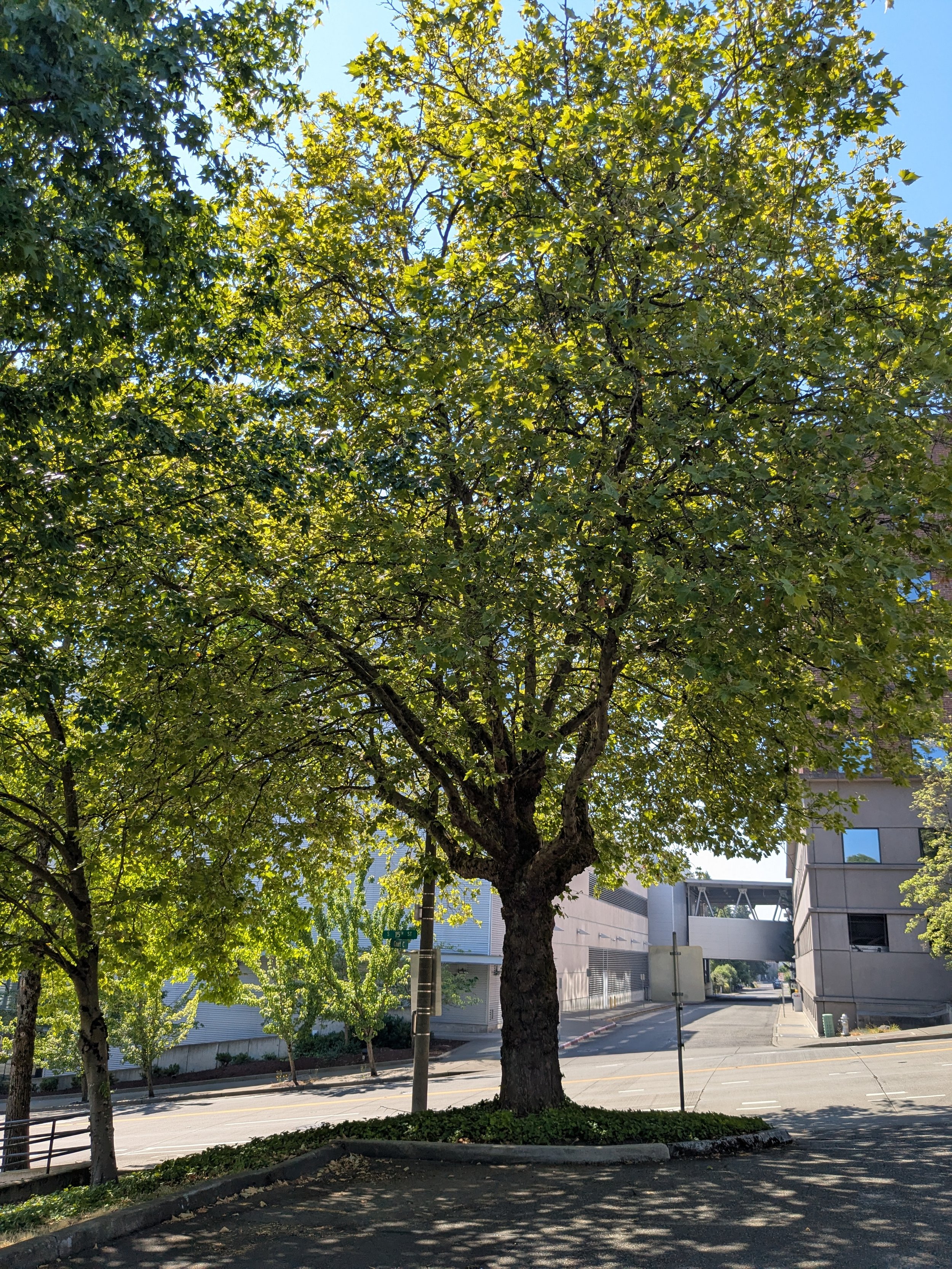
London Plane Across from the Tacoma Convention Center; Source: Eden Standley
To begin fostering these connections Lowell says that step number one is to “Turn off your phone. And just go for a walk. In your local area.” When you do this try to notice as much as you can. Maybe notice the trees, the sidewalk, the buildings, your neighbors, and talk to them if you can. When you’re done with walking, “then you can turn your phone back on to read about your local place, or find a book about your local place or your neighborhood. Anything that you learn is beneficial–you're going to learn good stories and you're going to learn bad stories and all that is part of the same history. What you're doing is forming an understanding and creating your awareness around it. You won't come up with a single story of the place, but you'll gain more perspectives. And when you gain more perspectives, then you get this like mosaic effect, or maybe like a layering of maps is how I like to think about it.”
Having grown up in Tacoma and having walked in many of our neighborhoods, I know not all feel like places we would want to take a walk in. When going for a walk it is important to stay safe, and while Lowell wouldn’t recommend someone walk in a space they don't feel safe, he points out the benefit of walking in an uncomfortable space: “It might not be fun. It might not be beautiful, but you might learn something. You might learn something about yourself. The more people are walking and taking time investing in their neighborhoods, the more connected they might be and the more chances they’ll have to connect with other people which can lead to a better sense of safety, of ownership.” Walking is a small act, but has the potential to radically change our relationship to place and the people around us by helping us see the role we play in the stories happening around us.
Lowell tells me that “anytime, we can connect ourselves to a story, we are sharing a sense of place with other people.” And for him, trees are a kind of story, with a history, which includes the story of their species. The London plane’s stories are connected to the big and the small aspects of place: the London plane that roots at the convention center in Tacoma relates to the people that walk by it, the birds and bugs that make homes in its branches; and, it is also an anchor point of familiarity here as it is in the other cities around the world for travelers who will feel a little more at home when they walk under its shade.