Frequently Asked Questions
If you still have more questions after reading this page, please feel free to surf our site or message us using our Contact Us page.
About Our Work
-
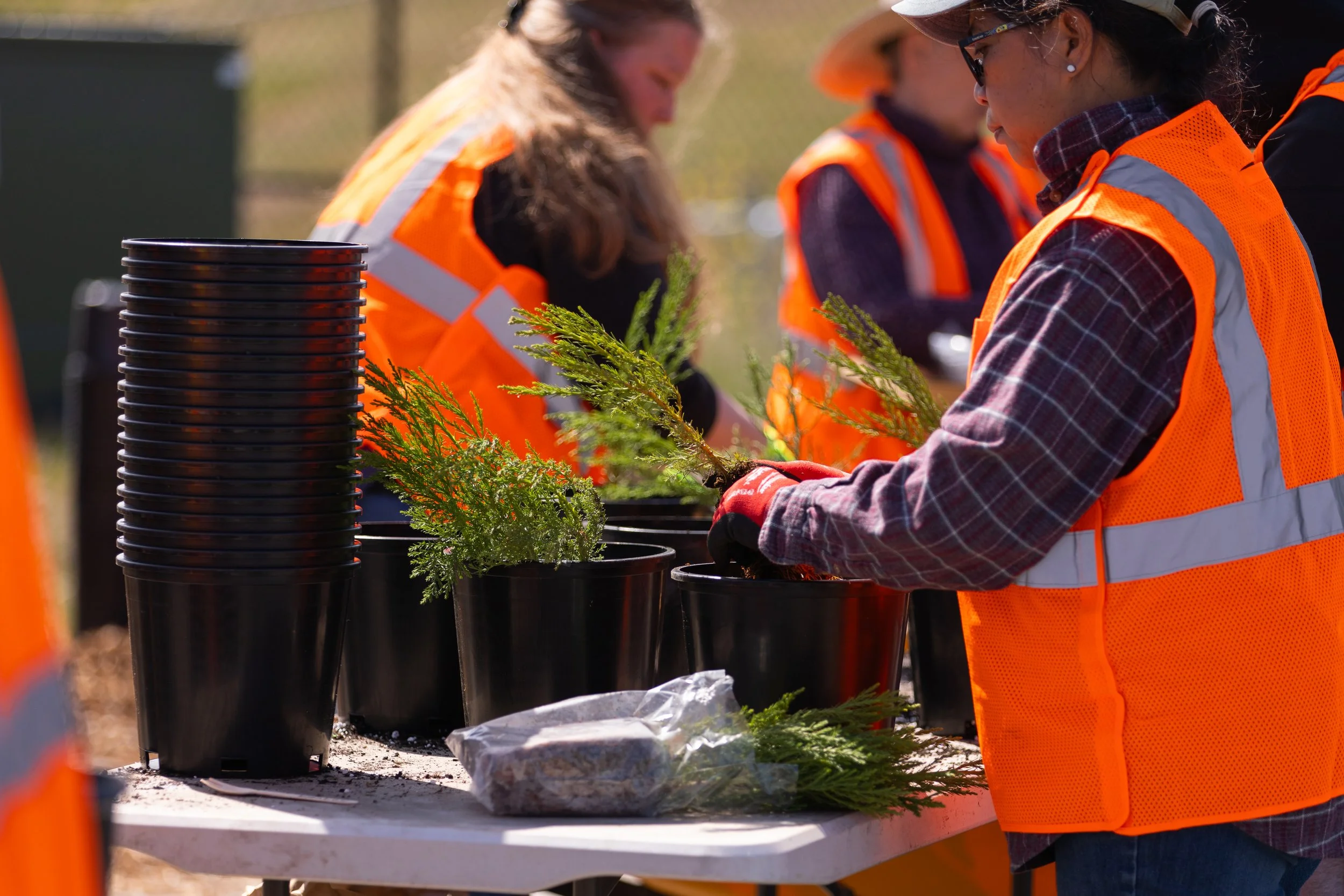
Tacoma Tree Foundation is a 501c3 community organization focused on growing community stewardship of the urban forest across Greater Tacoma through planting, education, and advocacy. To accomplish that mission, we provide educational programs about trees, tree selection and planting, tree care, and collective action. We also share and distribute trees through a variety of programs and help organize community members for neighborhood tree planting activities. Through these tree programs and activities, we hope to bring people together to create a greener, healthier, and more connected Tacoma area.
-
We love volunteers. There are many ways that you can get involved. Our volunteer page outlines all of the different ways you can help to support our work. There are plenty of opportunities, from planting trees with us to engaging with community members. If you are ready to volunteer, fill out this interest form to let us know what you are interested in doing and when you are available to help.
-
If you love trees, you probably want others to love them, too. We have great programs for everyone! If they want a tree, want to plant a tree for themselves or others, walk with trees, or learn about science, environmental justice or history related to trees, all you have to do is lead them to our Programs page where they can discover how to get involved.
-
Unfortunately due to the limited size of the plant holding facility we operate out of, we do not have the capacity to accept trees other than those we stock for our scheduled planting events and tree shares. We encourage you to connect with your neighbors to find new homes for the tree babies. We know that there is a great want and need in Tacoma for trees and there are many people who would be happy to have them in their yard or right-of-way. We encourage you to reach out to community members and offer free trees to those who are ready to care for them and who have space for them.
If you would like to dig them out and pot them up in containers, you can follow the instructions here. Thank you for thinking of us and wanting to share the love of trees with those around you.
If you are a regulated plant nursery, please contact us at info@tacomatreefoundation.org with the species, size, and number of trees, your timeline, transportation needs, and if you plan to donate.
Tree Care
-
Recently planted trees need some help establishing. In the days following planting, the tree may need some extra water. For the first three to five years, you should give the tree 15 gallons of water per week during the summer.
-
Just like us, trees experience stress. All sorts of things can cause trees to experience stress. Some common causes of stress are drought and inadequate water, too much water, too little space for roots to grow, bark damage from a lawn mower or weed-wacker, pests and diseases, too much sun, and compaction. Common signs of tree stress are: significant loss of leaves on a portion of the tree (this is called dieback), discoloration of the leaves, visible damage on the bark, woodpecker activity, and watersprouts (a bunch of small branches coming from one point). If you suspect that your tree is unhealthy, you can contact WSU Extension to find out whether it is diseased. If your tree is potentially hazardous, you will need to contact an ISA-certified arborist. You can find a list of local ISA-certified arborists here.
-
Although we cannot recommend to you a particular arborist, we recommend finding one with an ISA certification. Below are two links to help you find an arborist in your area.
Planting
-
We are often asked “what tree should I plant in my yard?”, but the answer depends on several factors, including the specific site conditions, such as the amount of space, sun, and water available. People also have different preferences and knowing what your own preferences are helps narrow down the possibilities. Some questions to ask yourself are: what size tree am I comfortable with? Would I like a tree that shades my house? Would I like a tree that is evergreeen? What benefits am I hoping to get from the tree (e.g. attract songbirds, showy flowers, reduce flooding)?
Once you know what the site conditions are, how large a tree you want, and what benefits you would like, then you are ready to dig deeper. Tacoma Tree Foundation offers a program called “Choosing Wisely” to help you think through the decision-making process. In addition, you can take a look at our Tree Care page for more information.
Another consideration for tree selection is local availability. Your ideal tree may not be available at the time that you are ready to plant; however, if you know the characteristics that you are looking for it is easier to choose a different tree.
-
When planting trees in urban areas, it is important to look around. Knowing where possible infrastructure and utility conflicts could happen will help prevent any problems in the future. You can see a detailed list of recommended distances here.
-
If you have heard people talking about a right-of-way when talking about trees, you might have wondered what exactly that means, and you would not be alone. A Right-of-Way is generally an easement, which, in Tacoma, often means that it is land owned by the City of Tacoma or another public agency but cared for by the adjacent landowner. In most places in Tacoma, the Right-of-Way might include a sidewalk, a planting strip, a parking strip, a curb, and it may even go into your yard 5 to 10 feet, sometimes more. The Right-of Way often includes above ground and underground utilities, such as powerlines, communication lines, gas lines, water lines, and sewer lines. You can find out approximately where the Right-of-Way line is near your home by checking out the DART map (keep in mind that this is not equivalent to an official land survey).
Since the Right-of-Way is an easement, the city and utilities have guidelines for how and what trees can be planted there. Once you know where you would like to plant a tree, it is important to Call Before You Digto have the utilities marked. This is a free service and a required step. You can learn more about the requirements and guidelines for planting street trees in the Right-of-Wayhere.
-
Most of the trees we plant and give away are native species. However, there are a few reasons why we provide non-native plants as well.
Many of our native trees are already struggling in the increasingly hot and dry seasons. In fact, some of them are dying. When we plant species that did not locally evolve, we are planting only species that will do well in drought and heat, and that have proven to do well in our region.
Our goal as a foundation is to plant for the future, being mindful of what we’re planting and where it’s going is how we strive for an ecologically resilient urban forest. Biodiverse environments are less susceptible to disturbances including pests, pathogens, drought, urban infrastructure, poor water quality, and climate change. When only a few types of trees are widely planted, they can easily share pathogens and decline in health more rapidly than in areas with higher biodiversity.
We respect everyone’s choice to plant and care for the plants that work best for them on their property. We follow City of Tacoma’s tree guidelines which you can find on our tree care page.We never plant invasive or prohibited species.
It is important to remember that just because a species isn’t native to an area doesn’t mean that it is invasive. Check out our YouTube video Native, Adaptive, and Invasive Plants: a Conversation recording where we discuss the language around plants and the effects these terms have.
Other
-
Thank you for noticing and caring for the trees around you. If you live in Tacoma, you must have a permit to cut down a tree in the right-of-way. If you see a street tree is being taken down, you may ask the person to show you a permit. To report a tree being cut down in the right-of-way, you can call 311 and use other Tacoma First 311 resources. Report your tree concerns on the city’s website.
For trees on private property, a permit is not required. In which case we recommend respectfully starting conversations in your community about the trees you care about. If you want to learn more about how to do this, you can join our Tree Stewards training program. We offer two every year, one in the fall and one in the spring.
-
Per the landscaping code, the City should not be pursuing removal and should be required to find ways to work around the trees. If the owner is pursuing removal, they will need to request a permit, which the City is supposed to deny if there is not a tree health reason for removal.
If there is a large tree you would like to protect, we recommend looking into the City’s Heritage Tree program which recognizes trees with historical, cultural, or environmental value in Tacoma.
-
If you are a regulated plant nursery, please contact us at info@tacomatreefoundation.org with the species, size, and number of trees, your timeline, transportation needs, and if you plan to donate.