
Understanding Air Pollution and Our Urban Forest
One of the top benefits trees provide is the production of oxygen and improved air quality through filtration. This service is becoming more and more important as we continue to burn fossil fuels and climate change increases the frequency of wildfires and heat waves. However, trees can only take in so much air pollution at a time and will need our help in order to stay resilient and healthy to support future air quality.
What is air pollution?
PM graphic credit: Wa Ecology Dept
According to the Puget Sound Clean Air Agency, fine particulate matter, including black carbon, and ozone are primary threats to air quality in our region.
Fine particulate matter are microscopic solids or liquids that come from wood smoke, vehicles, industry, and wildfires. Black carbon is a type of particulate matter that is specifically produced by diesel exhaust and represents over 80% of the cancer risk from air pollution in our area. Particulates are measured in micrometers, with particles that are the most dangerous being around 10-30 times smaller than a grain of sand.
Ground level ozone (or smog) is a gas (O3) that is formed when volatile organic compounds and nitrogen oxides react with heat and sunlight, making ozone more prevalent in the summer. Nitrogen oxides and volatile organic compounds both occur naturally in small amounts, but mainly are introduced to the environment through paints, power plants, vehicles, furnaces, wildfires, and gasoline pumps.
When inhaled, particulate matter smaller than 10 micrometers can enter the lungs, and particles 2.5 micrometers or less can directly enter your blood stream, contributing to heart attacks, aggravated asthma, and decreased lung function; while ozone can irritate lungs, make them more susceptible to infections, and aggravate existing lung diseases. Unfortunately, there are many more harmful health effects for humans and other living beings, including our trees, that these types of air pollution cause.
How do trees filter air?
Trees filter the air in two ways–through absorbing gases through tiny pores on their leaves called stomata, and by temporarily capturing particulate matter from the air with their leaves. When a tree intakes gaseous pollution like Nitrous oxide, it is converted inside the leaf and becomes a part of the tree, but when particulate matter is captured by a tree, it remains on the leaf surface temporarily before being washed off by rain, transferred to the soil, or re-entering the atmosphere.
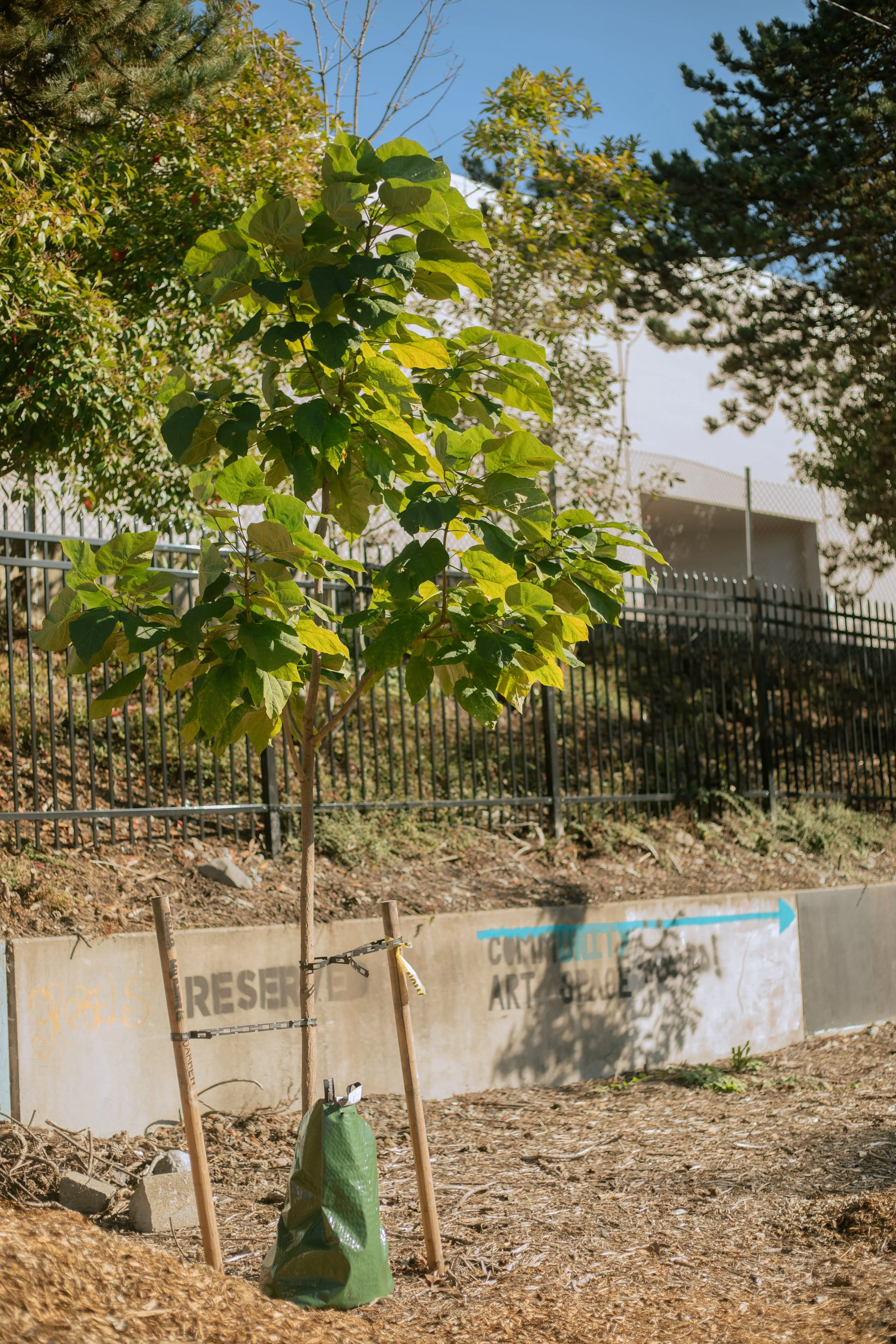
Tree in South Tacoma credit: Julia Wolf
It is important to consider that trees have a tolerance threshold to pollution, especially ozone, that once crossed can cause significant damage to a tree and its ability to grow. The National Parks Service reports that ground level ozone “reduces tree growth, injures the foliage, and predisposes trees to insect and disease attack.”
Some trees are better at withstanding pollution than others, such as ginkgo and honey locust according to this study done by the ISA that shows how different tree species respond to pollution and other urban stressors.
This research further enforces some things we already know about how to keep our urban forest healthy: maintaining healthy trees and maintaining a biodiverse urban forest are key to bolstering our urban forests from the negative impacts of ozone and pollution. Different trees will take up different amounts of pollutants, hopefully making it a better environment for the more sensitive species to thrive.
Trees also provide secondary support with air pollution by reducing ground temperatures, thereby reducing the energy consumption needs of buildings to stay cool during summer months, and the amount of ozone produced.
How does warmer weather affect air quality?
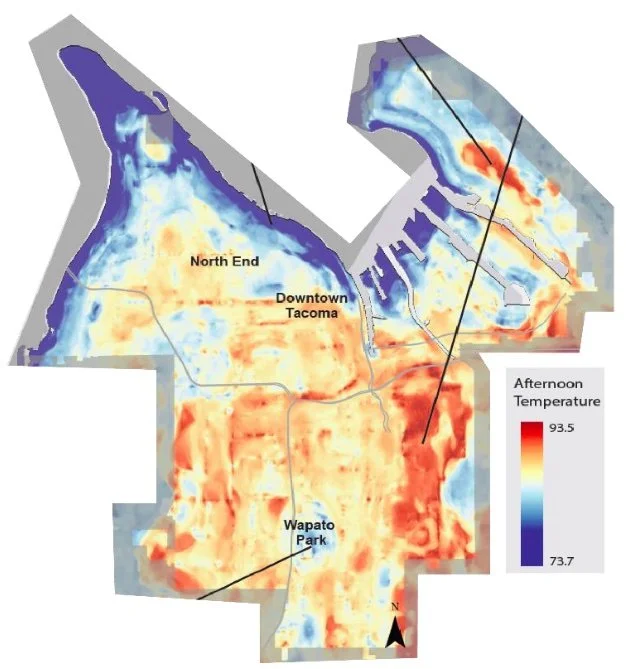
Tacoma Urban Heat Islands 2018 credit: TTF
Warmer weather and heat waves will become more frequent and extreme in the coming years due to climate change, increased frequency of forest fires, and increased frequency in high-heat events. As a result, our air quality is likely to decrease.
Since sunlight and heat are two necessary components for the production of ground-level ozone, warmer conditions will typically worsen air quality. How much worse the air quality becomes is dependent on how hot an area is, and the amounts of volatile organic chemicals and Nitrous oxide present. Higher temperatures and existing air pollutants are likely to be found in higher concentrations in neighborhoods close to industry, high-traffic roads, and areas with less tree canopy coverage and urban heat island effect.
In extreme cases, heat waves can cause stagnation, trapping air, and the pollutants it contains, in an area for an extended period of time. This kind of system concentrates the air pollution in an area, as air pollutants continue to enter the atmosphere from cars, industry, and other sources. Heat waves can also create conditions for forest fires to happen, which introduce significant amounts of carbon, soot, nitrous oxides, and volatile organic chemicals into the atmosphere.
In Tacoma, our South Tacoma, Tacoma Mall, Eastside, and Parkland/Spanaway neighborhoods are impacted by summer temperatures more than other neighborhoods. These areas already experience the urban heat island effect and pollution because of their lack of green infrastructure and proximity to pollution sources–such as Pacific Avenue, I-5, and industrial spaces–but are at risk for increased ozone production and concentration as summer conditions intensify.
How can we support our urban trees during times of heat and pollution related stress?
To support trees that are experiencing heat or pollution related stress, or to prevent them from becoming stressed:
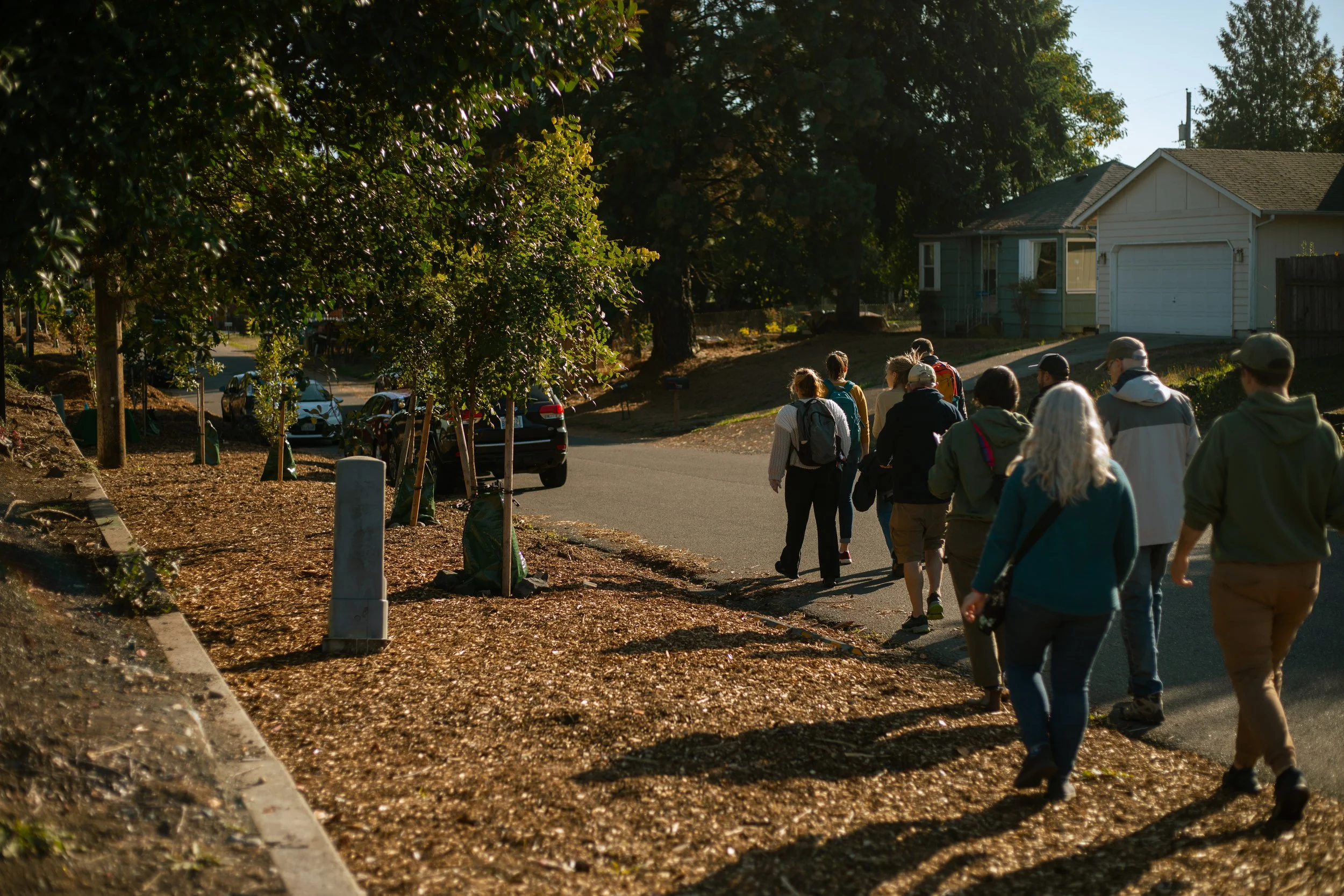
Group on S D st credit: Julia wolf
Water your tree regularly during the summertime or when soils become dry. For baby trees this means using a watering bag or bucket to ensure the topsoil around the tree’s roots stay moist.
For older trees this means practicing deep watering using a drip irrigation system or other tool for long, slow watering. Beware that overwatering can invite fungus, pests, or disease, so make sure to keep your tree watered but not in a constant state of dampness.
Mulching your tree will further help protect roots from becoming dried out or damaged by extreme weather or lawn care tools.
Pruning dead, dying, or damaged branches that may be at risk of spreading a disease, pest, or infection to other parts of the tree.
These actions will help support the tree’s immune system which can be weakened by environmental stressors leaving the tree susceptible to mold, insects, and disease. For more detailed information on tree care see Tacoma Tree Foundation’s Tree Care Resources or this guide from the Washington State University Extension on tree care.
For more information on air quality, air pollution, and the research done in Tacoma, join our upcoming webinar with Ailene Ettinger!