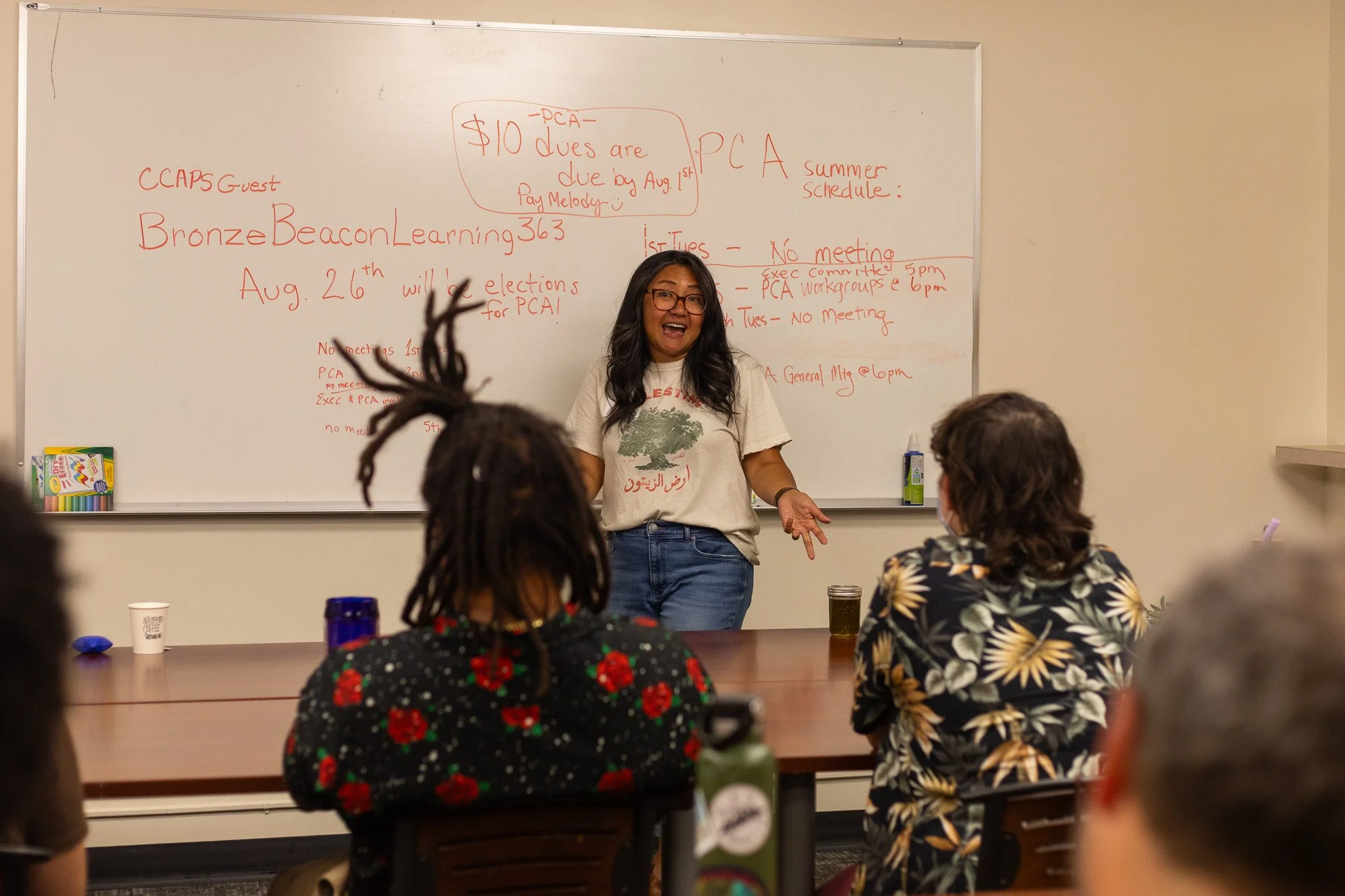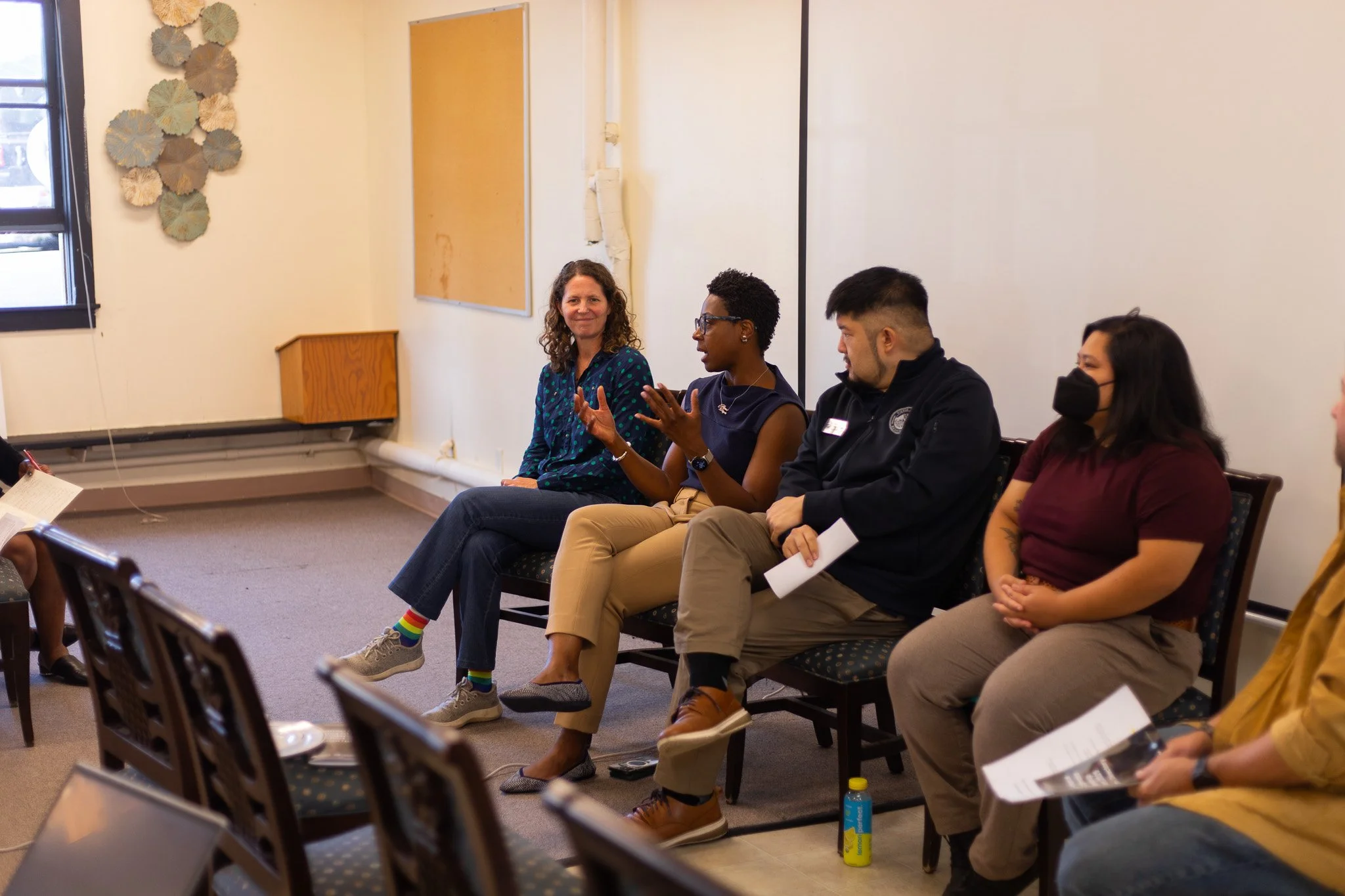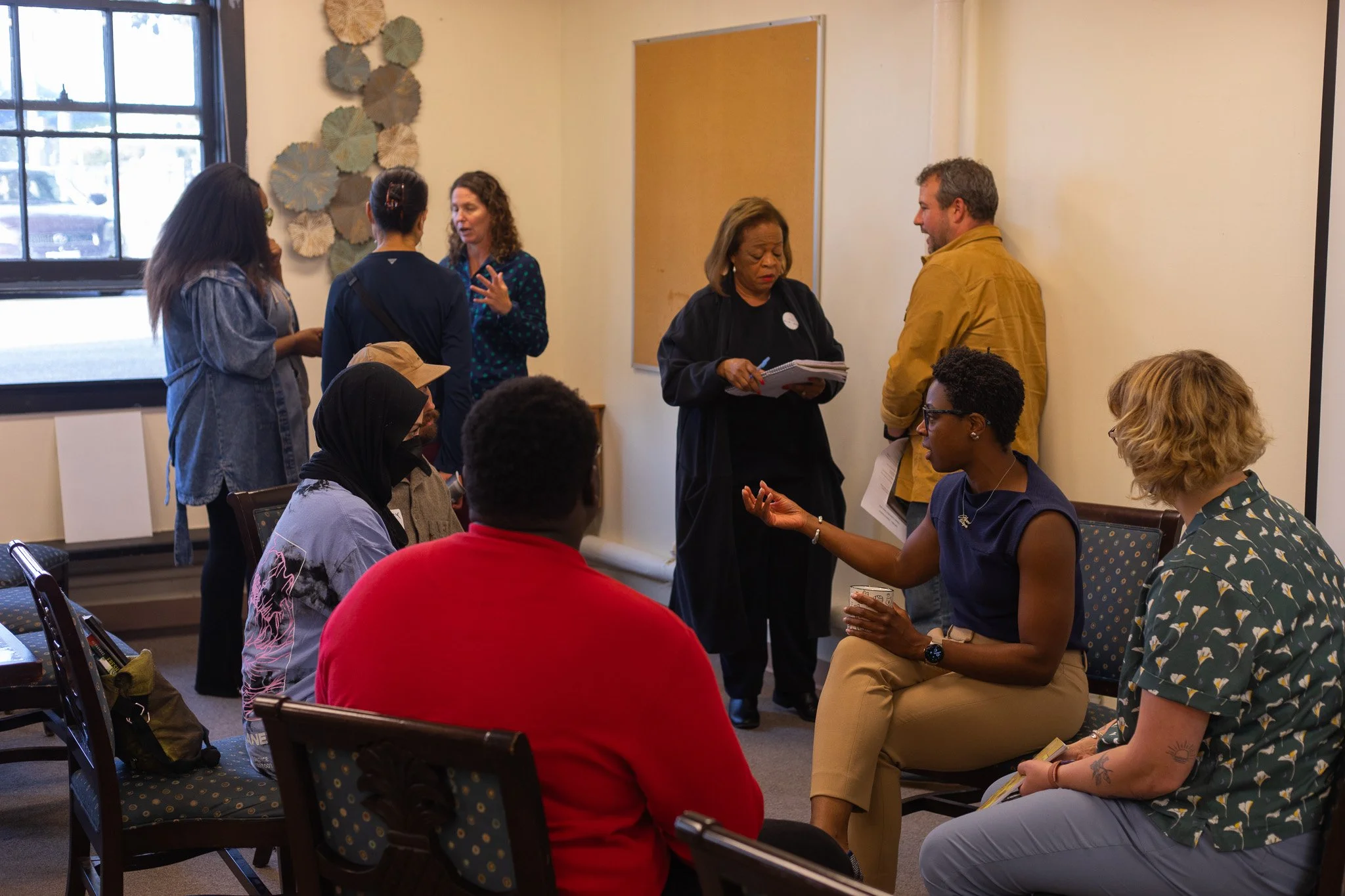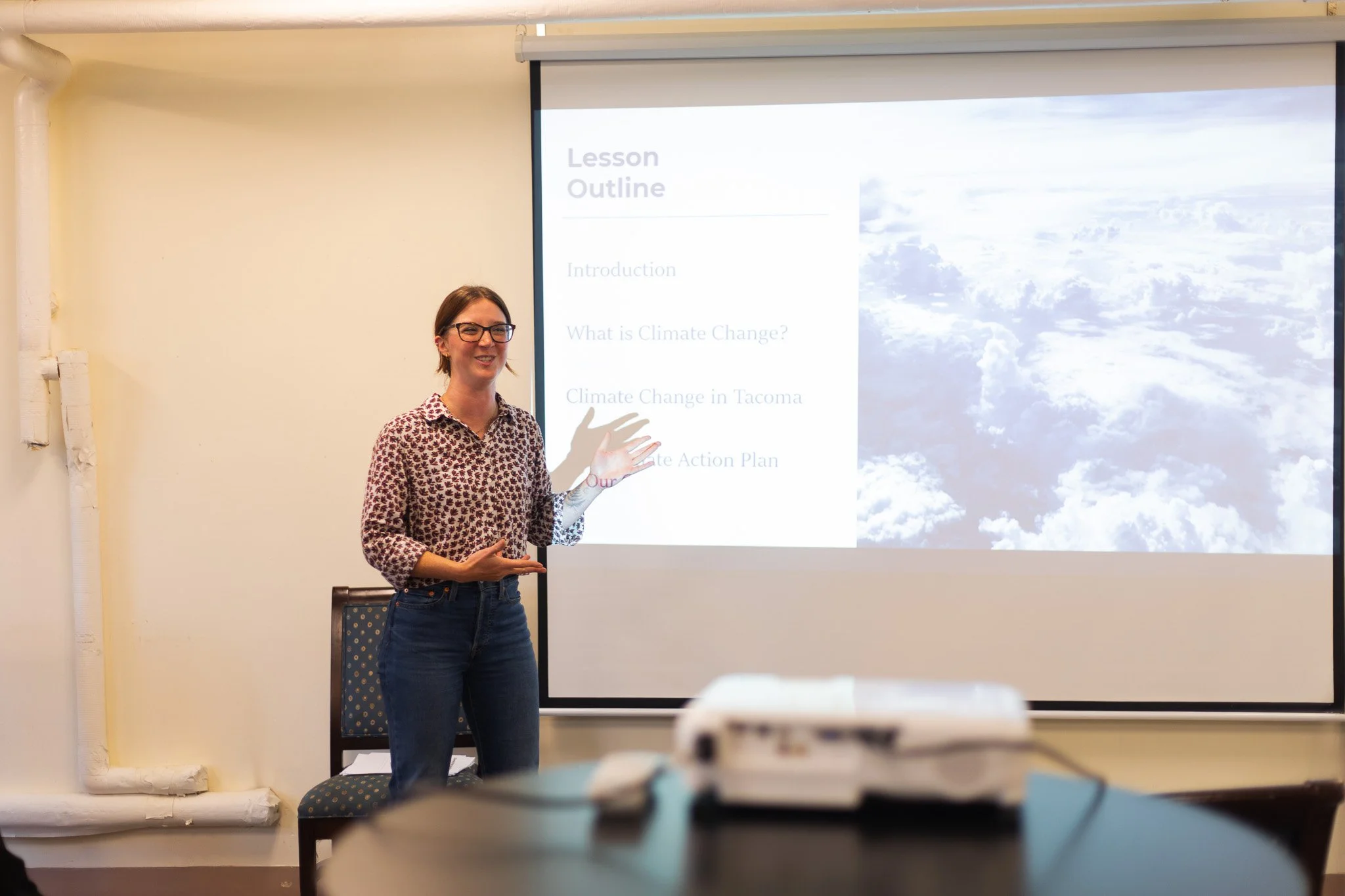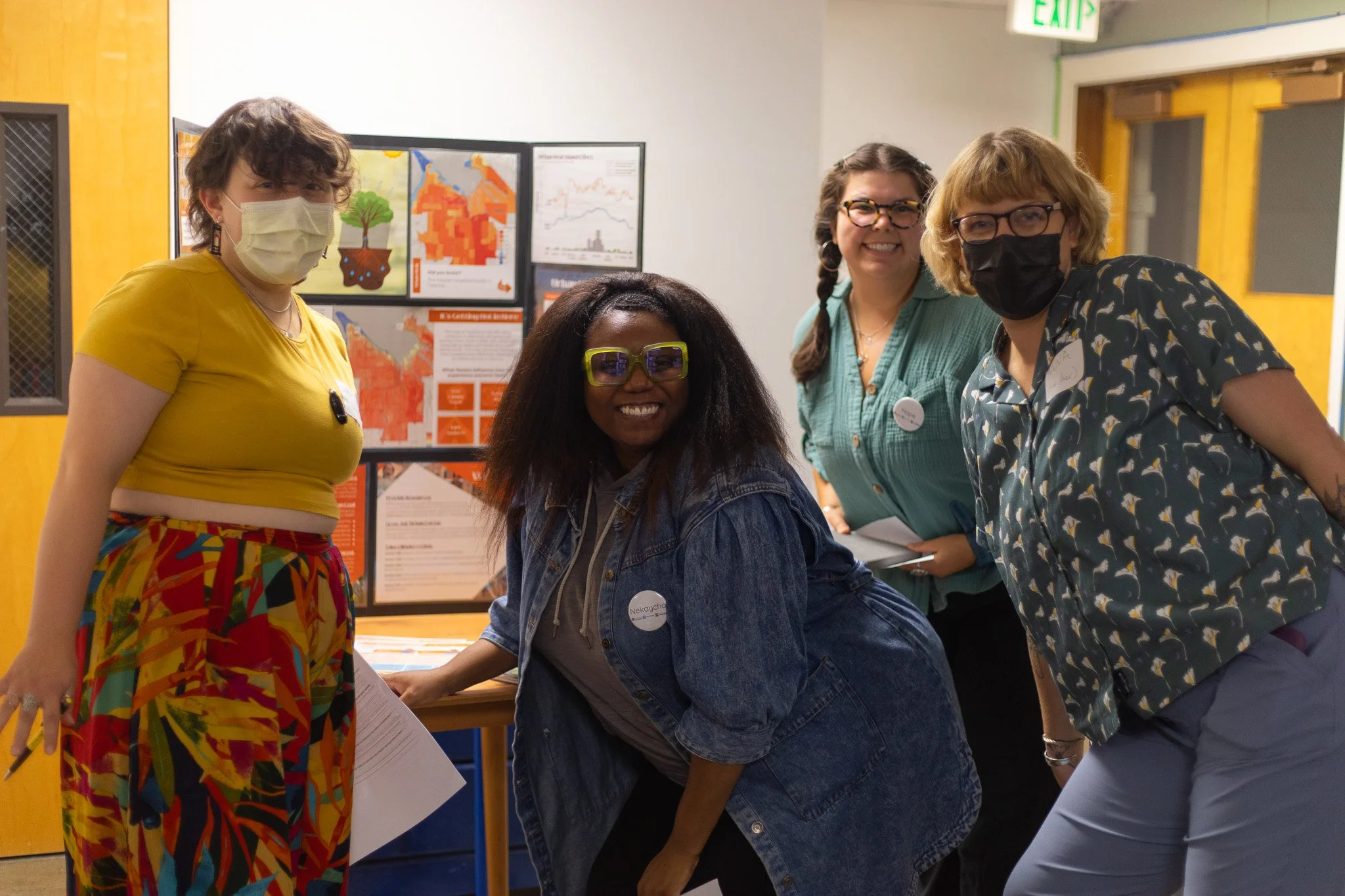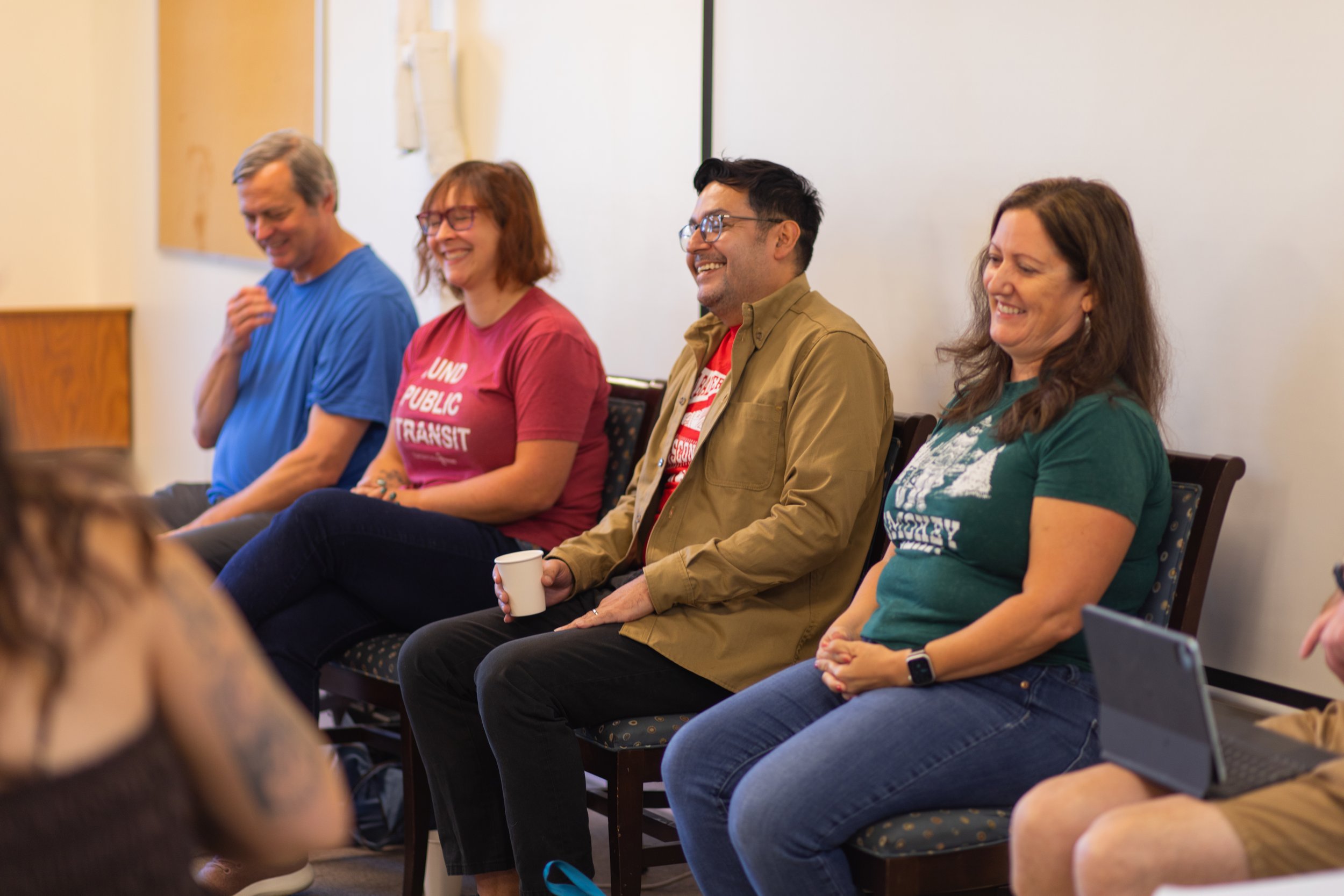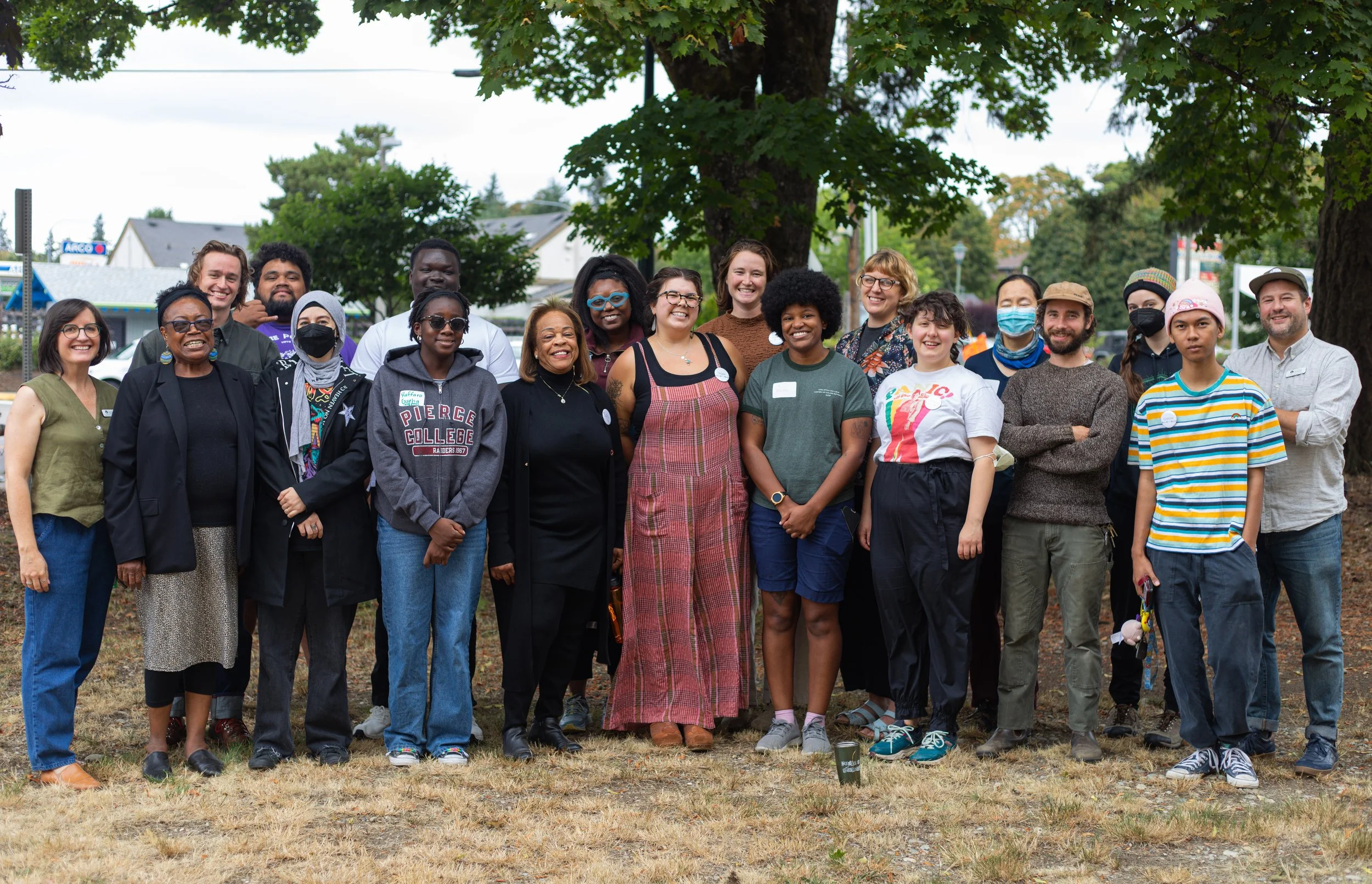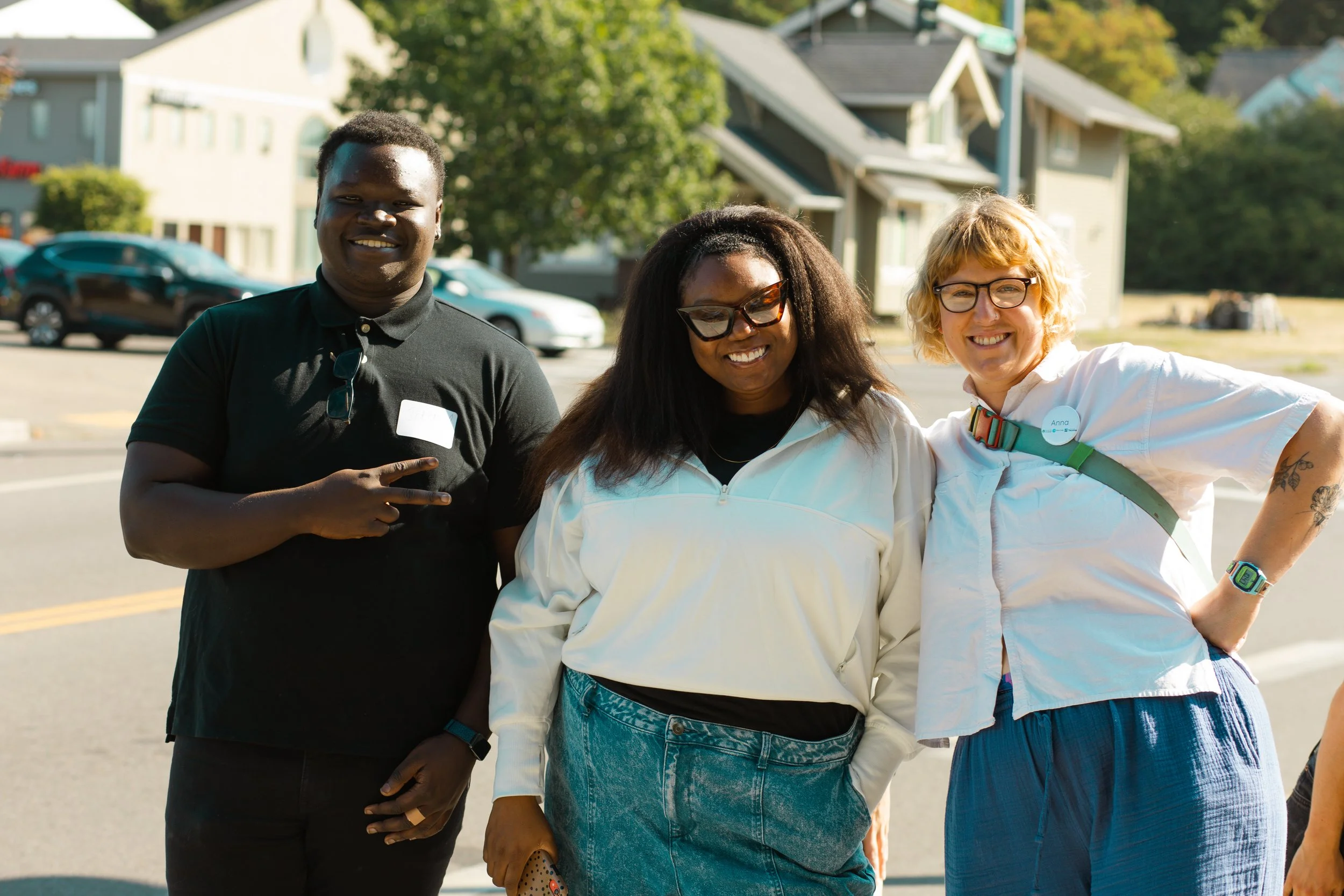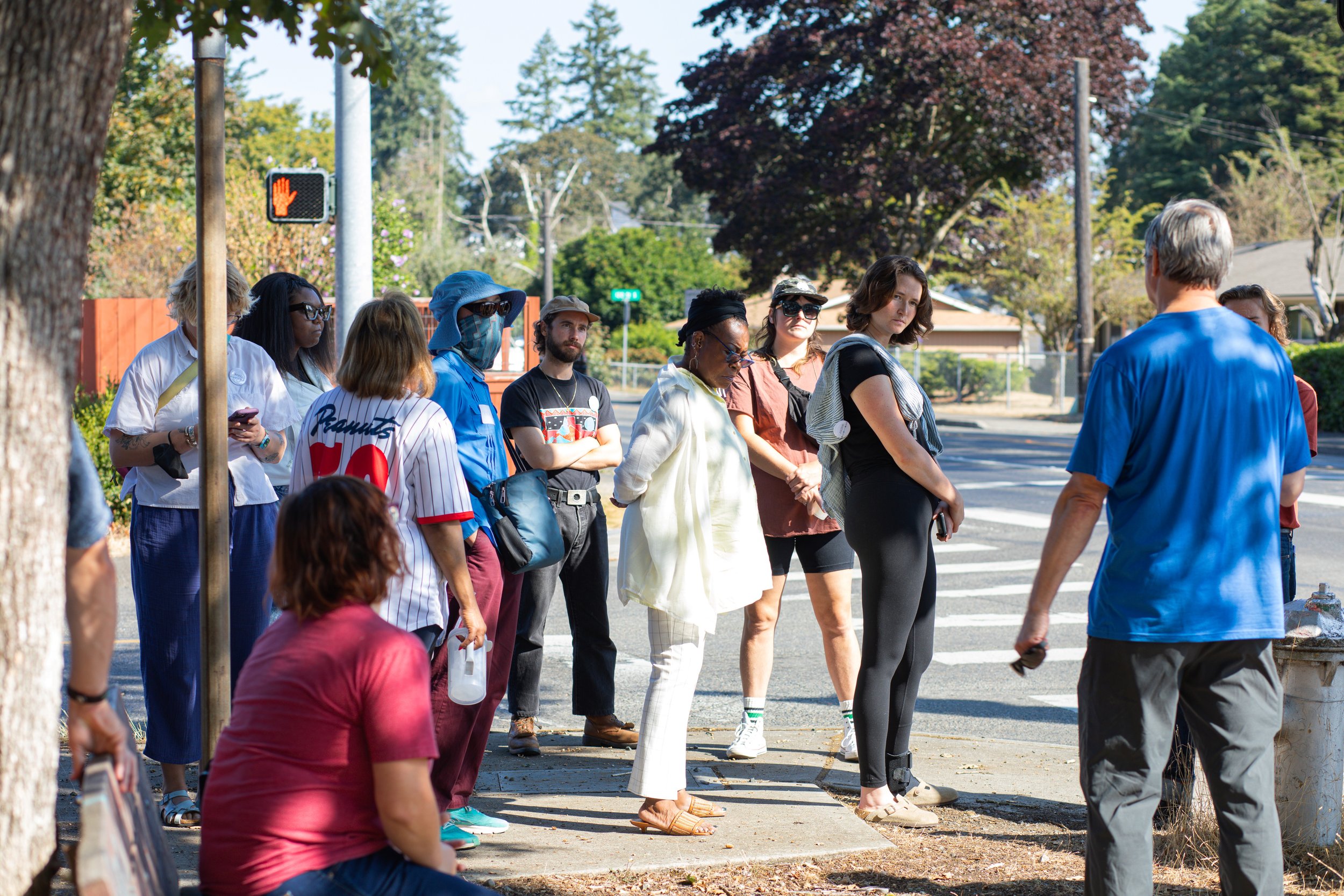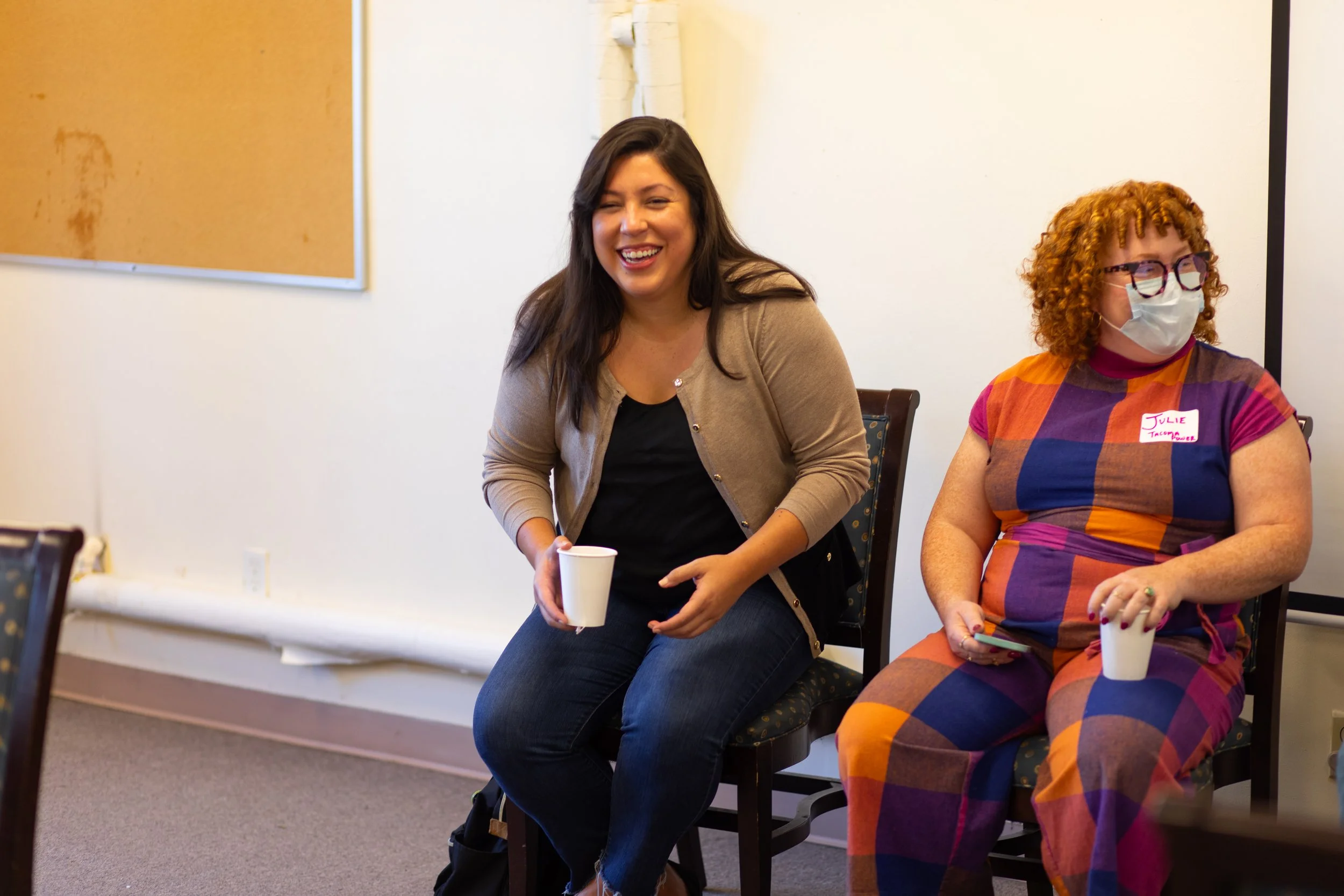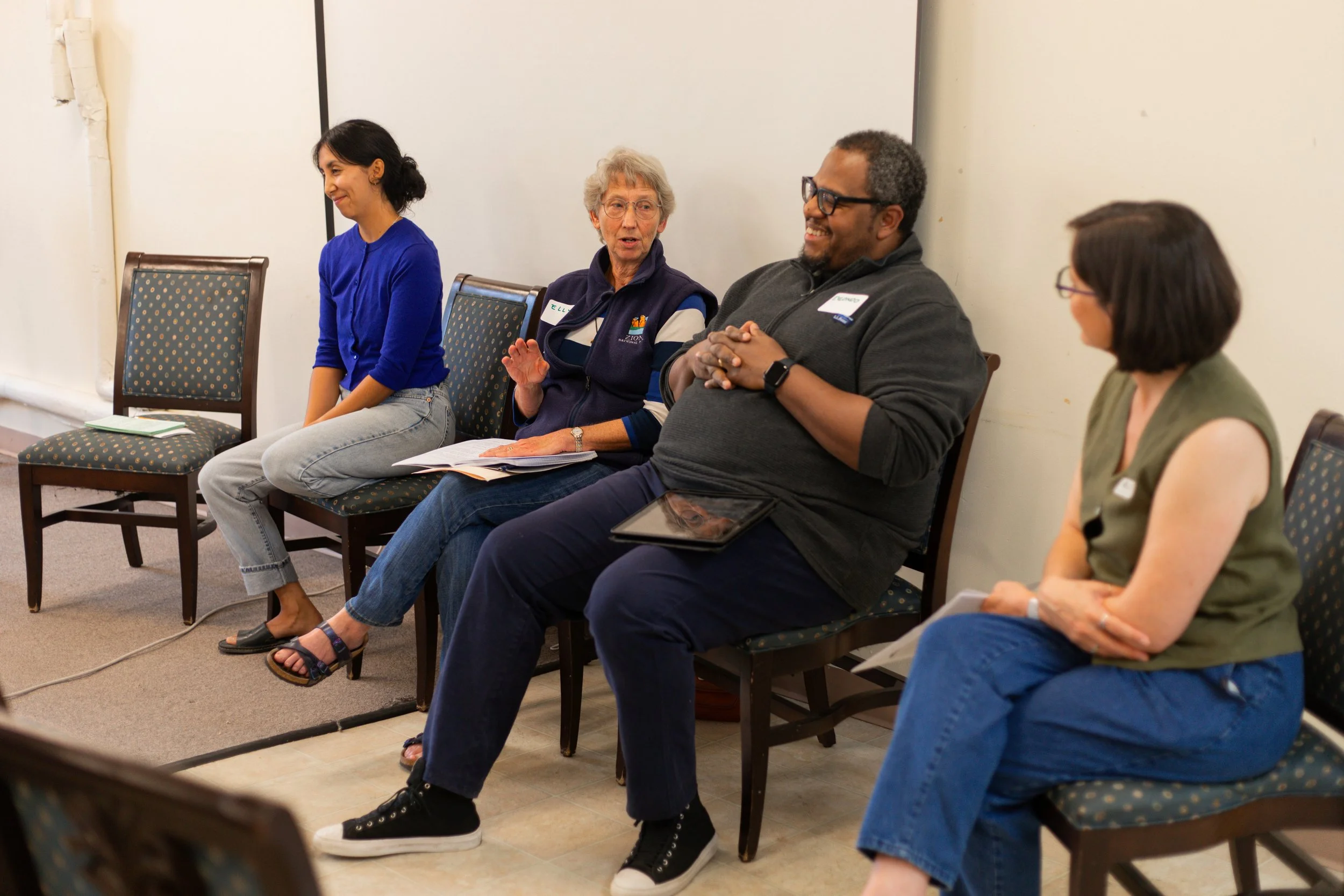
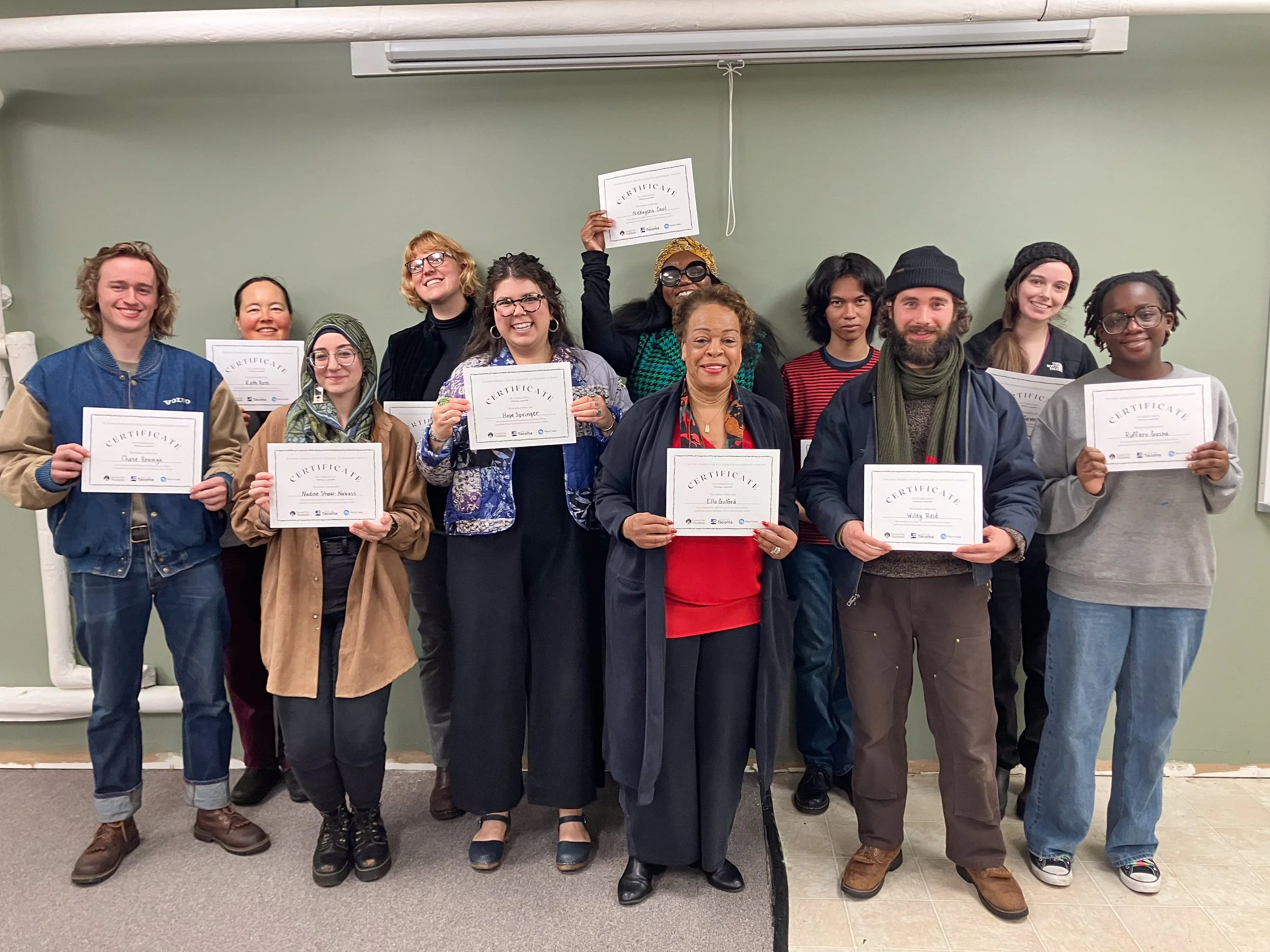
2025 Cohort graduates, December 6, 2025; Photo Credit: Julia Wolf
This spring, 16 community members from Pierce County and the City of Tacoma came together for the 4th Annual Tacoma - Pierce County Climate Leadership Cohort to deepen their knowledge about climate action, leadership, and sustainability. After a three-day training where they heard from 29 local leaders, community members, and advocates, they developed their own capstone projects to address the climate issues they care about most, and contribute to cultivating climate resilience in their communities. We are excited to share their projects and the changes they have been striving to make in their communities to further the mission of sustainability and climate leadership.
The entire program graduation can be viewed on our YouTube channel. Below is an exhibit of each graduate’s project.
Climate Change Mitigation and Sustainability
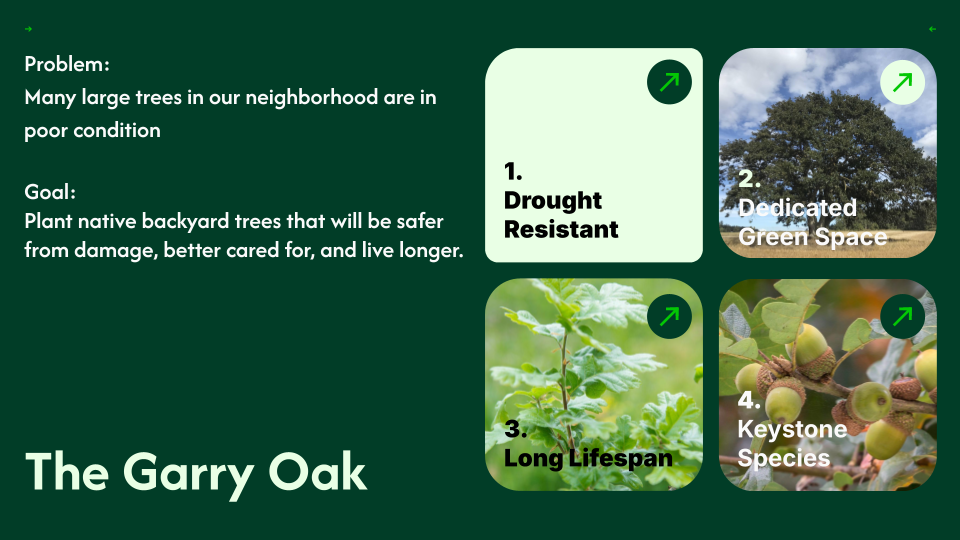
Planting a Resilient Community Ecosystem
Chase Hovinga (he/him), Pierce County
-
In the long term, my project has the goal to increase Midland’s tree canopy by planting native Garry oaks in backyards and available large open spaces. The area of Midland sits along highway 512 and has now largely been developed for industrial, agricultural, and residential uses. While the area does contain some scattered canopy, many of the street trees have damage from poor pruning, utilities, and high wind from lack of a robust canopy. In addition, due to the lack of tree canopy our community deals with the heat island effect, lower air quality (air pollution from the highway and industrial use), poor stormwater drainage, and overall lower quality of life.
I have chosen the Garry oak for its resilience. It is resistant to drought due to a deep taproot that prefers well draining glacial till that Midland is on. They can live up to 500 years and can serve as a dedicated green space because of their protected status both statewide and locally. Garry oaks are also considered a keystone species supporting moss, lichen, fungi, smaller shrubs and many species of animals.
To begin the project, I have germinated about 45 oak acorns in tree pots. These saplings will develop in these containers for 1-2 years. While they are growing, in spring, I plan to introduce myself to new community members and collect a list of people interested in planting these trees and or other natives. When the trees have matured enough I will distribute or help plant them around the community.
-
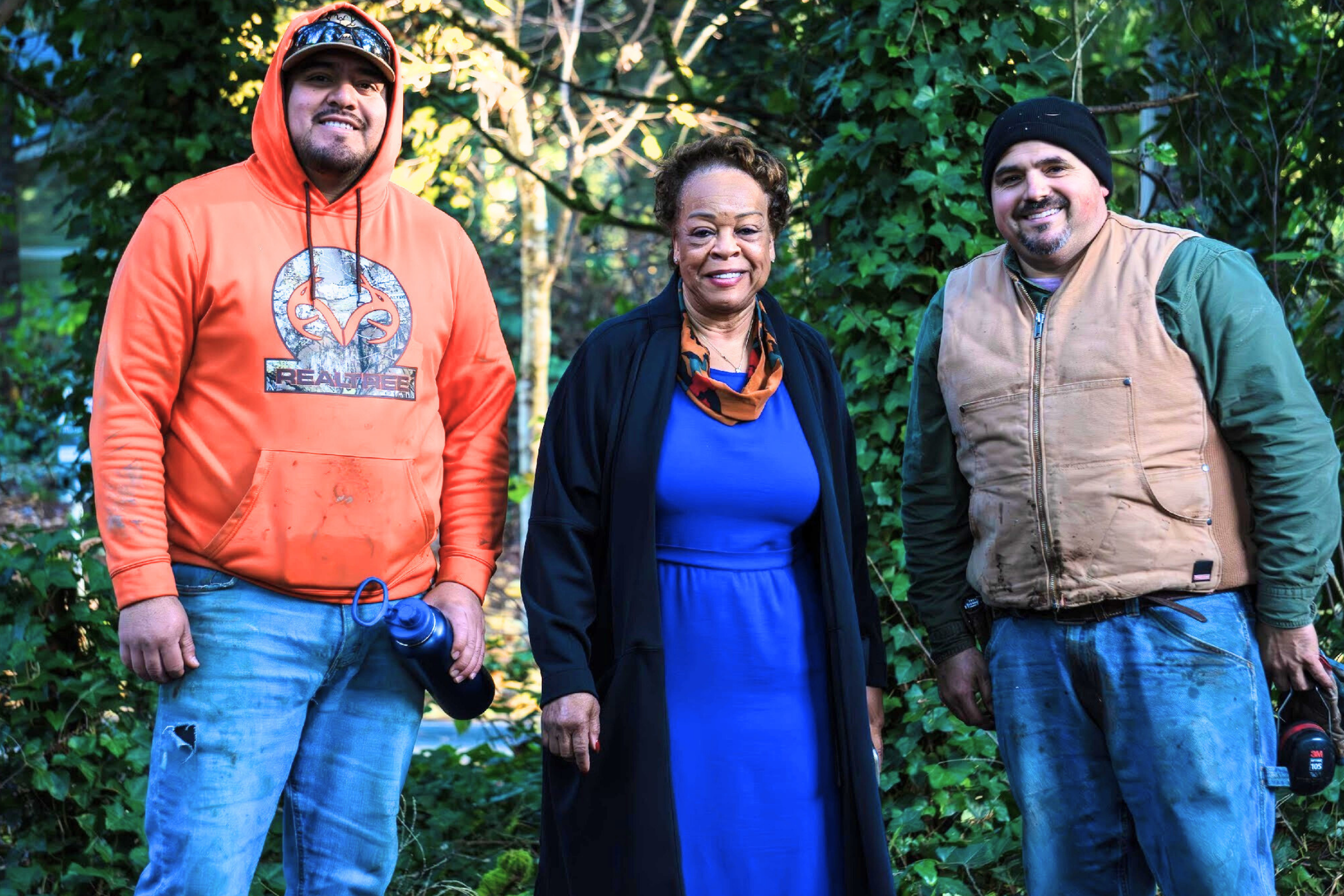
A Dedicated Green Space
Ella Guilford (she/her), Pierce County
-
This project began with challenges from extensive foliage on private property, which created high maintenance demands and recurring expenses. A reassessment of tree management practices led to selective removals and a broader exploration of sustainable approaches. It centers on community and individual solutions to climate change, encouraging sustainable behaviors and environmental education. Its vision is to create a dedicated green space that expands the urban tree canopy, improves ecosystem health, and enhances communal environments. By utilizing municipal and private properties, the project aims to increase shaded areas, strengthen resilience, and elevate quality of life for residents.
To develop the green space, I reached out to University Place City Planning to clarify procedural requirements. I completed a Tree Stewards training with the Tacoma Tree Foundation, and learned about tree biology and tree care. Then I verified the boundaries of the property with the Tacoma Auditor, reviewed by HOA bylaws, and identified opportunities for green space integration. Consultations with Deputy Director Debra Kelly-Sage focused on canopy expansion and required a visual presentation for feasibility review. Regulatory authority was confirmed to reside with the HOA.
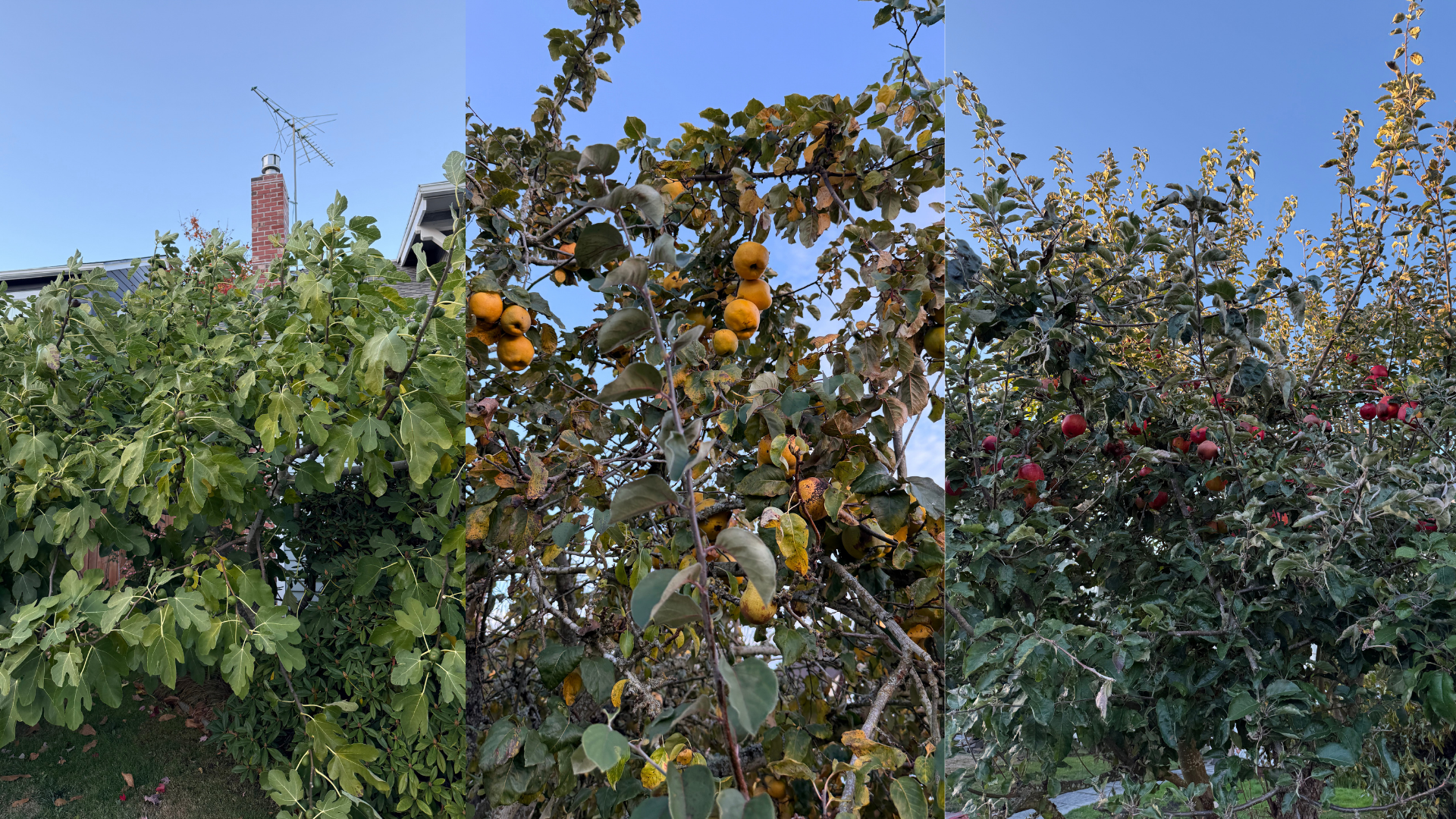
North End Fuit Survey
Hope Springer (she/her), City of Tacoma; Kath Ross (she/they), City of Tacoma
“We learned that a surprising number of fruit trees can be found in an urban setting, as well as a large variety of fruits, including cherries, figs, quince, green, red, & yellow apples, plums, pears!”
-
We set out to find a solution to prevent fruit from rotting on the ground or on trees when homeowners choose not to pick it. This rotting fruit can contribute to climate change through the release of methane when it breaks down. Additionally, any unpicked fruit that is left to rot is fruit that is not going into someone’s hungry belly.
This is a city-wide problem. For this project, we focused on the North End neighborhood. We began our work in the North End where the issue impacts homeowners who are left with rotting fruit on their lawns, and community members who are interested in picking fruit from trees but are not sure if they are allowed to. Our goals were to add North End fruit trees to the citizen science database, FallingFruit.org, educate homeowners about fruit tree harvest and care resources from the Pierce Conservation District, and find out if neighborhood trees are harvestable by the general public by sharing a survey that would allow us to connect with homeowners.
To this end, we walked the North End neighborhood to identify all visible fruit trees, created the survey, and fliered to call for submissions. We successfully added available trees to the FallingFruit.org database. However, we were unable to reach our other goals because only 1 out of 30 homeowners replied to our survey.
-
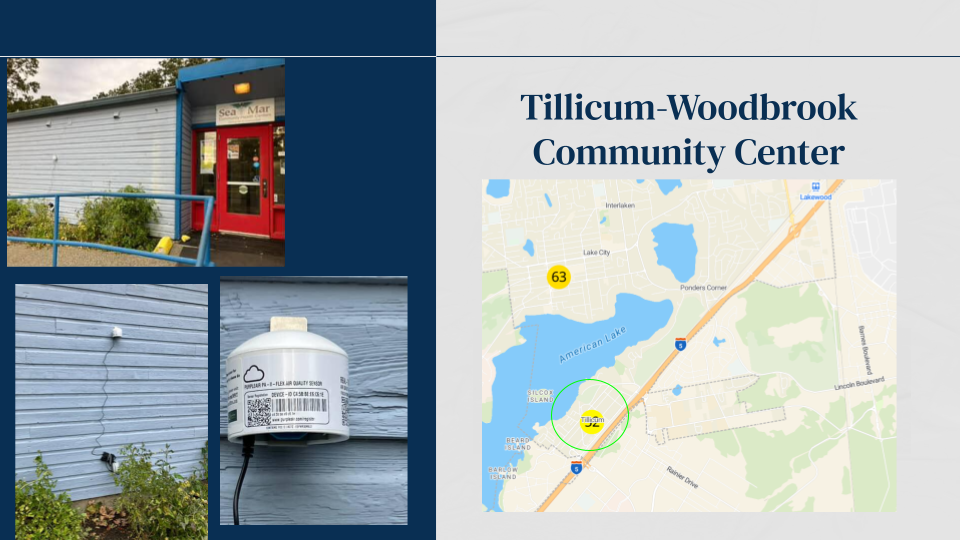
Air Quality Monitoring in Lakewood’s Tillicum and Springbrook Neighborhoods
Connar Mon, City of Tacoma; Ruffaro Guzha, City of Tacoma
“Overall, the most valuable lesson we learned was how environmental inequities shape daily life in Pierce County, and how essential community relationships are for building a healthier neighborhood.”
-
The Tillicum and Springbrook neighborhoods of Lakewood, Washington, face significant air quality concerns due to their proximity to major pollution sources, including Interstate 5, Joint Base Lewis-McChord (JBLM), and McChord Air Force Base. Residents of Tillicum and Springbrook, many of whom are low-income, older, and already vulnerable to pollution-related health conditions are directly affected by the lack of localized air quality data that reflects their lived experiences. Despite these environmental risks, there is currently a lack of localized air quality monitoring in these communities.
Our project sought to address that gap by deploying PurpleAir sensors to measure particulate matter (PM2.5)concentrations. The primary goal was to collect pilot data that will define the extent of air quality issues in the area and inform future community and policy actions. The pilot data gathered will provide a clearer understanding of existing environmental conditions and help identify specific sources and patterns of pollution.
After looking through the data, we found from Oct 16th and Dec 5th, there were 12 unhealthy air days in Tillicum according to the air quality index. These insights will support community advocacy for improved air quality measures, such as increased monitoring, strategic tree planting, and depaving initiatives. These monitoring efforts aim to establish a foundation for sustained environmental assessment and encourage long-term involvement from governmental agencies, including the Washington State Department of Ecology, to ensure ongoing protection of community health and environmental equity.
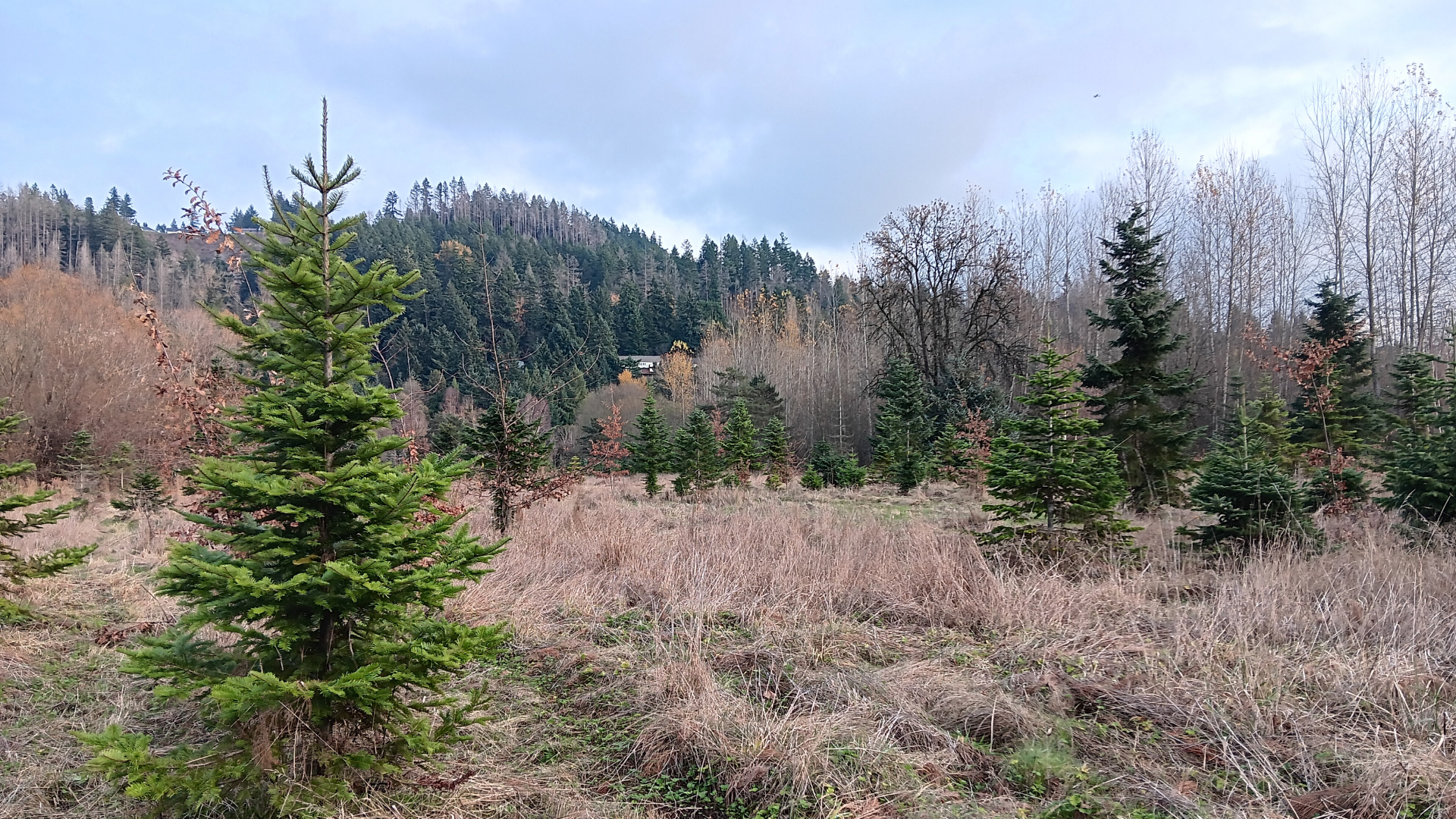
Closing the Loop on Christmas Tree Waste
Gabrielle Irle, Pierce County
“Why should Christmas trees be cut and sold, only to end up in a landfill, producing methane gas? Could I reinvest the energy of that tree in a way that led towards a more climate-just world?”
-
Our linear economic system often encourages us to produce items, use them, and discard them. “Closing the loop” refers to a circular economy where waste is reinvested in the system. As a Christmas tree farmer, I wanted to apply this circular system on a small scale on my Christmas tree farm. My capstone project seeks to provide information directly to those who buy a Christmas tree from my business, giving them flyers to tell them about yard waste bins and local transfer stations.
There are several systems in place that help with this problem in Pierce County. Yard Waste Bins are an easy way for consumers to transport their trees to a commercial composter. Many transfer stations (waste centers) also accept trees for free. For those who have access to them, these are great solutions that result in reinvestment in farms/land instead of methane production! However, many consumers do not know about these options, electing to burn their tree or throw it out with their garbage, instead.
I know that the more convenient you make something, the more likely people are to engage with it. This is why we’re offering our farm, a place our customers know and may live close to, as a dropoff point for a day in January. We decided to make this a dropoff for cardboard as well, as many households will have an abundance of boxes leftover from the holidays.
The trees that come to our personal tree drop off will not just get commercially composted and redistributed to the system at large. We plan on using the chipped wood (and cardboard) to help us sheet mulch parts of our land overgrown by invasive plants. These areas will be replanted with native plants and edibles to get redistributed in our community, creating pockets of climate resilience in our area.
-
“Four Tips for a Climate-Friendly Yard.” Audubon, 25 Jan. 2022, www.audubon.org/magazine/four-tips-climate-friendly-yard. Accessed 5 Dec. 2025.
“Importance of Methane.” EPA, Environmental Protection Agency, www.epa.gov/gmi/importance-methane. Accessed 30 Nov. 2025.
“Winter Holiday Reminder.” Piercecountywa.gov, 2025, www.piercecountywa.gov/1551/Winter-Holiday-Reminders. Accessed 19 Oct. 2025.
Community Partners
Harvey’s Harvest Christmas Trees: https://www.harveysharvestchristmastrees.com/
Pierce County Solid Waste Manager, Karen Hultgren (email not public)
WA Native plants at Northwest Meadowscapes: https://northwestmeadowscapes.com
Wildfern Grove: https://www.wildferngrove.com/
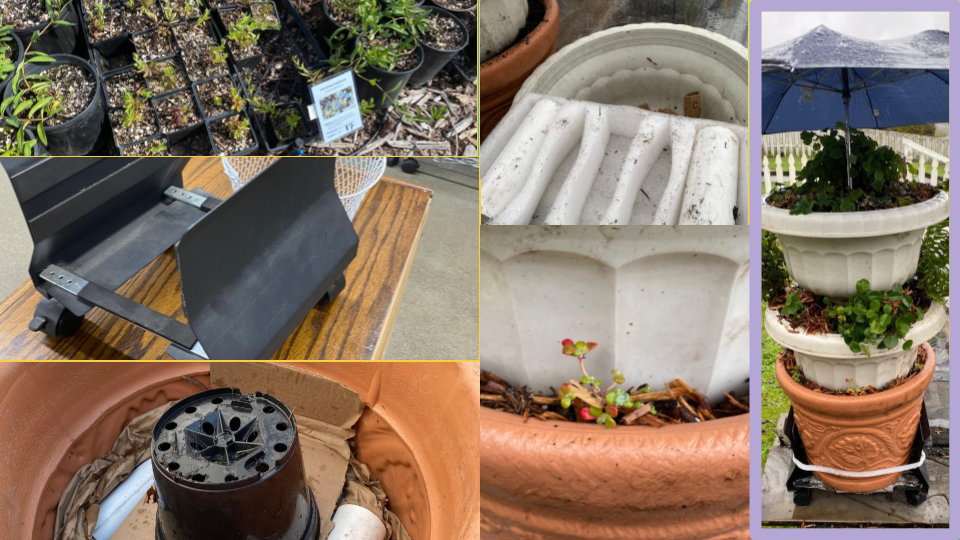
PNW Flora Garden Tower
Kalika Carver (she/her), Pierce County
“I look forward to further developing this blueprint and collaborating with the Pierce County community to improve accessible gardening and urban green spaces!”
-
My capstone project is an educational display planter. The “anthropocene”, regarding all humans, is often blamed for modern climate change. Some declare addressing root causes at all is “hopeless”. An alternative term, the “capitolocene”, addresses political and economical causes (Kotsila et al., 2020, p.6). Climate change needs to be addressed at its root causes of capitalism, materialism, asymmetrical power relations, and exploitative extractive systems (Morrison et al. 2022 p.1100). Acknowledging community vulnerability factors during climate planning (Erekson et al, 2015, p.9) is recommended to stay innovative.
To this end, my garden tower is constructed from upcycled materials, and is installed on a base with wheels for ease of transportation. In general, cities lack portable green infrastructure that is budget, disability, and renter friendly. I kept local disparities, politics, and environmental challenges in mind while curating this PNW garden tower project.
I filled the tower with organic soils and an array of plants native to Western Washington. The final prototype provides an accessible blueprint for Pierce County residents to utilize, and symbolizes the need for urban green spaces. I used elements of green infrastructure, regenerative gardening, and material upcycling. This model offers pollinator and bird habitats, pollution filtering, seasonal temperature regulation, space maximization, regionally-adapted plants, ethnobotanical potential, and year-round beautification.
Please feel free to both view my recommended garden tower resources and contact me!
-
Adger, W. Neil. “Vulnerability.” Global Environmental Change, vol. 16, no. 3, Aug. 2006, pp. 268–281, www.sciencedirect.com/science/article/pii/S0959378006000422, https://doi.org/10.1016/j.gloenvcha.2006.02.006.
Burch, S. L., & Harris, S. E. (2021). Understanding climate change : science, policy, and practice. University Of Toronto Press.
Carver, Kalika. “WA South Sound Gardening & Upcycling Resources” Linktree. Dec. 2025, https:linktr.ee/eco.kalika.carver
Eriksen, Siri H., et al. “Reframing Adaptation: The Political Nature of Climate Change Adaptation.” Global Environmental Change, vol. 35, Nov. 2015, pp. 523–533, https://doi.org/10.1016/j.gloenvcha.2015.09.014.
Kotsila, Panagiota, et al. “Resources for a Better Future: Political Ecology.” Resilience, 30 Nov. 2020, www.resilience.org/stories/2020-11-30/political-ecology/.
Knutsen, Thomas. “No AI Statement”
https://no-ai-icon.com/statement/?url=Kali-TTF-Capstone-Project
Morrison, T. H., Adger, W. N., Agrawal, A., Brown, K., Hornsey, M. J., Hughes, T. P., ... & Van Berkel, D. (2022). Radical interventions for climate-impacted systems. Nature Climate Change, 12(12), 1100-1106.
Jason W. Moore (2018) The Capitalocene Part II: accumulation by appropriation and the centrality of unpaid work/energy, The Journal of Peasant Studies, 45:2, 237-279, DOI: 10.1080/03066150.2016.1272587
Climate Coalitions and Networks
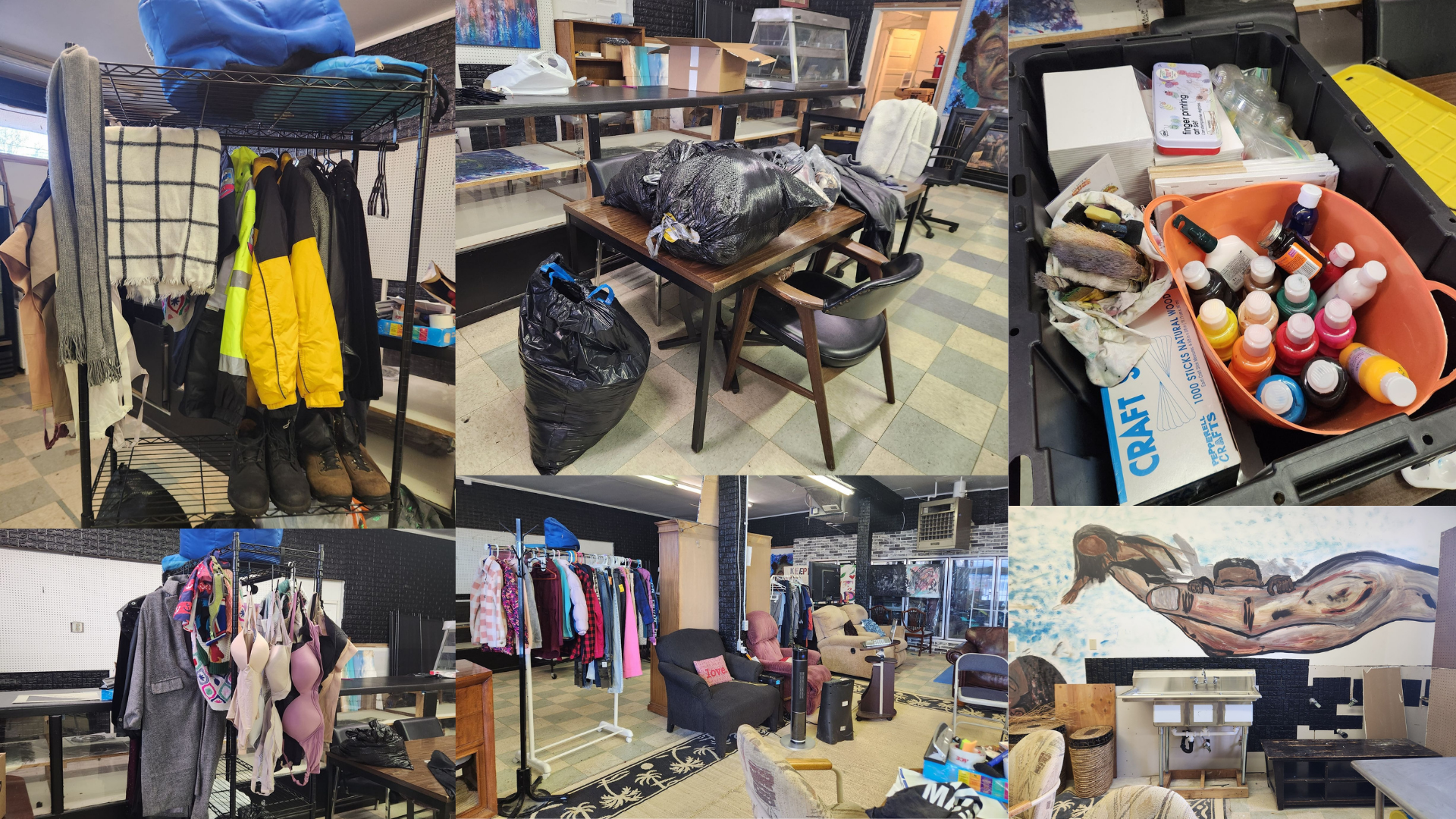
Supporting Food Justice on the Hilltop
Houstan Vassel
“Intentional communities cultivate a sense of collective responsibility, motivating people to help their neighbors.”
-
For my project, I aimed to increase food sovereignty, decrease food insecurity, and educate others about food and the climate by assisting the staff of Hilltop Urban Gardens (HUG). HUG is a community-led, Afro-Indigenous, racial, environmental, reproductive, and queer justice organization based in the Hilltop neighborhood of Tacoma. To this end, I assisted HUG with the organization and maintenance of their Artivism Storefront Center (ASC), which hosts vendors, workshops, and community events.
I contributed approximately 20 hours of service at the ASC, performing tasks such as supply inventory, organizing the mutual-aid donations, cleaning, and rearranging the space. Through this work at the ASC, I was able to support HUG’s mission because staff were able to allocate their time to other duties, such as grant work and workshop planning, which support HUG’s mission (developing systems for food sovereignty) and vision (inspiring our community to live with abundance).
I was able to build community during my time at HUG, and have begun working for HUG as the Urban Food Network Land and Community Outreach Steward, which will allow me to address the food needs of Hilltop and the greater Tacoma area.
What’s Next?: Civic Pipeline Network
Nekaycha Cavil, City of Tacoma
“Grand gestures don't create transformation, but the accumulation of small, faithful choices does.”
-
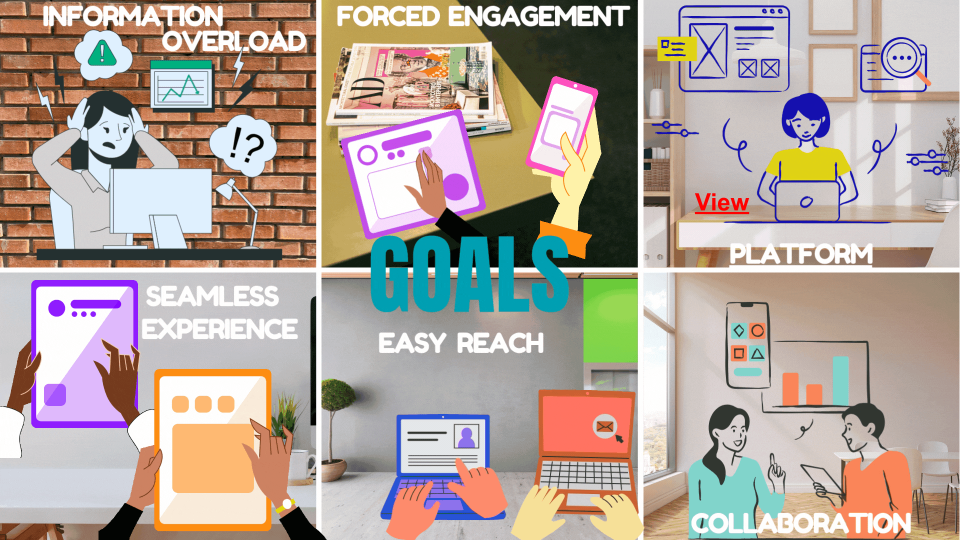
At the Tacoma Pierce County Climate Leadership Cohort training, speakers highlighted a common problem: the disconnect between agencies and the community. They discussed how this impacts collaboration, community engagement, and closing the loop. This is why I decided to spend my Capstone project addressing the "broken bridge" that separates agencies, organizations, and the community. It is a statewide problem. But my project begins by tackling the issues in the Pierce County/Tacoma area. The broken bridge impacts communities of color, underserved and disadvantaged individuals, and families that are the most affected by climate and social issues. My goal is to create a streamlined digital ecosystem that reduces information overload and removes gatekeeping of pertinent information, making profiles of climate professionals, ongoing projects that could use support, related work opportunities, as well as ways for climate professionals to connect, accessible to everyone. I reached this goal by consulting with Kate Waind (Waste Reduction Specialist, City of Tacoma), Robb Krehbiel (Environmental Planner, Puget Sound Partnership), and TaNeashia Sudds (Hilltop Urban Garden, Executive Director). The network will live on Notion, a project management resource used for planning and website development. I will continue refining the site, gathering resources, conducting outreach, and applying for funding to contract help and keep the momentum going.
-
What’s Next? Website -
Cascadia Bioregion- https://cascadiabioregion.org/
Clean Energy Council Sitting - https://ecology.wa.gov/regulations-permits/sepa/clean-energy/council
Beyond the Bin- Looking to clear out clutter without filling up the landfill? Beyond the Bin is a new series of free reuse events from the City of Tacoma’s Solid Waste Management team. Bring your usable items to the Tacoma Recovery & Transfer Center and donate them to local nonprofit partners who will repair, repurpose, and redistribute them back into the community. It’s a simple way to reduce waste, support neighbors, and keep valuable materials in use. Contact: Kate Waind, Waste Reduction Specialist: (253) 502-2100; kwaind@tacoma.gov
Hilltop Urban Gardens- https://www.hilltopurbangardens.org/
Washington Climate Partnership- https://waclimatepartnership.org/en/
Increasing Awareness of Hilltop Urban Gardens at UWT
Jeremy Odero, City of Tacoma
“Storytelling and local engagement can strengthen climate resilience.“
-
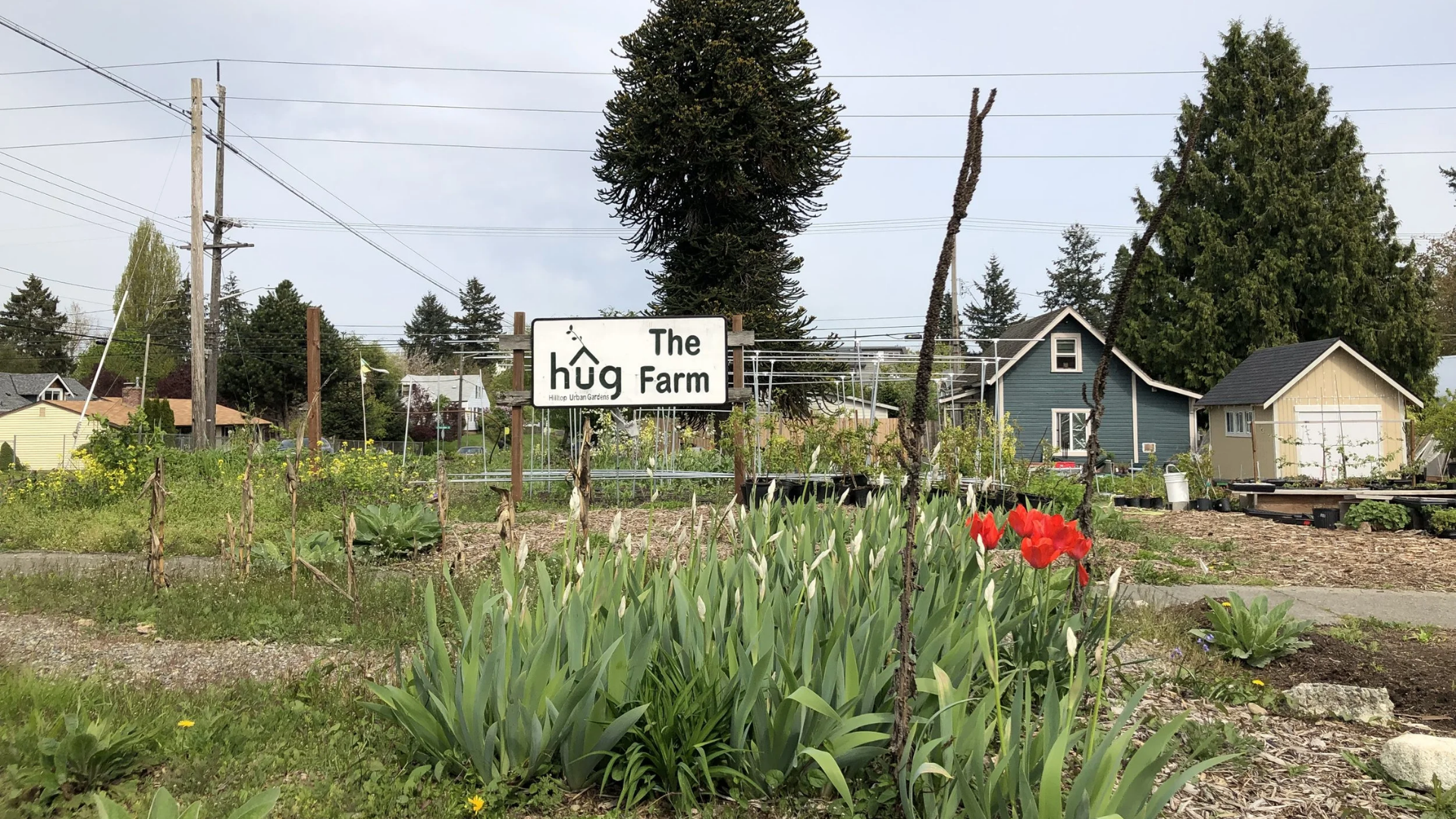
I chose to increase awareness of Hilltop Urban Gardens (HUG) across the University of Washington Tacoma (UWT) community. HUG plays a vital role in advancing food justice and climate resilience in Tacoma by promoting urban farming and mutual aid. While UWT students and staff are part of the broader Tacoma community, many are not actively engaged with local sustainability initiatives. My project aimed to bridge that gap by highlighting HUG’s work and encouraging participation.
My main goal was to amplify HUG’s mission and opportunities for involvement. I achieved this by conducting an interview with The Ledger, UWT’s student newspaper, resulting in a published article that showcased HUG’s programs and volunteer pathways. Additionally, I began assisting with HUG’s online gift shop, which is designed to serve as an added revenue stream to help fund the garden. Moving forward, I plan to continue promoting HUG’s initiatives on campus and explore partnerships for service-learning projects. This experience deepened my understanding of Tacoma’s food justice movement and the power of community-driven solutions.
-
You can read the article here: From SNAP uncertainty to campus harvests: Where Tacoma can turn for food support – The Tacoma Ledger
Climate Resilience
Climate Coworking
Anna Czarnik-Neimeyer (she, her), Pierce County
“This is actually Climate Resilience work: the work of building social & relational resilience!”
-
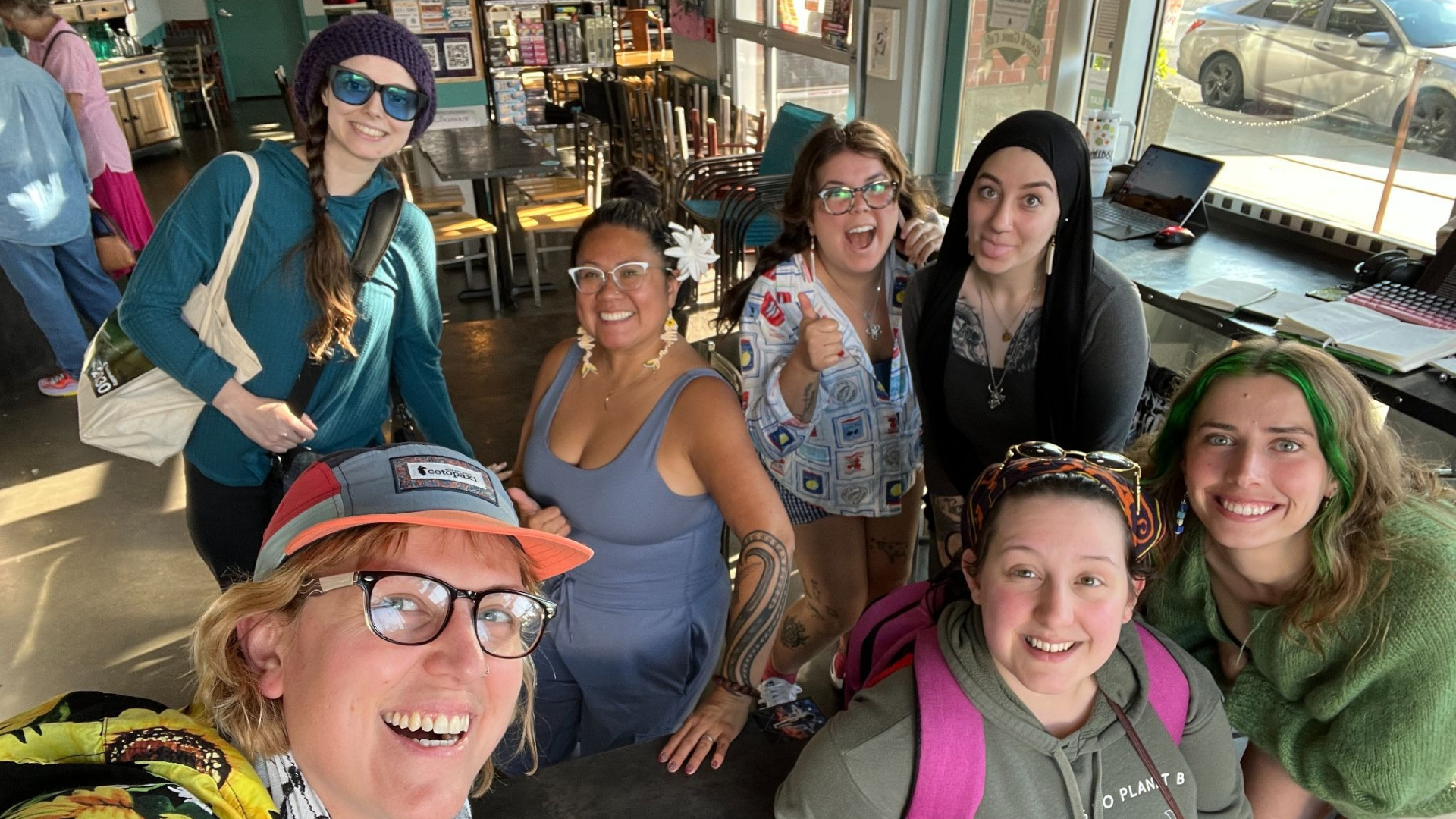
For climate and sustainability professionals, the work can sometimes feel isolating and lack a sense of hope. Remote work, federal cuts, and the visible effects of climate catastrophe add up to become overwhelming, and we might struggle with completing work. But climate organizing works best when people are connected by relationship, share resources, and support each other through mutual accountability, and by building trust. Because of all of the above, the idea for “Climate Coworking” was born! I had three main purposes for this event series:
Support (and caffeinate!) climate professionals, making work feel more connected + sustainable.
Create low-barrier access to relationship and community building opportunities. I chose The 15% Boardgame Cafe in Tacoma, a bus and wheelchair accessible location, which is community-oriented, Woman & BIPOC owned, inclusive, and free. All of this is important as we build community.
In-person meetings to strengthen networks of trusted support, which is the groundwork for civic action.
I piloted two “mini” coworking sessions with our Climate Leadership Cohort in September and October. In November, I made a public invitation relying on the TPCCLC Planning Committee networks and online media. With my capstone stipend I bought coffee for attendees. A total of 11 people from two different Counties, and State and regulatory bodies, nonprofits, and religious institutions showed up. I learned from them how “in flux” and grueling work can be, and how it’s deeply affected by funding cuts. It’s more important than ever to be connected as people do “more with less.”
Power of Music to Inspire Climate Action
Kath Ross (she/they), City of Tacoma
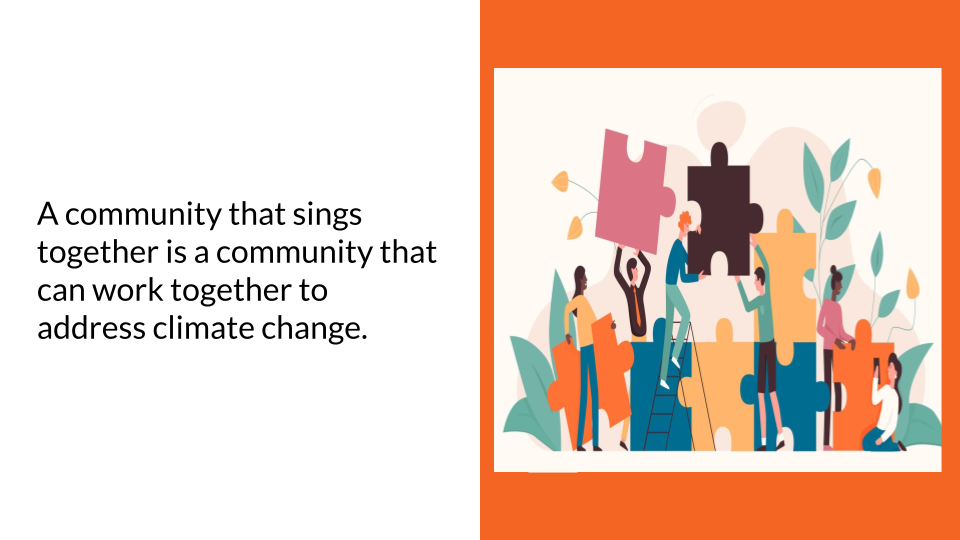
“A community that sings together is a community that can tackle climate issues together.”
-
My goal for participating with the Climate Leadership Cohort (CLC) is to integrate climate change action into the organizations I currently support. One of my passions is singing with the Tacoma Refugee Choir (TRC). TRC provides community outreach through musical performances. Usually each performance includes songs and speakers. The choir encourages the audience to join in singing to help build the community bonds. Before each performance there are organizations and vendors that set up tables in the lobby. Tailoring a future performance to address issues surrounding climate change is a great way to leverage TRC’s platform to spread awareness. This awareness of climate change can also apply more directly to TRC’s mission to support refugees and immigrants who are frequently most impacted by climate issues. This project outlines a proposal for a climate change focused performance with songs, presenters, and organizations speaking to the issues of climate change. I identified potential songs for suitable messaging. The performance proposal will need to be reviewed by the choir committees and further iterated, with the goal of scheduling a climate focused performance sometime in the future. Coming together as a community is one of the most powerful actions we can take. Appealing to the community at an emotional level as well as at an educational level is key to motivating and engaging others to take action.
-
A Change Is Gonna Come - Sam Cooke
Mercy Mercy Me - Marvin Gaye
Big Yellow Taxi - Joni Mitchell
Imagine - John Lennon
We Are the World - Multiple
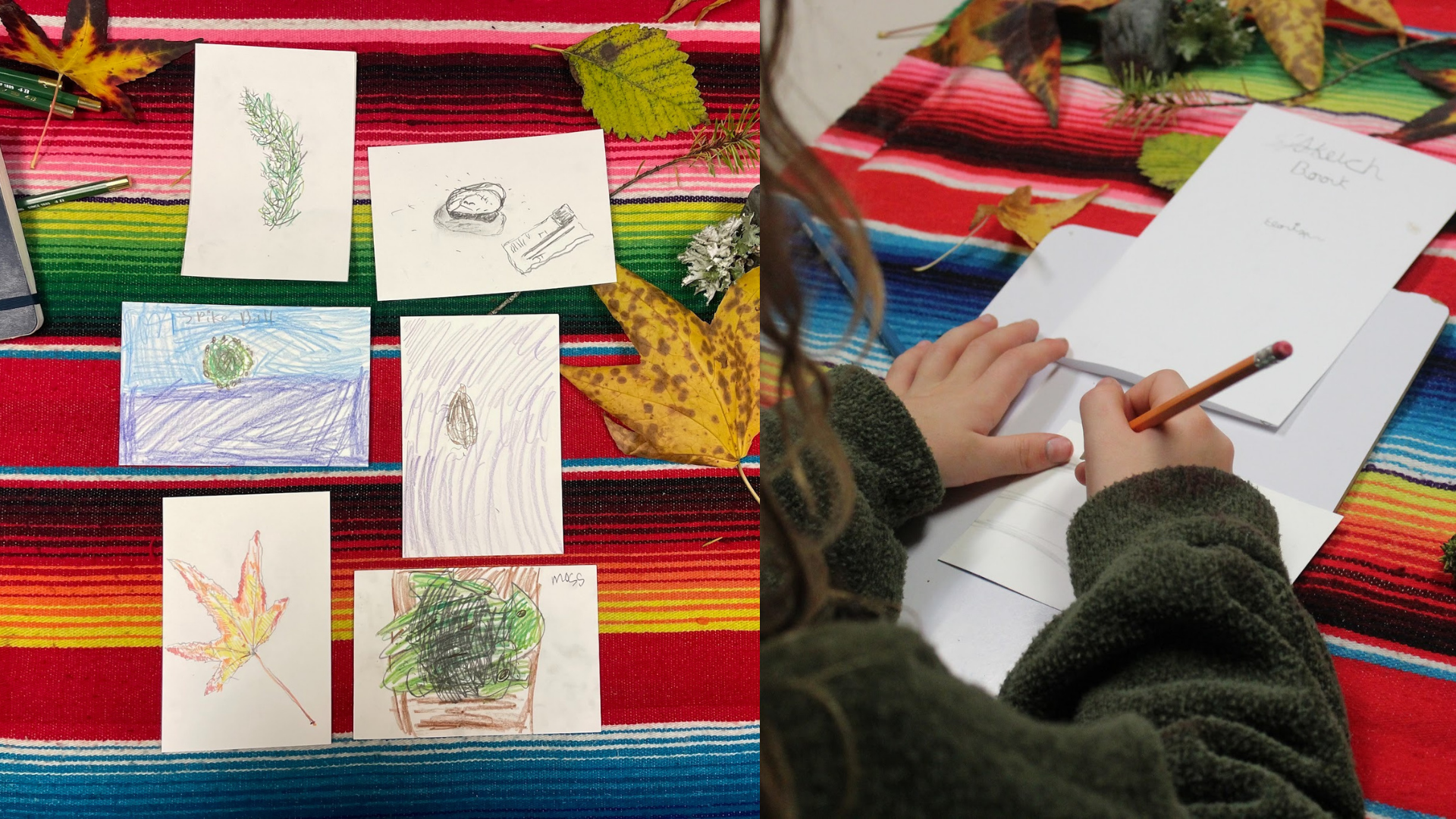
Drawing Hope from Nature
Wiley Reid (he/him), City of Tacoma
-
Through my project, I wanted to address the social dimensions of the climate change crisis, especially as it relates to the experience of youth growing up in an atmosphere of despair concerning this issue. I planned and executed a workshop for Pierce County children ages K-12 with the goal of sharing creative practices (drawing and poetry) with the students to engage with themes of nature in an uplifting way. Both the drawing and poetry exercises were successfully executed. The drawing exercises are the most intuitive and I anticipate those being replicated the easiest by the students going forward, post-session. Getting the word out for attendance was the most significant challenge I faced. But, in the end, we had a half dozen students, mostly middle school students. An unanticipated value to having younger students participate is that parents were also inclined to attend and participate. This created a multigenerational bond around the activities and themes of nature, allowing for deeper discussion among family units concerning climate change and hope. This is a community takeaway from the project I may not have quite realized in the same way going in.
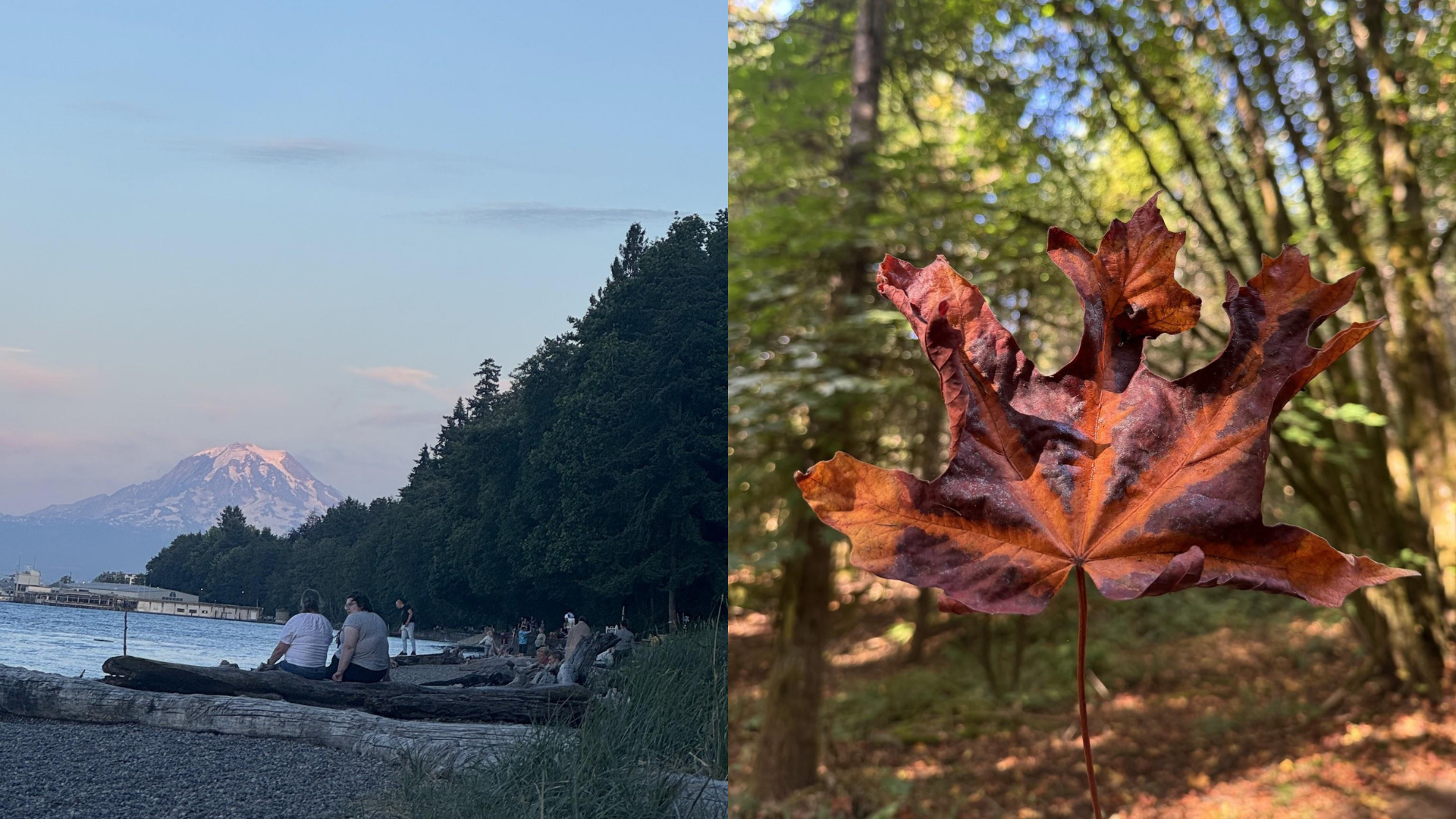
How to Connect to the Land
Jackie Kaiser (she/her)
“How do we connect to land? What impact does a name have on a place? Who decides what a place should be called?”
-
Currently, the average American spends 6.5–7 hours a day looking at a screen. Personally, I work in front of a computer and spend an additional 2–3 hours a day on my personal phone. One of my goals in this project, and in joining the Cohort, was to connect more deeply with my neighbors and community members. Through the capstone project, I explored the Tacoma Pierce County region, and held spaces with others to explore how naming can be used to strengthen place-based connection.
I created a survey form to have greater understanding of others around me and their connection to land, read four books to foster my own connection to land, and held a neighborhood “coffee and connection” gathering where I talked to new neighbors about their favorite places and their connection to each place’s name. Seventeen neighbors completed the survey.
Ultimately, this experience has left a lasting impact on my life. It strengthened my connection to the land, deepened my ties to the community, and showed me that even small, deliberate actions can contribute to meaningful change. Most importantly, it reminded me that building relationships and listening to others are at the heart of creating a stronger, more connected community.
-
Books:
Braiding Sweetgrass - Robin Wall Kimmer
Homewaters - David B Williams
Hidden Life of Trees -
Chief Seattle - David M Buerge
The Overstory - Richard Powers
Community Centers:
Tacoma Public Library
Websites:
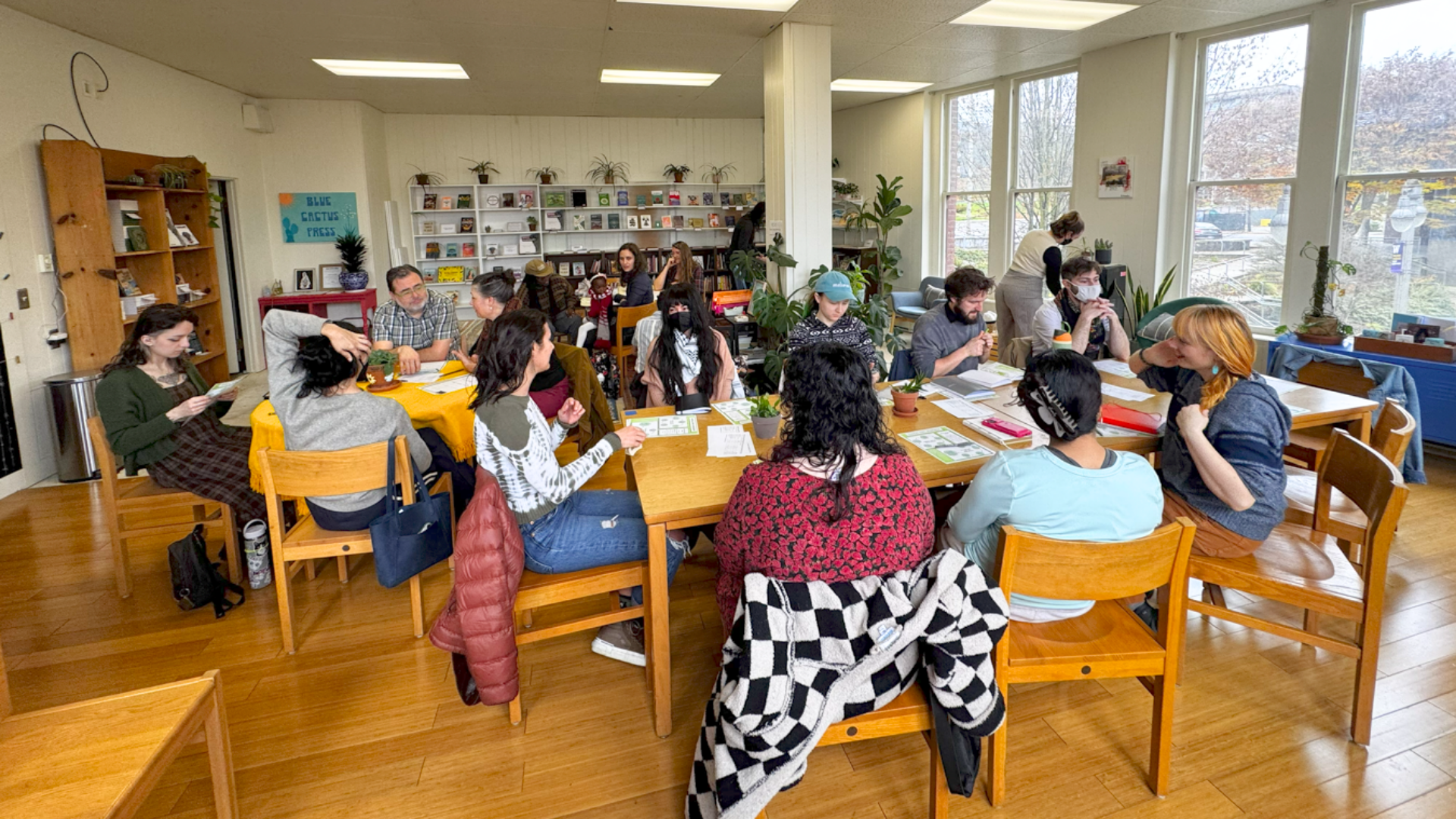
Mitigating Climate Despair
Nadine Shaw-Nabass
-
A big part of Pierce County’s Climate Resilience preparedness relies on community-driven efforts. In exploring this, I identified an opportunity to support community engagement in climate initiatives through discussing and mitigating climate despair. For my project, I developed a writing workshop to tackle feelings of hopelessness using tangible tools rooted in liberatory, anti-colonial history, and spend time imagining how we would build the world we hope to live in. It proved to be valuable to spend time acknowledging the devastating climate impacts to our community locally and how overwhelming it feels to engage with the tangle of institutions and systems that insufficiently address these very real problems.
RADICAL HOPE:
Goes beyond optimism and is a strategic re-imagining, adapting, and re-building in the face of uncertainty, disaster, and dissolution of a way of life.
Addresses the root of unjust systems by constructing sources of hope outside familiar patterns and recognizable ways of living.
Courage to envision and work towards a future fundamentally different from the past, even without a clear path forward.
This workshop was one way to inspire local climate action by using artmaking as a pathway to radical hope. I think there is a genuine opportunity to facilitate more spaces for communities to imagine together and take that imagination seriously as part of a climate resiliency strategy for city and county climate initiatives.
-
Pierce County Sustainability Plan 2030; accessed: https://www.piercecountywa.gov/8681/Sustainability-2030-Plan-Update
Tacoma’s 2030 Climate Action Plan https://cms.tacoma.gov/sustainability/climate%20action%20planning/2025%20update/2030%20climate%20action%20plan%202025%20update%20executive%20summary.pdf Ailton Krenak, Ideas to Postpone the End of the World
Ailton Krenak, Ancestral Future
Dr. Ayana Elizabeth Johnson, What if We Get it Right? Visions of Climate Futures
Rob Hopkins, From What Is to What If: Unleashing the Power of Imagination to Create the Future We Want
Jonathan Lear, Radical Hope: Ethics in the Face of Cultural Devastation
Further Reading:
Sarah Dee Shenker, “Towards a world in which many worlds fit? Zapatista autonomous education as an alternative means of development” https://whereareyouquetzalcoatl.com/RioHondo/Articles/Shenker2012.pdf
Just Transition Framework; https://movementgeneration.org/justtransition/
Nadine Shaw-Nabass, “Picture Books, 20/20 Vision, and Radical Hope: Do you still believe that it can’t happen here?” https://sonadinewrites.com/2025/03/04/picture-books-20-20-vision-and-radical-hope-do-you-still-believe-that-it-cant-happen-here/
Community Partners:
Blue Cactus Press; https://bluecactuspress.com/
2025 Climate Leadership Cohort members
Resource Library
Adger, W. Neil. “Vulnerability.” Global Environmental Change, vol. 16, no. 3, Aug. 2006, pp. 268–281, www.sciencedirect.com/science/article/pii/S0959378006000422, https://doi.org/10.1016/j.gloenvcha.2006.02.006.
Appropriation and the centrality of unpaid work/energy, The Journal of Peasant Studies, 45:2, 237-279, DOI: 10.1080/03066150.2016.1272587
Beyond the Bin- Free reuse events from the City of Tacoma’s Solid Waste Management team.
Blue Cactus Press; https://bluecactuspress.com/
Carver, Kalika. “WA South Sound Gardening & Upcycling Resources” Linktree. Dec. 2025, https:linktr.ee/eco.kalika.carver
Cascadia Bioregion- https://cascadiabioregion.org/
Clean Energy Council Sitting - https://ecology.wa.gov/regulations-permits/sepa/clean-energy/council
Daily Screen Time Among Teenagers: United States, July 2021–December 2023
Eriksen, Siri H., et al. “Reframing Adaptation: The Political Nature of Climate Change Adaptation.” Global Environmental Change, vol. 35, Nov. 2015, pp. 523–533, https://doi.org/10.1016/j.gloenvcha.2015.09.014.
“Four Tips for a Climate-Friendly Yard.” Audubon, 25 Jan. 2022, www.audubon.org/magazine/four-tips-climate-friendly-yard.
From SNAP uncertainty to campus harvests: Where Tacoma can turn for food support – The Tacoma Ledger
Garry oaks, also called Oregon white oaks, enjoy protected status | Tacoma News Tribune; https://www.thenewstribune.com/outdoors/article172374247.html
Harvey’s Harvest Christmas Trees: https://www.harveysharvestchristmastrees.com/
Hilltop Urban Gardens- https://www.hilltopurbangardens.org/
“Importance of Methane.” EPA, Environmental Protection Agency, www.epa.gov/gmi/importance-methane. Accessed 30 Nov. 2025.
Jason W. Moore (2018) The Capitalocene Part II: accumulation by
Just Transition Framework; https://movementgeneration.org/justtransition/
Kotsila, Panagiota, et al. “Resources for a Better Future: Political Ecology.” Resilience, 30 Nov. 2020, www.resilience.org/stories/2020-11-30/political-ecology/.
Location & Community | University of Puget Sound
Morrison, T. H., Adger, W. N., Agrawal, A., Brown, K., Hornsey, M. J., Hughes, T. P., ... & Van Berkel, D. (2022). Radical interventions for climate-impacted systems. Nature Climate Change, 12(12), 1100-1106.
Nadine Shaw-Nabass, “Picture Books, 20/20 Vision, and Radical Hope: Do you still believe that it can’t happen here?” https://sonadinewrites.com/2025/03/04/picture-books-20-20-vision-and-radical-hope-do-you-still-believe-that-it-cant-happen-here/Pierce Conservation District Fruit Tree Education Series
Pierce County Sustainability Plan 2030; https://www.piercecountywa.gov/8681/Sustainability-2030-Plan-Update
Revisiting Washington — Midland; https://revisitwa.org/waypoint/midland/
Sarah Dee Shenker, “Towards a world in which many worlds fit? Zapatista autonomous education as an alternative means of development” https://whereareyouquetzalcoatl.com/RioHondo/Articles/Shenker2012.pdf
Tacoma Tree Foundation; tacomatreefoundation.orgTacoma.gov
Tacoma’s 2030 Climate Action Plan https://cms.tacoma.gov/sustainability/climate%20action%20planning/2025%20update/2030%20climate%20action%20plan%202025%20update%20executive%20summary.pdf
WA Native plants at Northwest Meadowscapes: https://northwestmeadowscapes.com
Washington Climate Partnership- https://waclimatepartnership.org/en/Washington Lt. Governor says 'Franklin Pierce shouldn’t have a county named after him' | king5.comWhat’s in a name, Pierce County? A pro-slavery, racist president we must reckon with
Wildfern Grove: https://www.wildferngrove.com/
“Winter Holiday Reminder.” Piercecountywa.gov, 2025, www.piercecountywa.gov/1551/Winter-Holiday-Reminders.
2025 Climate Leadership Cohort members; tacomatreefoundation.org/climate-leaders
Reading List
Buerge, David M. Chief Seattle and the Town that Took His Name. Sasquatch Books, 2017.
Burch, S. L., & Harris, S. E. Understanding climate change : science, policy, and practice. University Of Toronto Press, 2021.
Hopkins, Rob. What Is to What If: Unleashing the Power of Imagination to Create the Future We Want. Chelsea Green Publishing, 2020.
Johnson, Ayana Elizabeth. What if We Get it Right? Visions of Climate Futures. One World, 2024.
Kimmerer, Robin Wall. Braiding Sweetgrass. Minneapolis, MN: Milkweed Editions, 2015.
Krenak, Ailton. Ancestral Future. Polity, 2024.
Lear, Jonathan. Radical Hope: Ethics in the Face of Cultural Devastation. Harvard UP, 2008.
——. Ideas to Postpone the End of the World. House of Anansi Press, 2020.
Powers, Richard. The Overstory. W.W. North & Co., 2019.
Wohlleben, Peter. The Hidden Life of Trees. Greystone Books, 2016.
Williams, David B. Homewaters: Human and Natural History of the Puget Sound. University of Washington Press, 2022.