Trees of Significance: Re-rooting like a Willow
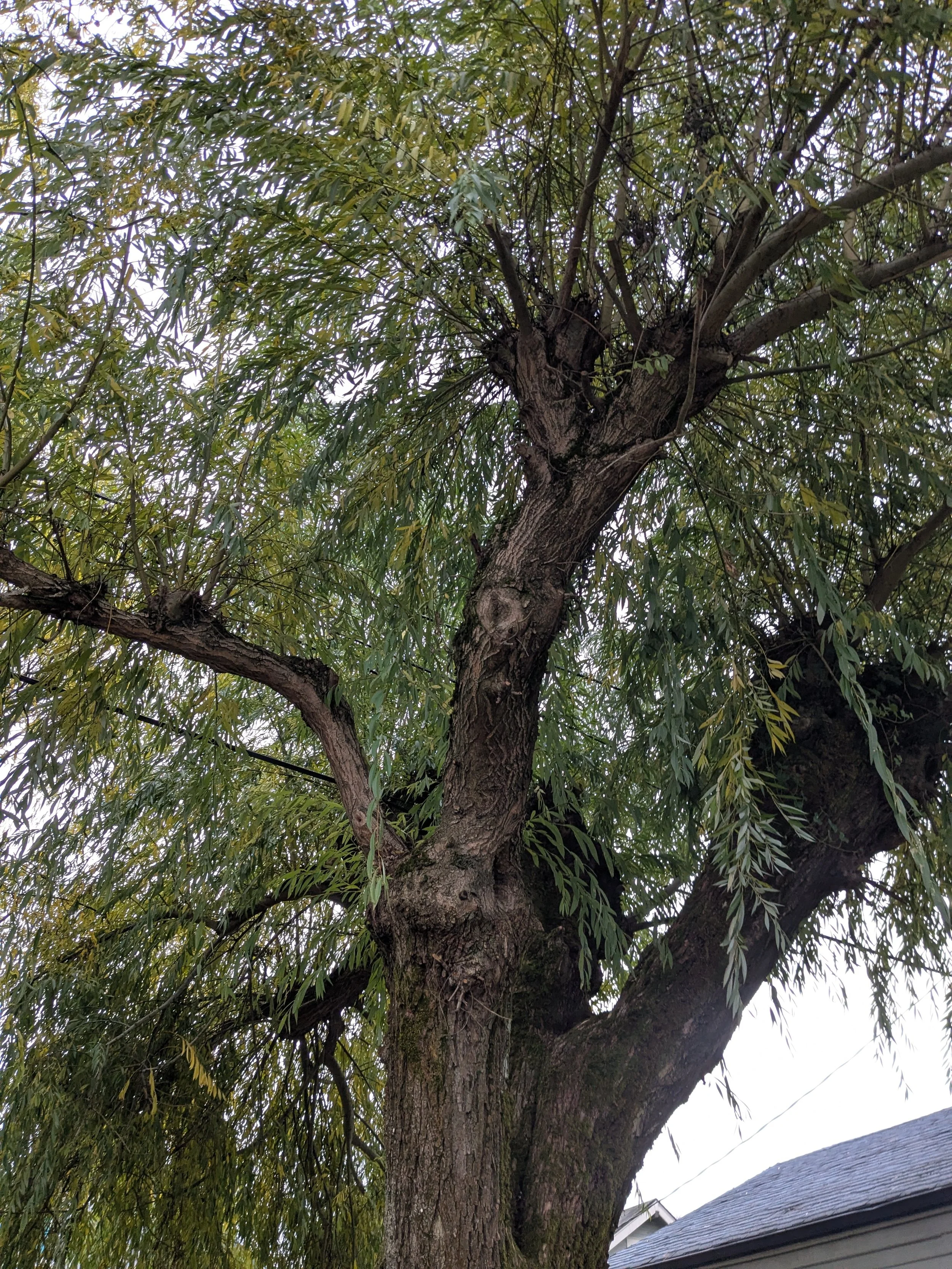
Willow Tree. Photo credit: Eden Standley
The weeping willow tree is an anchor point within its ecosystem: providing soil stability, water filtration, and a source of food, medicine, and craft material for the human and non-human beings that live around it. While it's a rare find in the urban forest due to its size and rooting habits, for Natalie Caro, TTF’s Planting Coordinator, it provides a sense of grounding, connection to place, and a reminder of how to be flexible while maintaining strong roots.
The willow species has been an important part of many cultures across the globe for thousands of years–from the Coast Salish peoples to ancient Egyptians, early Chinese societies, among others. All this time, humans have used the willow’s pliable branches to make baskets, clothes, and tools, along with using the bark, shoots, and leaves for pain relief from the salicin they contain.


In most cultures, weeping willows are a symbol of death, mourning, and wisdom which is why they are found in graveyards and as embellishments on gravestones. The tree is also a well known symbol in contemporary culture, appearing as a character in famous literary texts and Disney movies.
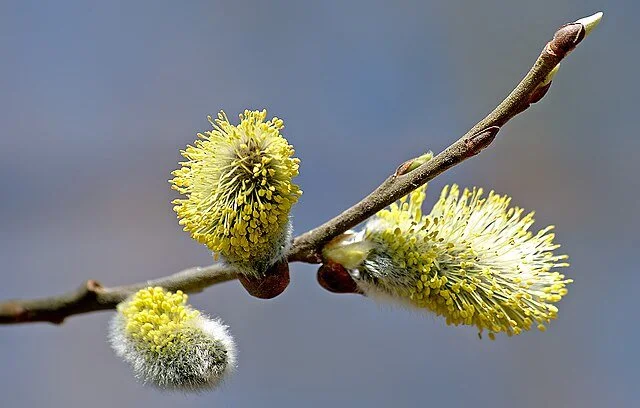
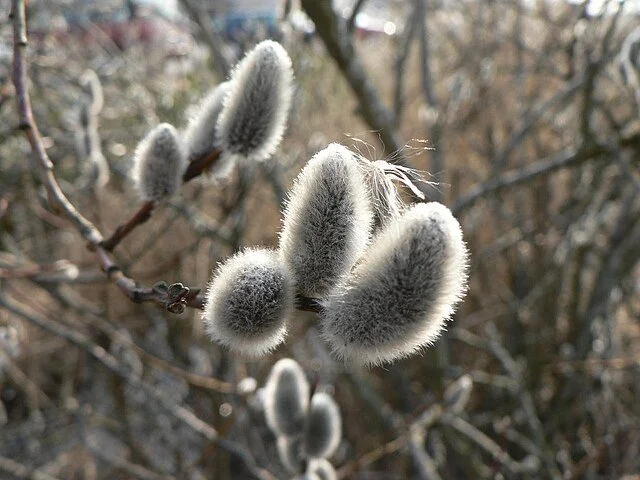
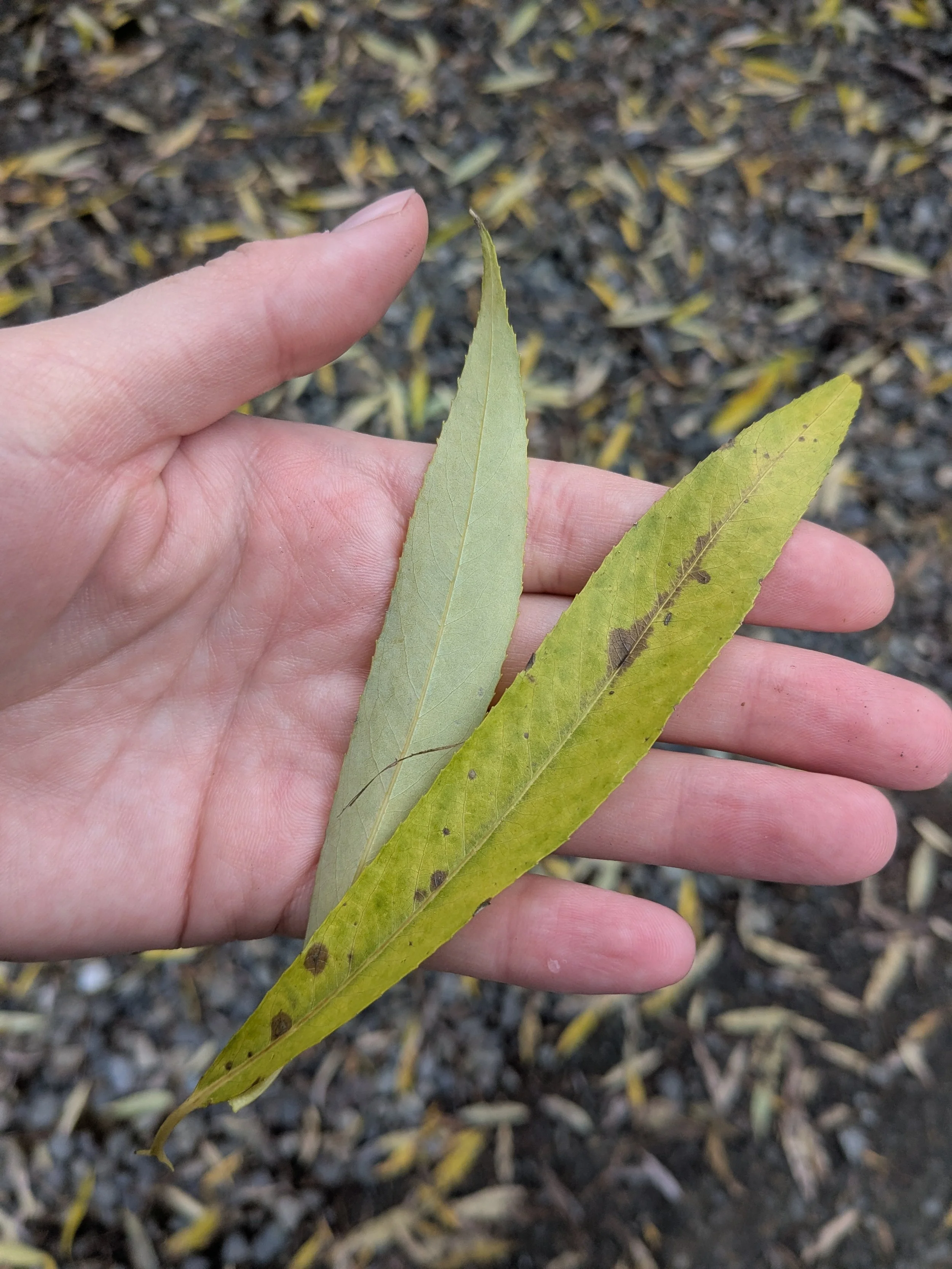
In the Pacific Northwest, we have several varieties of native willow, including the Pacific willow (Salix lucida), Hooker’s willow (Salix hookeriana), Scouler’s willow (Salix scouleriana), and the Sitka willow (Salix sitchensis). While there are many different willow varieties which all have their own unique characteristics, they all share some common characteristics, and habitat preferences. All willow varieties produce catkins, which are groups of small and wooly flowers that appear in early spring, or even early February as they do in the Pacific Northwest. Catkins can be stiff and upright, or drooping from the branches. Indigenous storytellers have a story about how the willow got its catkins from the ears and tail of the rabbit. Many willows have long, narrow, and pointed leaves ranging from silvery to bright green in color that are either smooth or with tiny serrations. All willow species thrive near bodies of water, including wetlands, streams, and lakes, as well as other constant sources of water (like leaky underground pipes!). These features can help us to identify willows. But identifying willows by their exact variety can be a challenge even for experts as these trees can vary greatly in size and bark texture, and can hybridize in the wild, meaning new varieties could appear anytime.
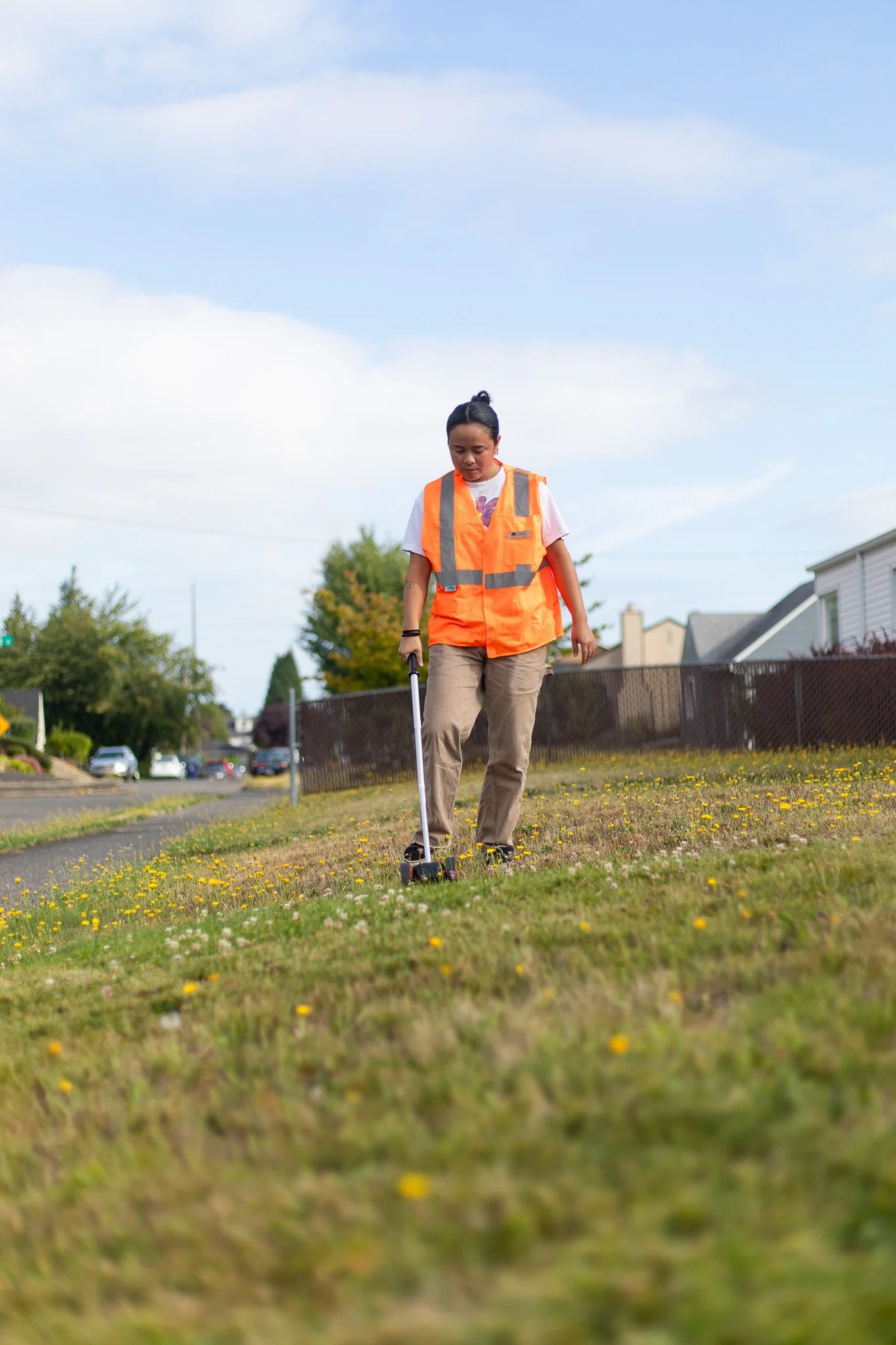
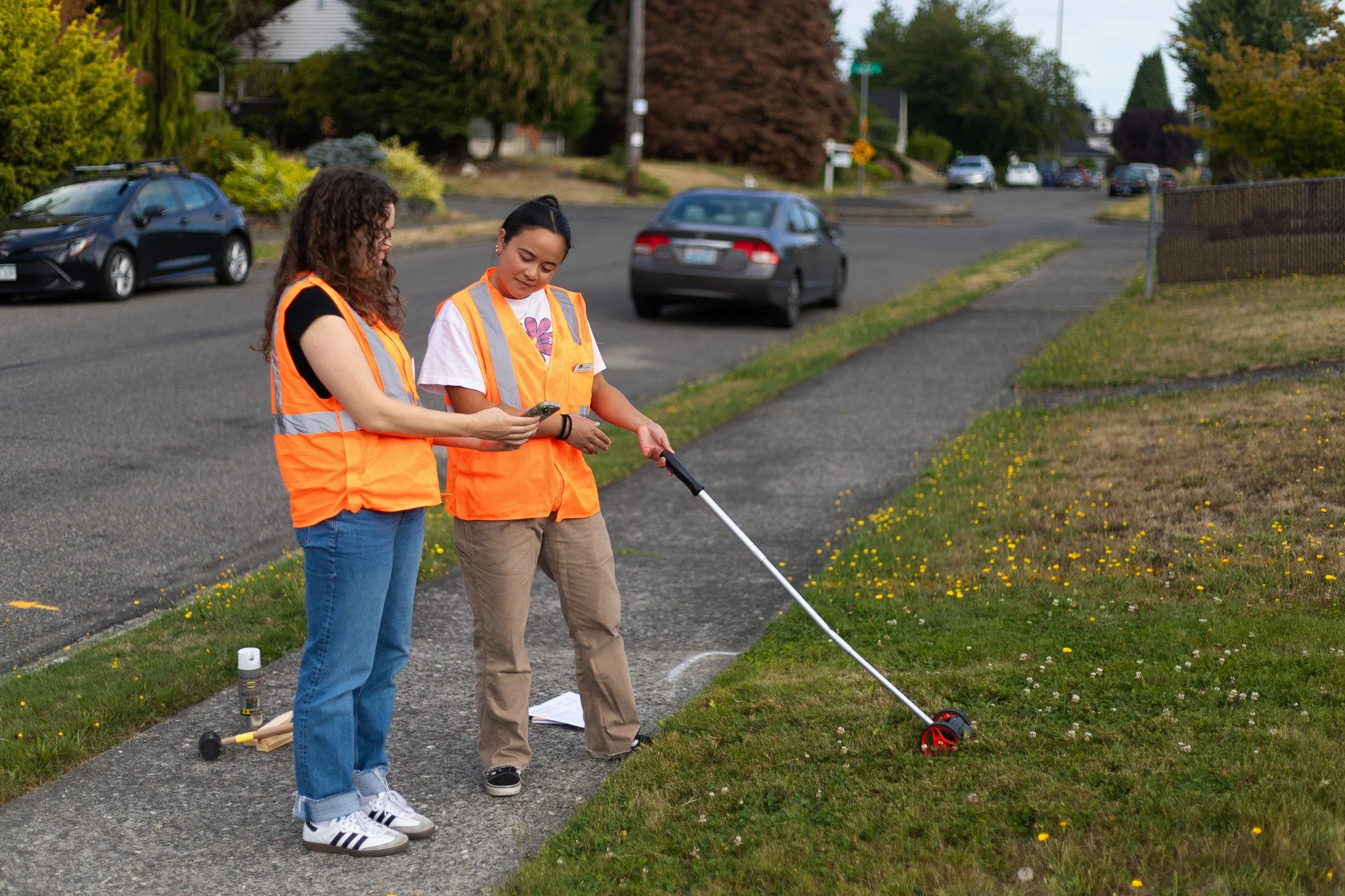
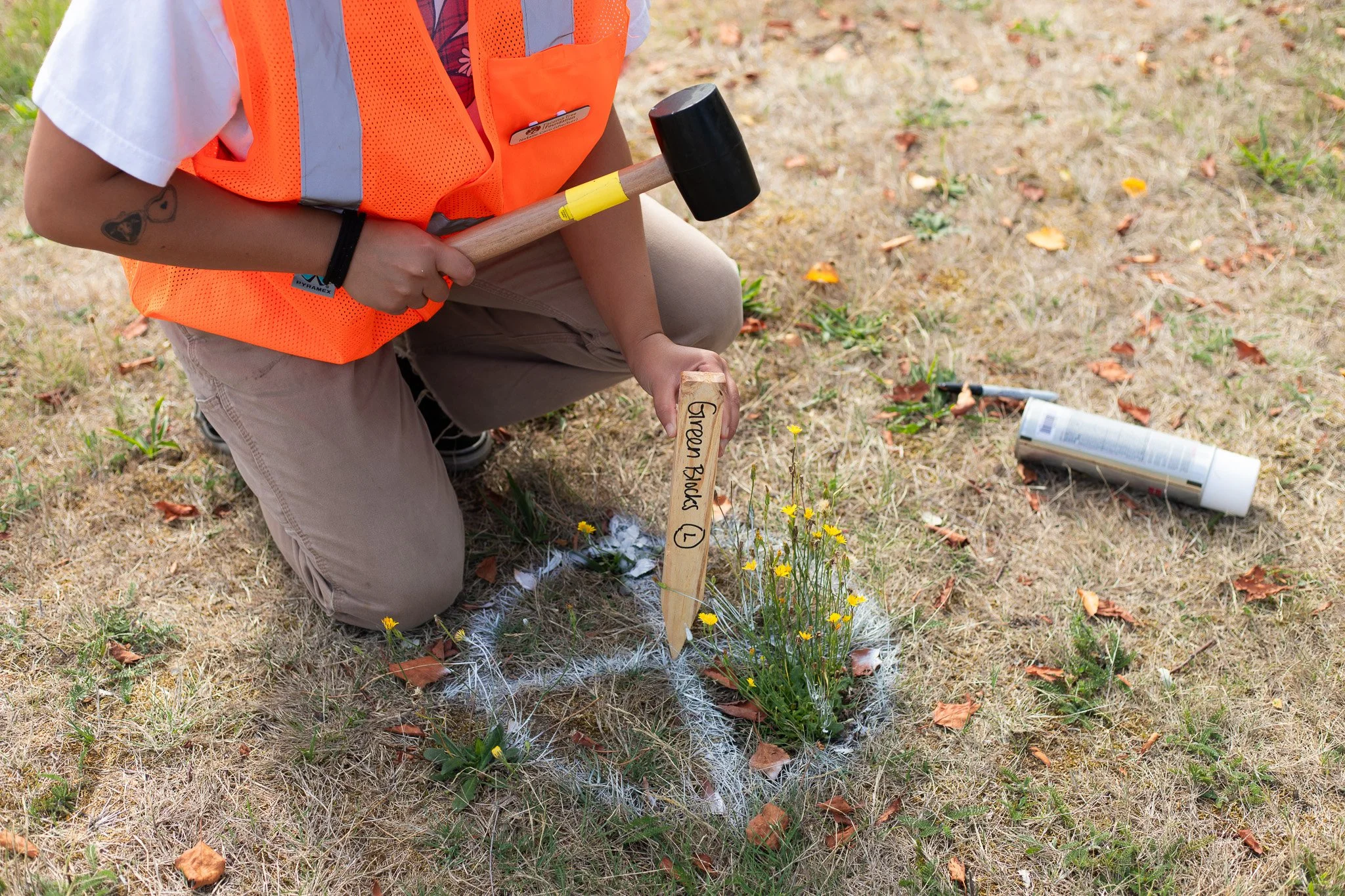
Natalie measuring from utilities. Photo credit: Julia Wolf
At the end of September, Natalie was out in the neighborhoods of South Tacoma marking potential planting sites for trees. Working in the heat of unshaded right-of-ways, she measured the space between utilities, sidewalk, and road to decide the right size and species of tree for each space. Although this is hard work, Natalie finds that it is "kind of tricky" but that it is fun, "fun like a puzzle."
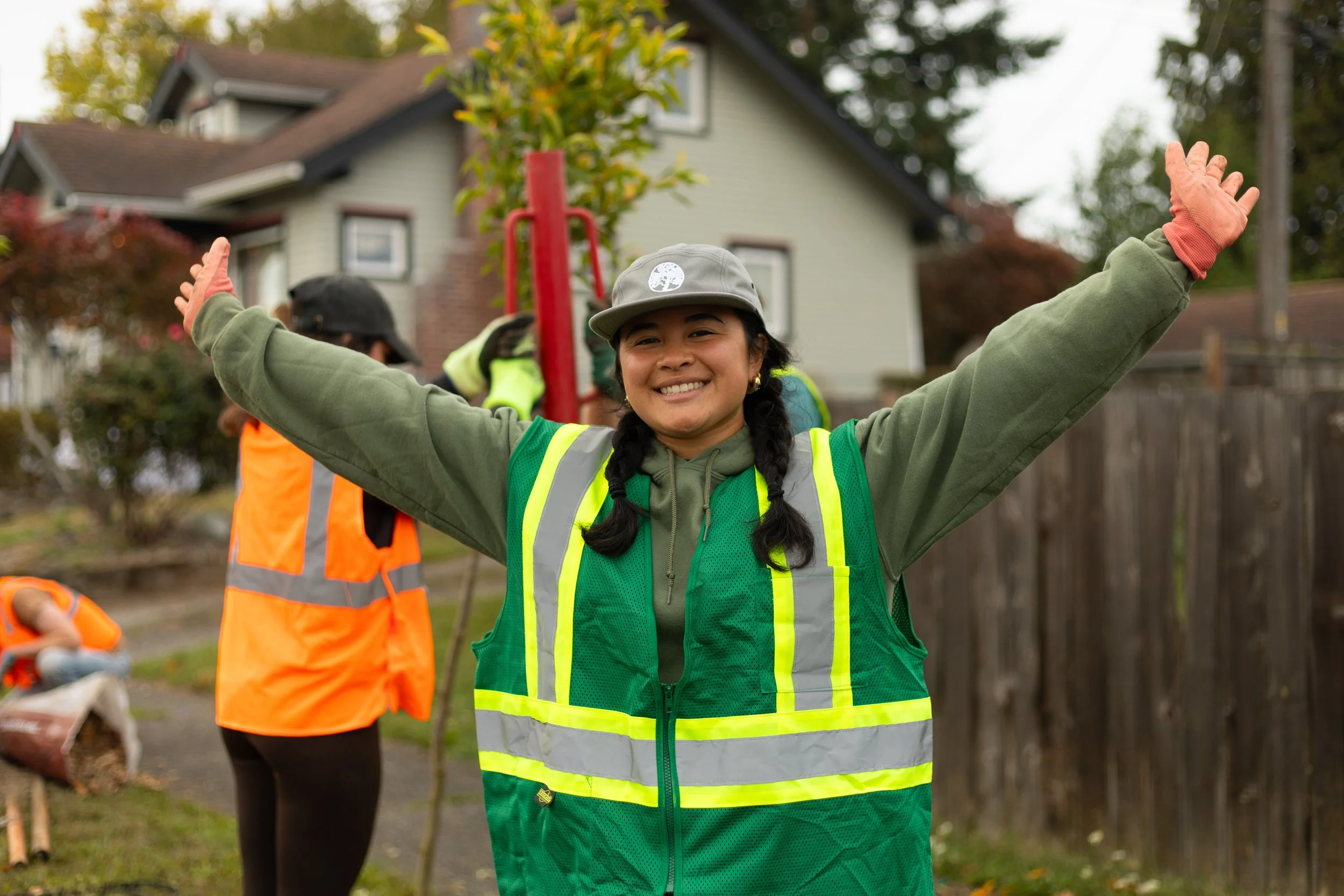
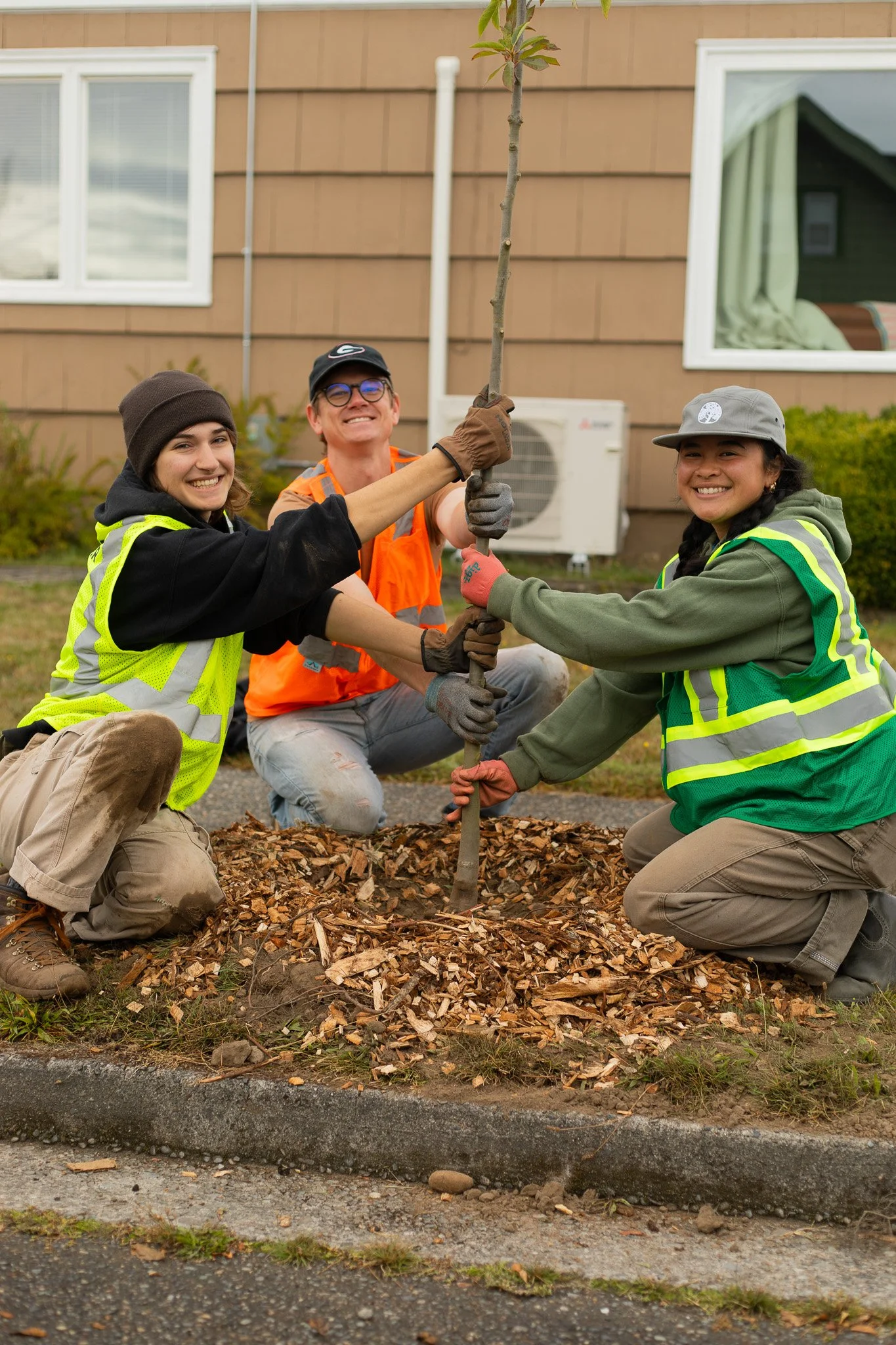
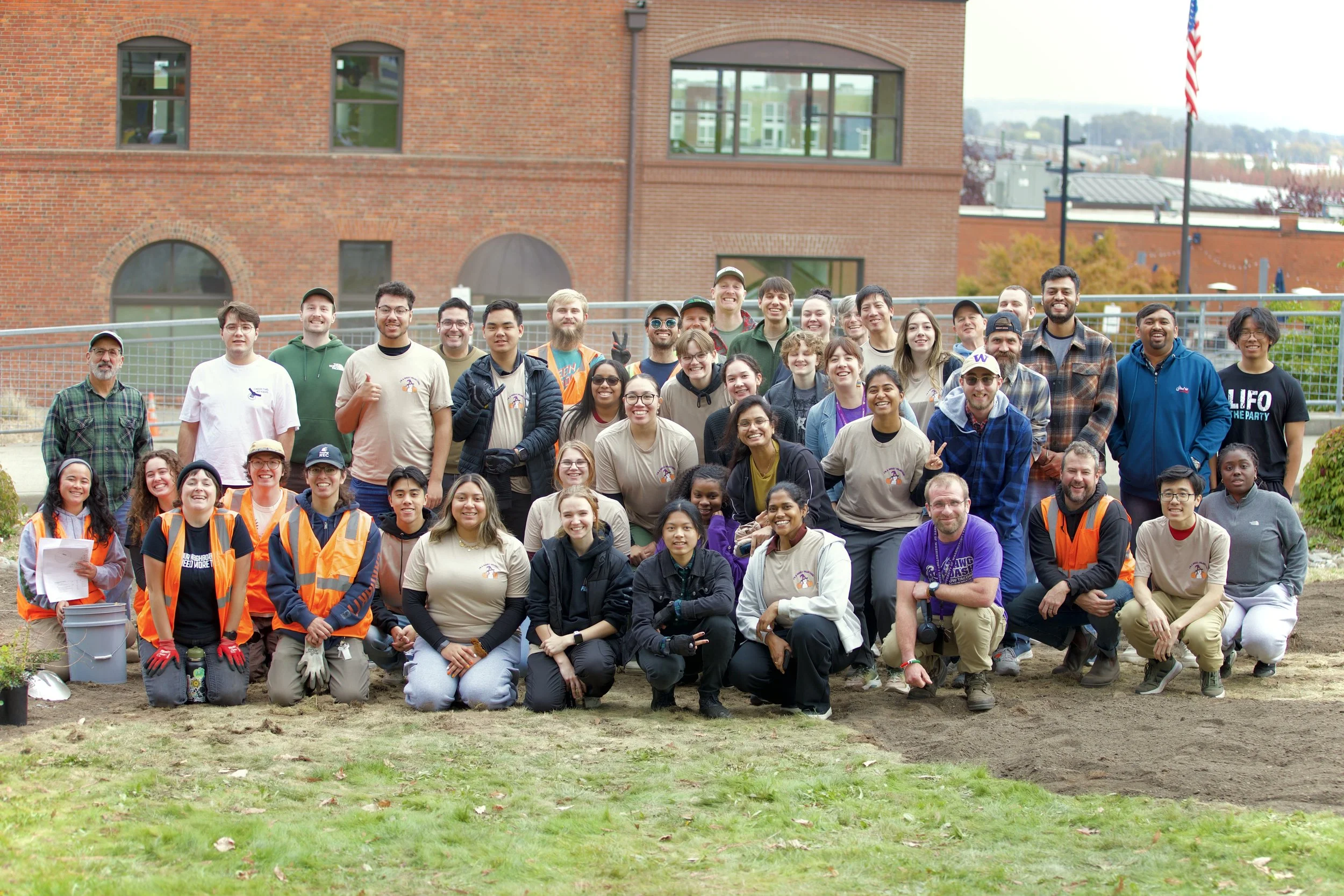
Natalie does a lot of hands-on work in her position at TTF, making planting plans become realities for the most vulnerable neighborhoods like South Tacoma. She started as an intern with TTF in summer of 2024 and quickly graduated to being an integral member of our full-time staff in January of 2025. She handles the logistics and volunteer organization of our major planting projects like Green Blocks and Branch Out. She also helps build digital tools to make planting projects easier, like the data map she created to help us plot and keep track of the trees we offered for Green Blocks: South End.
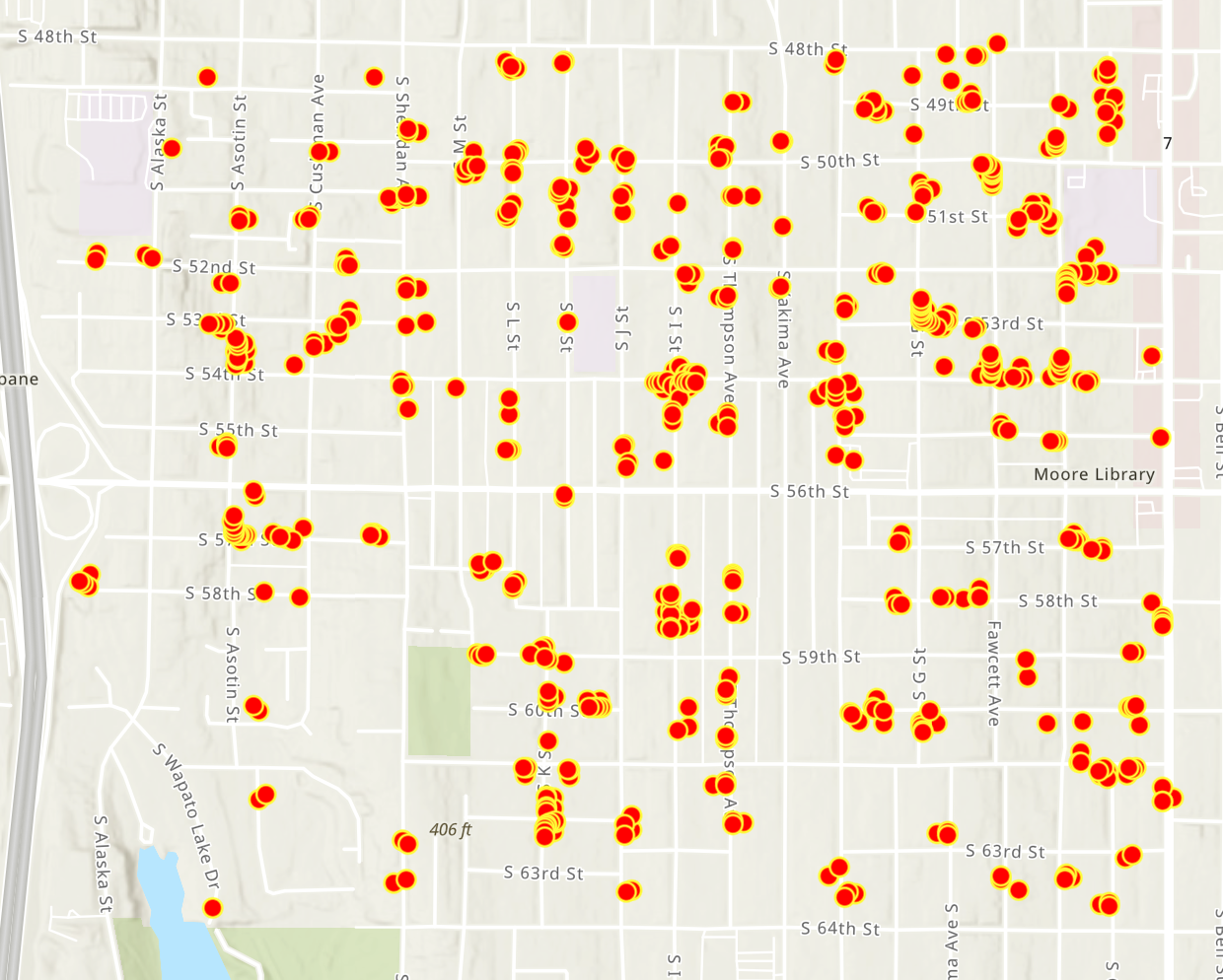
Trees plotted on Natalie's planting planning app. Source: Natalie Caro
She grew up traveling across the country as her parents pursued new entrepreneurial opportunities. “Every once in a while, like every two years, we would move. We would rotate between different cities in Florida, Texas, Washington, and Colorado.” It was jarring for Natalie to move into a new place, new home, new school, and new friends. “That whole process itself was really difficult because it was so much effort to feel comfortable in a new space. I do wish we had stayed in one place for longer than a year or two.” It is not surprising, then, that she feels a solidarity with a tree that is grounding.
Throughout her life the weeping willow, a variety characterized by its downward sweeping branches, has been a symbol of resilience and a familiar silhouette against all the backdrops of her childhood. “It’s my favorite tree. It is one of the best trees at propagating itself.”
“When the branches break off they might float down a river or stream and it’ll stick itself somewhere and grow. I felt a lot like that with moving, like I have to break a piece of myself off and leave it there maybe, or I’ll be carried along and set myself up and grow somewhere else.”
Willows no longer have a native range and are considered naturalized in most of the world. Experts suspect that the tree’s native range was originally in China, and that they were brought across the world via the silk road because of the value of these trees for crafting and medicine.
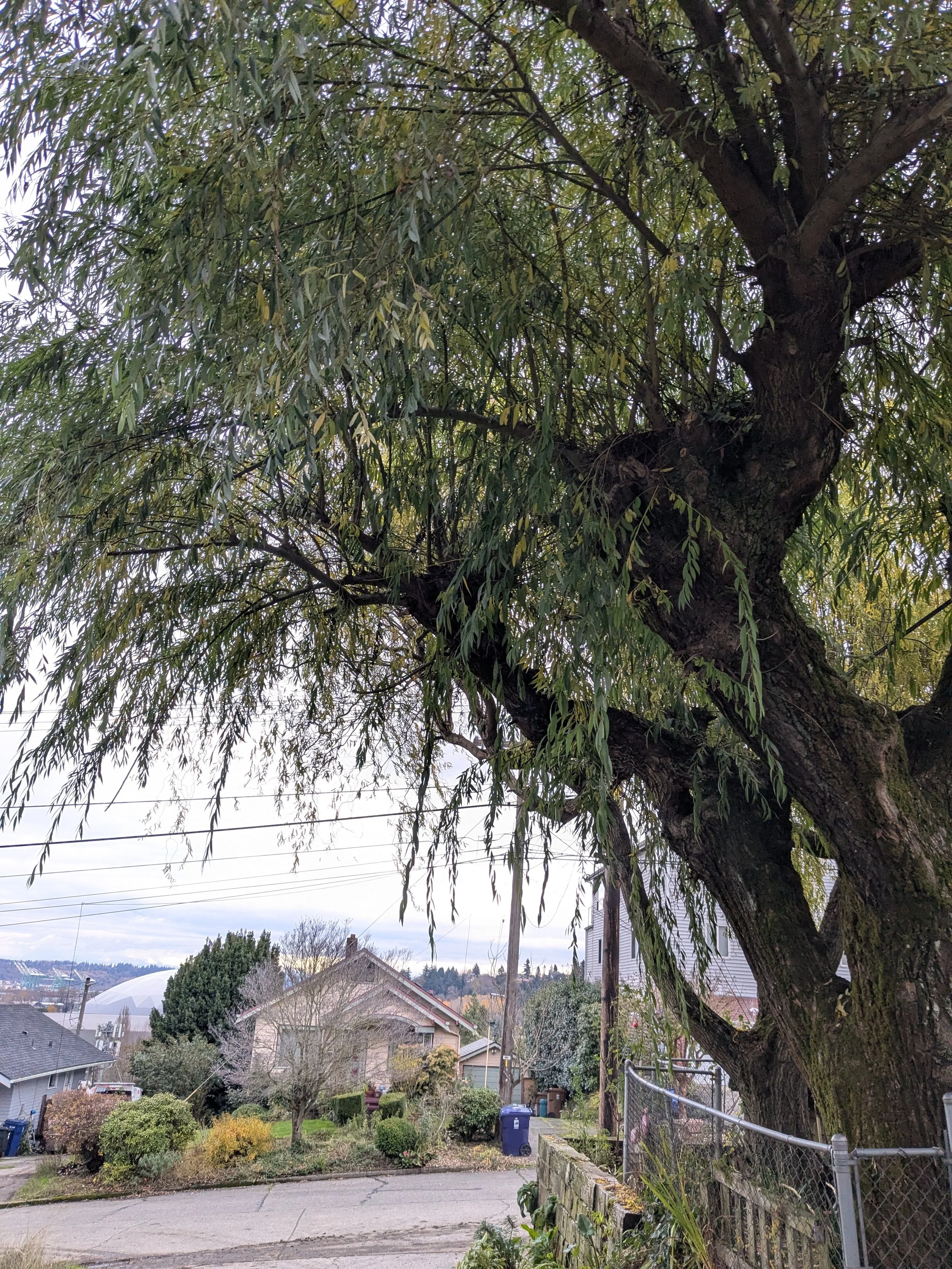
Willow tree in Tacoma. Photo credit: Eden Standley
It's a tree without a clear origin, which is sometimes how Natalie has felt throughout her life. “Sometimes it was familiar coming back to a state,” but it was never the same place her family had lived before, limiting her ability to feel connected to any one place.
But for Natalie they symbolize the shadow side of death: “I see the tree more as a sign of resilience and rebirth and hope.”
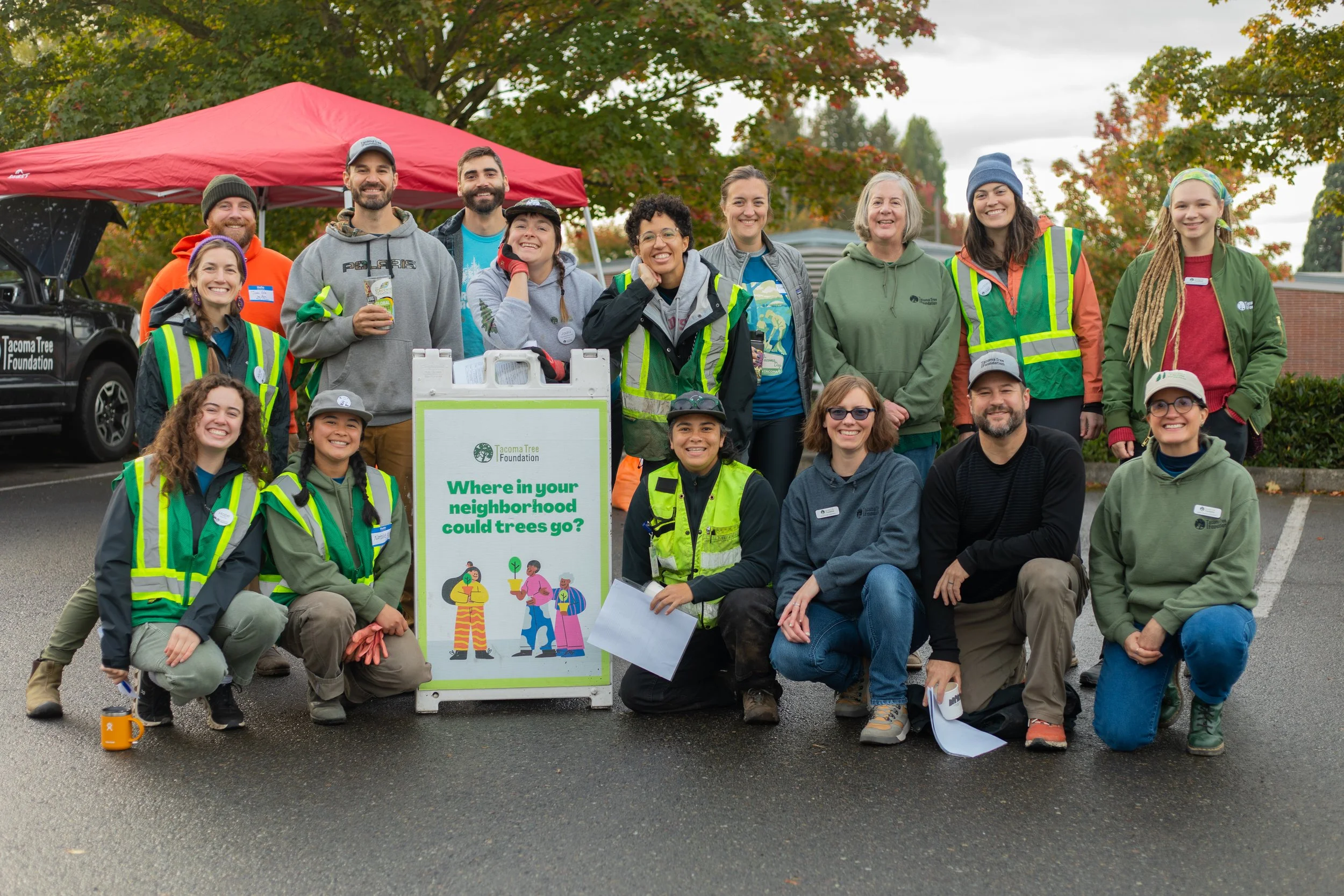
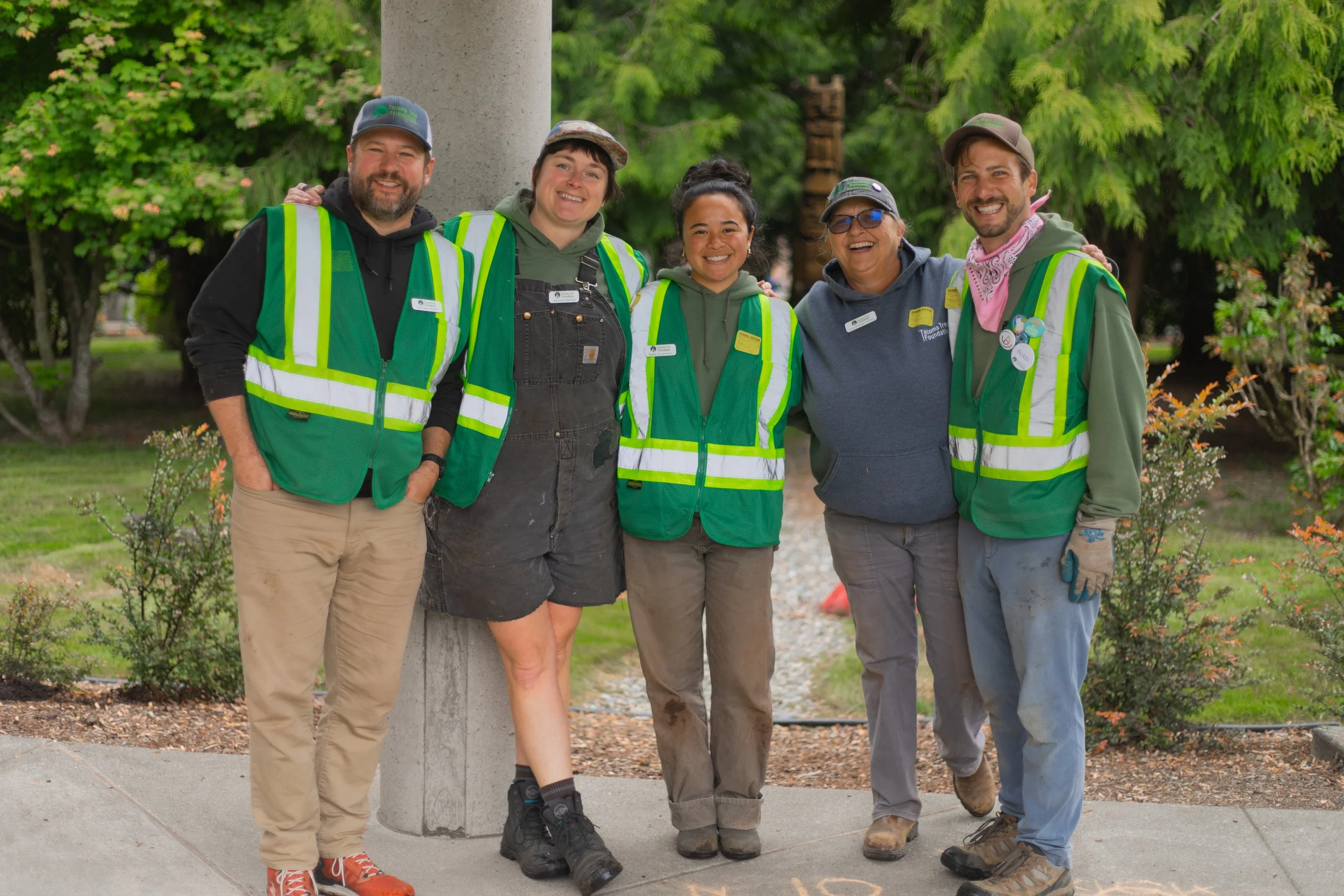
In her adult life, Natalie has had more control over where she lives, and has chosen to settle in Tacoma for a while, fortunately for us! She loves being able to return to her favorite coffee shops–like Bluebeard and Espresso Yourself–and to invest in long term friendships and community connections, especially through her work at TTF. She has been inspired by her co-workers and community members. “Seeing how many people they [her co-workers] know and like and care for is mind-blowing because I didn't have those kinds of long lasting connections at all growing up…I want to be a part of that.”
While Natalie becomes rooted in Tacoma, her connection to the willow tree reminds her of the power of being flexible which is a strength of hers that comes through in her work at TTF, while teaching her how to stay connected to place. Flexibility is a quality we all need to maintain to keep a healthy connection to place. As Natalie knows, you can’t appreciate your connections to a place until you have the opportunity to choose where you want to be.
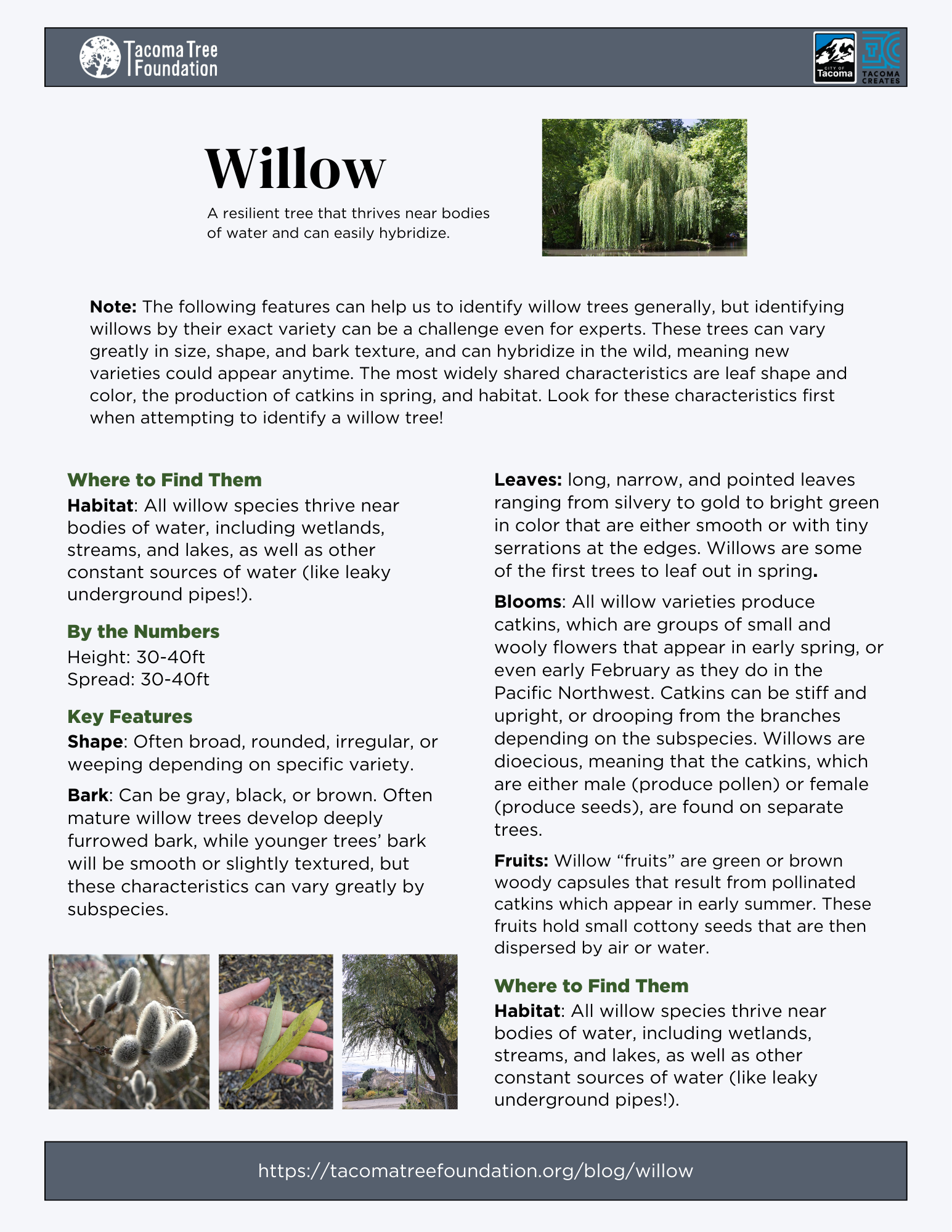
Download our tree ID guide so you can spot western hemlock trees around your city.